CDC Blog Addresses Cleaning Dialysis Stations Between Patients
The CDC, in collaboration with the Dialysis Bloodstream Infection Prevention Collaborative, has recently developed several new tools to prevent bloodstream infections among outpatient hemodialysis patients. Most recently, a new checklist tool for Dialysis Station Routine Disinfection was developed and piloted at St. Albans satellite clinic affiliated with Fletcher Allen Healthcare in Vermont. Today, on CDCs Safe Healthcare blog, Peggy Bushey, nurse manager for renal services at Fletcher Allen Healthcare, describes the impact of this new checklist on the St. Albans clinic. She reports several positive outcomes associated with waiting for the patient to leave the station before beginning routine disinfection. In a separate post on CDCs Safe Healthcare blog, Dr. Priti Patel, medical officer and lead of CDCs Dialysis Safety efforts, describes how elements of routine disinfection of the dialysis station are basic patient safety expectations. The new Dialysis Station Routine Disinfection checklist tool and accompanying Notes for Clinical Managers may be found in the Prevention Tools section of CDCs Dialysis Safety website. Join the conversation on CDCs Safe Healthcare blog: http://blogs.cdc.gov/safehealthcare
This week on Infection Control Today, the stories ranged from emerging drug-resistant pathogens circling the globe to a landmark decade of surface science—all against a backdrop of ongoing outbreaks and a hard look at what the profession owes its own workforce.
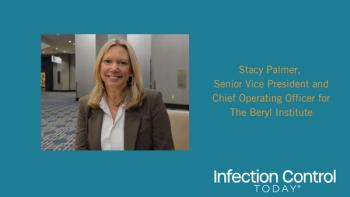
At AHE 2026 in New Orleans, The Beryl Institute's Stacy Palmer discussed 8 guiding principles for experience excellence and why EVS professionals influence far more than environmental cleanliness. Their interactions, workplace culture, and connection with patients help shape the overall human experience of health care.
During National EVS Week, appreciation matters, but partnership matters more. Environmental services professionals bring infection prevention expertise and a unique understanding of the health care environment that can help identify barriers, improve cleaning and disinfection practices, and ultimately protect patients.
Nearly 4 months into the DRC's Bundibugyo virus disease outbreak, some indicators suggest transmission may be slowing. But shifting hotspots, treatment-center capacity problems, community deaths, and incomplete surveillance data show why national case totals alone cannot determine whether containment has been achieved.
A 10-year NIH-funded study used Bayesian statistical modeling to examine the relationship between continuously active EOScu surfaces and HAI reduction. EOS Surfaces representatives discuss the findings, passive infection prevention, environmental recontamination, and why IPs should continue asking tough questions.
Artificial intelligence can help IPs analyze surveillance data, identify patterns, improve training, and reduce repetitive work. Bassel Molaeb explains why AI literacy is becoming an important IPC competency while human validation, clinical context, and professional judgment remain essential.
A surface can look clean and still carry significant bioload.
The new Bioload Exposure Metric Index (BEMI) aims to standardize ATP sampling and move surface hygiene toward a measurable cleanliness score.
If we can't measure clean, how do we know we've achieved it?
At AHE Exchange 2026, ICT spoke with experts representing commercial laundry services, EVS, and infection prevention about the systems behind a successful reusable linen program.
They discuss linen quality, reject rates, unnecessary waste, frontline education, data, PAR levels, infection prevention oversight, and why strong relationships between health care facilities and their laundry providers matter.