

This week's coverage in Infection Control Today centered on a common thread: the systems, partnerships, and data that let infection prevention teams catch problems before patients are harmed.
This week's coverage in Infection Control Today centered on a common thread: the systems, partnerships, and data that let infection prevention teams catch problems before patients are harmed.

Knowing the protocol is only the beginning. In The Clean Bite, Sherrie Busby explores how explaining the why, addressing staff concerns, and creating clear procedures can help dental teams make infection control part of everyday practice.

What Were the Biggest Infection Prevention Stories This Week? Ebola's Outpaced Response, Lyme Coinfection Data, and Sterile Processing Burnout Explained, and more

A patient with fever and no recent travel could still have dengue. Florida’s local transmission highlights why clinicians and infection preventionists should look beyond travel history and recognize warning signs.
CBIC's new IPU requirements are intended to protect continuing education from commercial influence. But they could also change who provides education, who funds it, and who ultimately pays for it. When “free” education gets more expensive to provide, somebody has to pick up the bill.
The Bug of the Month helps educate readers about existing and emerging pathogens that are clinically important in today's health care facilities. This month’s Bug of the Month isn’t quite like anything we’ve featured before. Can you solve the clues before the final reveal?

International infection prevention leaders discuss how Ireland and Saudi Arabia educate, recruit, and prepare IPC professionals while advocating for broader, multidisciplinary career pathways worldwide.

What if sterile isn't enough? Sterile processing has traditionally focused on ensuring instruments are cleaned, assembled, and sterilized correctly. But today's health care environment requires something more. This article explores why coordination between sterile processing, the operating room, supply chain, and clinical teams has become just as important as technical excellence. Learn why experts believe surgical readiness should become the next benchmark for sterile processing performance.
What are the most common infection control violations in dental practices? This article explains why hand hygiene, improper PPE use, and failure to wear utility gloves continue to challenge dental teams and offers practical, evidence-based strategies to improve OSHA adherence, strengthen infection prevention practices, and enhance patient and staff safety.

What should infection preventionists do when a patient presents with possible anthrax exposure after a suspicious incident? This article explores a realistic bioterrorism response scenario, highlighting the critical role of infection preventionists, public health partnerships, and laboratory coordination. It also introduces Bacillus cereus biovar anthracis (Bcbva), an emerging pathogen that can mimic anthrax while appearing to be a common laboratory contaminant. Learn how to recognize potential biosecurity threats, navigate specimen management, and build the public health relationships needed before an emergency occurs.
Sterile processing departments (SPD) are increasingly being pushed beyond reactive maintenance models as equipment failures, workflow disruptions, and tray defects continue to impact surgical readiness and patient safety. This article explores why SPD may be uniquely positioned for an AI-driven predictive maintenance revolution, examining how systems thinking, IoT integration, human factors research, and real-time equipment monitoring could help reduce disruptions before failures occur. The piece also highlights the growing shift toward treating maintenance as a strategic reliability function tied directly to infection prevention, OR efficiency, and operational resilience across health care systems.
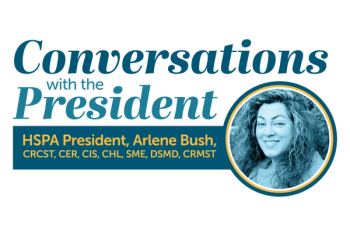
As Arlene Bush, CRCST, CER, CIS, CHL, SME, DSMD, CRMST, concludes her HSPA presidency, she reflects on advocacy, certification efforts, and collaboration, emphasizing mentorship and continued progress in sterile processing ahead of the 2026 conference in Baltimore.
This 6-part series chronicles the journey of 2 infection prevention leaders, Brenna Doran and Jessica Swain, who partnered to research and shed light on the critical issue of IP staffing in the current health care landscape. The fourth article in the series will focus on the impact of geographic variations and staffing models on the support for infection prevention programs.
Sherrie Busby, steps out of dental IPC to highlight infection control risks in Alzheimers care, including UTIs, C difficile, and hygiene practices. Practical tips on handwashing, PPE, and environmental cleaning emphasize protecting vulnerable patients while supporting caregivers’ health and resilience in home settings and safety outcomes.
The Bug of the Month helps educate readers about existing and emerging pathogens that are clinically important in today's health care facilities.

When sterile instruments look perfect but hidden soil remains, patient safety is at risk. In this in-depth ICT article, Marjorie Wall, EDBA, CRCST, CIS, CHL, CSSBB, explains why ultrasonic cleaning is not just equipment, but a critical quality system, and how failures in cavitation, lumen flushing, or water quality can quietly undermine infection prevention in the operating room and sterile processing department.
This Pathogen Pulse examines infection prevention worldwide. Minnesota is investigating a TMVII fungal outbreak with 13 confirmed and 27 suspected sexually transmitted cases in the Twin Cities. CDC researchers report 10,530 travel-associated dengue cases from 128 countries between 2010 and 2024, which can help detect global outbreaks earlier. Further, China, the first human Streptococcus parasuis case in Henan was confirmed, with no livestock exposure, raising environmental transmission concerns.
Infection preventionists are experts at stopping pathogens, but many of the field’s hardest challenges are human. Contagious Conversations is a new video series that opens the candid, sometimes uncomfortable discussions about who belongs in infection prevention, how teams hire and grow, and what it will take to build a stronger workforce. Expect curiosity, honesty, and practical takeaways, not hot takes.
Infection preventionists are experts at stopping pathogens, but many of the field’s hardest challenges are human. Contagious Conversations is a new video series that opens the candid, sometimes uncomfortable discussions about who belongs in infection prevention, how teams hire and grow, and what it will take to build a stronger workforce. Expect curiosity, honesty, and practical takeaways, not hot takes.
In this ICT podcast, HSPA President Arlene Bush reflects on a year of global collaboration, shifting standards, and the realities of compliance in sterile processing. She shares why 2026 should focus on celebrating throughput wins, strengthening training through rounding, and leading with empathy in high-stress departments.
Cold, flu, RSV, and COVID-19 are still circulating, but many people have stopped paying attention. This article breaks down how to recognize the differences between common respiratory illnesses, explains overlapping symptoms, and outlines practical steps health care and dental professionals can take to reduce transmission. From hand hygiene and masking to staying home when sick and vaccination awareness, the piece reinforces why everyday prevention still matters during respiratory virus season.

Look back with ICT at their print issues and look ahead at what ICT's 30th year will hold!
To celebrate and thank the infection prevention community, Infection Control Today® introduces The Merry Microbe, a festive holiday games booklet filled with quizzes, puzzles, and crosswords designed to educate, engage, and bring a little joy to the vital work of keeping health care environments safe.

When infection control slips, the consequences can be serious: patient harm, staff illness, fines from OSHA/local inspectors, and damage to your reputation. That’s why training isn’t optional; it’s essential.
Infection preventionists face a daily battle against unseen threats, yet the hardest struggle is often the fear of speaking up. When you spot a dangerous gap in practice, do you act or stay silent to avoid conflict. Real safety begins when IPs are empowered to stop the line without fear or hesitation.
HSPA President Arlene Bush believes the sterile processing profession is stronger—and more essential—than ever. From expanding public awareness to evolving standards and global reach, Bush says the field is driven by dedicated professionals who “do amazing things, 365 days a year,” and deserve recognition for their expertise, resilience, and impact on patient safety.

As financial pressures mount across U.S. health care, infection preventionists are increasingly caught in the crossfire of hiring freezes and sudden layoffs. The profession’s resilience is being tested, and for Saba Shaikh, MPH, an unexpected dismissal became both a stark wake-up call and the start of a healthier, more empowering new chapter.

With hospitals across the country accelerating investments in automation, why does human competence remain vital?

The November/December 2025 issue of Infection Control Today® dives into overlooked risks, breakthrough technologies, and the people driving innovation across IPC, EVS, and sterile processing. From bacteriophage therapy to burnout prevention, automation to UV regulation—it’s a powerful close to the year. Read the issue now: https://www.infectioncontroltoday.com/journals/infection-control-today #InfectionPrevention #Healthcare #InfectionControl #EVS #IPC #PatientSafety #ICT