

A 2026 IDWeek poster details how respiratory cultures and whole genome sequencing clarified a NICU MRSA outbreak, with targeted prevention measures followed by at least 6 months without additional bacteremias or related respiratory clusters.
A 2026 IDWeek poster details how respiratory cultures and whole genome sequencing clarified a NICU MRSA outbreak, with targeted prevention measures followed by at least 6 months without additional bacteremias or related respiratory clusters.
Researchers recovered a carbapenemase-producing organism from the shaft of a hospital drain auger, prompting calls for standardized reprocessing protocols and further investigation into maintenance equipment as a potential source of environmental dissemination.
A poster presented at IDWeek was a systematic review of 35 studies that found rare transmission of viral hemorrhagic fever to health care personnel in high-income countries and highlighted the need for standardized exposure definitions to guide response.

Kimberley Brown, PharmD, Head of U.S. Medical Affairs at ViiV Healthcare discusses the evolution of HIV care and how innovative long-acting injectables are expanding options across HIV treatment and prevention.
This week in infection prevention: Kenya's imported Ebola case showed how fever screening can miss an ill traveler, Florida's dengue outbreak reached 296 local cases, and new guidance underscores that missed surfaces and shared equipment fuel AMR risk. Our weekly roundup covers these stories and more.
Doe Kley, MPH, RN, T-CHEST, LTC-CIP, CIC, discusses how environmental hygiene supports efforts to contain antimicrobial resistance, examining disinfectant efficacy, dilution failures, shared equipment, and the partnership between infection prevention and environmental services teams.

Understanding current water quality is a starting point for ST108 implementation. John Kimsey, vice president of processing optimization and customer success for STERIS, spoke about his HSPA presentation on assessing readiness, distinguishing system qualification from routine testing, and understanding where water samples should be collected.

Missing instruments and processing delays can strain OR–SPD relationships. At AORN 2026, John Kimsey, vice president of processing optimization and customer success for STERIS, discusses understanding root causes, exploring off-site reprocessing for ambulatory surgical centers, and using hands-on simulation to help surgical teams see sterile processing from a different perspective.

Two posters presented by Karen Jones, MPH, RN, CIC, FAPIC, at the APIC Annual Conference and Exposition examine surveillance responsibilities and staffing in small hospitals, as well as IPs’ reported experiences after implementing electronic surveillance. Findings highlight opportunities for more investigation, rounding, and communication.

What happens when one disinfectant cannot satisfy every IFU? At AHE in New Orleans, Diane Cullen discusses weighted risk assessment, documenting difficult decisions, and why infection prevention and EVS need to work together.
Sterile processing professionals face constant interruptions, cognitive overload, increasingly complex devices, and hundreds of IFUs. Randalyn Harreld, CRCST, FHSPA, explains why health care organizations must address the human factors behind SPD performance rather than expecting frontline professionals to simply absorb ever-increasing complexity.

Long-acting HIV therapies promise greater convenience, but fewer doses alone may not solve adherence or access challenges. Lloyd Bibby and Pooja Goyal, MS(Pharm), discuss patient choice, weekly oral and injectable therapies, health system capacity, equitable access, and the real-world measures that will define success.
At AHE 2026 in New Orleans, The Beryl Institute's Stacy Palmer discussed 8 guiding principles for experience excellence and why EVS professionals influence far more than environmental cleanliness. Their interactions, workplace culture, and connection with patients help shape the overall human experience of health care.

How much linen is enough, and where does it all go? EVS, infection prevention, and laundry experts discuss PAR levels, linen loss, staff education, data, accountability, and building better reusable linen programs.
At AHE Exchange 2026, ICT spoke with experts representing commercial laundry services, EVS, and infection prevention about the systems behind a successful reusable linen program. They discuss linen quality, reject rates, unnecessary waste, frontline education, data, PAR levels, infection prevention oversight, and why strong relationships between health care facilities and their laundry providers matter.

Can a UV-C robot make up for a surface that wasn't properly cleaned? Experts say that's the wrong way to think about the technology. UV-C can provide an additional layer of microbial reduction, but factors including shadows, distance, positioning, and exposure time mean it cannot replace thorough manual cleaning and disinfection.
During an expert panel at Exchange26 on whole-room microbial reduction technologies, regulatory and health care leaders discussed the distinction between FDA and EPA oversight, what constitutes a medical device claim, the risks surrounding unauthorized or off-label claims, and why IP and EVS professionals should verify a device's regulatory status rather than relying solely on vendor presentations.
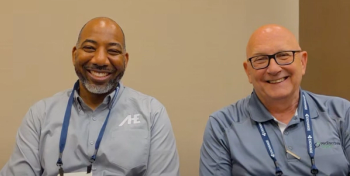
“Cutting” waste shouldn’t mean cutting people. At AHE Exchange26, David Green and Donald Sipp explored how EVS departments can improve performance by strengthening workplace culture, empowering employees, eliminating inefficient processes, and understanding EVS’s critical role in patient throughput. One case study showed bed turnaround times falling from nearly 2 hours to less than an hour, but the larger lesson wasn't simply about speed. High-performing EVS operations begin with a strong foundation.

At AHE Exchange26, experts revealed how surprisingly small gaps in linen education can contribute to waste, higher costs, and potential patient safety risks. The solution begins with something simple: helping everyone who touches health care linen understand why their role matters.

Community health workers in Malawi are helping close pediatric HIV care gaps by tracing children who miss testing, addressing barriers to care, and connecting vulnerable families with treatment and support.
Malawi has made major progress against HIV among adults, but children continue to lag behind. Community health workers are helping close that gap by finding HIV-exposed infants and children who have fallen out of facility-based care.
In this complete interview, ICT speaks with Endale Tilahun, MD, MPH, about a Malawi community program that reduced missed HIV testing and achieved 0.2% positivity among exposed infants through household follow-up, individualized case management, and coordinated health and social support.
Phase 3 ISLEND trials presented at AIDS 2026 found an investigational once-weekly oral HIV regimen maintained viral suppression comparable to daily therapy while improving treatment satisfaction and flexibility.
APIC 2026 presenters Ekaete Usoh, MPH, MSc, CIC, VA-BC, and Risha Patel, MPH, CIC, shared practical strategies for reducing health care-associated infections through health equity, standardized data tracking, and interdisciplinary collaboration while encouraging infection preventionists to take advantage of APIC's educational and networking opportunities.

What happens when your hospital is located on an island, and supplies take weeks to arrive? At APIC2026, Emily Frost, MPH, CIC, LTC-CIP, of Providence Kodiak Island Medical Center, shared how a critical access hospital in Alaska uses innovation, collaboration, and hands-on problem-solving to meet infection prevention and regulatory standards despite significant logistical challenges.
At APIC2026, Monica Pogorzelska-Maziarz, PhD, MPH, CIC, FAPIC, FSHEA, FACE, of Villanova University, received the Elaine Larson Distinguished Scientist Award and reflected on mentorship, collaboration, and research that support infection preventionists across the continuum of care.
Researchers at Advocate Children's Hospital used genomic sequencing, active surveillance, and targeted infection prevention interventions to investigate and control a NICU CLABSI outbreak. Findings presented at #APIC2026 showed the cluster was not caused by a single hypervirulent MSSA strain but highlighted opportunities to strengthen hand hygiene, line maintenance, and ongoing surveillance.
Researchers used whole genome sequencing and traditional epidemiology to trace a cluster of Paraburkholderia fungorum bloodstream infections to contaminated nonsterile ultrasound gel, prompting national safety recommendations.
A quality improvement initiative at Ocean University Medical Center found that reinstating hands-on urinary catheter competency training was associated with a 46% reduction in CAUTIs and improved infection metrics.
At HSPA 2026 in Baltimore, Malinda Elammari shares why education, certification, and data literacy are critical to advancing sterile processing. Learn how stronger advocacy and recognition can elevate SPD’s role in patient safety and health care outcomes.