

Presented at IDWeek 2026, a living review of 64 studies found the strongest evidence for dengue prevention from mosquito modification, while highlighting substantial uncertainty and research gaps in other approaches to Aedes vector control.
Presented at IDWeek 2026, a living review of 64 studies found the strongest evidence for dengue prevention from mosquito modification, while highlighting substantial uncertainty and research gaps in other approaches to Aedes vector control.
A poster presented at IDWeek was a systematic review of 35 studies that found rare transmission of viral hemorrhagic fever to health care personnel in high-income countries and highlighted the need for standardized exposure definitions to guide response.

An unexplained death at a Russian plague research institute has prompted international scrutiny. The incident raises questions about laboratory safety, transparent reporting, and infection prevention preparedness while the cause remains unconfirmed.

Missing instruments and processing delays can strain OR–SPD relationships. At AORN 2026, John Kimsey, vice president of processing optimization and customer success for STERIS, discusses understanding root causes, exploring off-site reprocessing for ambulatory surgical centers, and using hands-on simulation to help surgical teams see sterile processing from a different perspective.

What might infection prevention rounds miss when visible conditions dominate the conversation? Tommy Davis, PhD, CMIP, a member of ICT's executive advisory board, makes the case for structured observations of clinical workflows, shared accountability, and greater attention to environmental services staff’s insights.

A followed procedure can still leave patients at risk if it no longer matches validated requirements. Annetta L. McKnight, MHA, BSN, CRCST, CER, examines how infection prevention and sterile processing can identify process drift, assess disruptions, and strengthen shared oversight of medical device reprocessing.

A shifting mask or fogged eyewear can interrupt focus when precision matters most. Dana Weaver Storm, MHA, BSN, RN, examines the challenges of prolonged surgical mask use and how perioperative leaders can support comfort, visibility, and consistent adherence.

A patient with fever and no recent travel could still have dengue. Florida’s local transmission highlights why clinicians and infection preventionists should look beyond travel history and recognize warning signs.

As US measles cases climb into the thousands, immigration has become part of the political debate over the cause. Outbreak data point to a more complex picture involving international travel, declining vaccination coverage, pockets of susceptible populations, and highly efficient measles transmission. CDC reported 3,294 confirmed cases as of September 10.
"You can't underinvest in public health and then expect it to have a fast and swift response." Brian C. Castrucci, DrPH, discusses Cyclospora, surveillance, workforce capacity, misinformation, and rebuilding public trust. Read the Q&A and watch the full ICT interview.
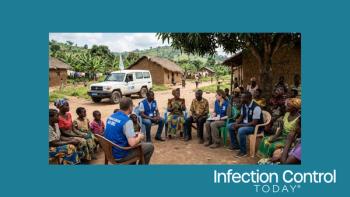
Is the Ebola outbreak in the DRC getting better? The answer depends on which numbers you examine. Several important indicators are moving in the right direction, including slower case growth and a declining Rₜ. But major gaps remain in contact tracing, testing, community deaths, safe burial coverage, and treatment capacity in some of the hardest-hit areas. ICT takes a deeper look at the latest outbreak data and why the numbers suggest cautious optimism, not victory.
The US effectively eliminated measles once. Now cases are climbing again, infants remain vulnerable, people have died, and vaccine misinformation is undermining one of public health's greatest achievements. The price of forgetting what vaccines prevent can be measured in lives.
Infection Control Today has published several articles on CBIC's updated IPU requirements for Industry Partners. We have been given permission to post the joint response from CBIC and APIC on the coverage by ICT and on social media.

CBIC's new IPU requirements are intended to protect continuing education from commercial influence. But they could also change who provides education, who funds it, and who ultimately pays for it. When “free” education gets more expensive to provide, somebody has to pick up the bill.

The Bug of the Month helps educate readers about existing and emerging pathogens that are clinically important in today's health care facilities. This month’s Bug of the Month isn’t quite like anything we’ve featured before. Can you solve the clues before the final reveal?

Federal officials say new gain-of-function restrictions will improve biosecurity, but infectious disease experts warn limiting carefully regulated research could weaken preparedness for future outbreaks and emerging public health threats.
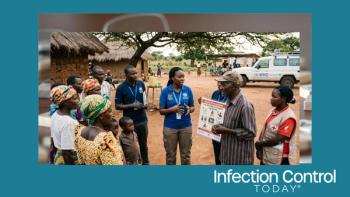
What does a measles exposure investigation have in common with an Ebola outbreak? More than you might think. A new perspective explores how trust, surveillance, and contact tracing shaped Uganda's successful Ebola response.
Sepsis diagnoses are increasing, but are health systems measuring true clinical deterioration or changes in documentation? A new perspective explores how real-time surveillance and coordinated workflows can improve sepsis response and patient outcomes.
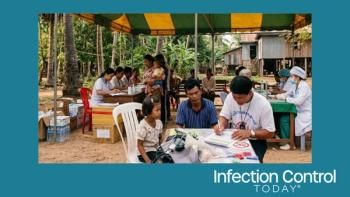
How much infection prevention training should volunteers receive before participating in medical missions? A new perspective in Infection Control Today follows one college student's experience volunteering in rural Cambodia, where he was asked to perform clinical tasks well beyond his training. Years later, he realized just how many infection prevention risks he had unknowingly encountered. The article explores what his experience reveals about volunteer preparation, resource-limited care, and why basic infection prevention education should be considered essential for anyone participating in clinical outreach. Read the full story.

What if sterile isn't enough? Sterile processing has traditionally focused on ensuring instruments are cleaned, assembled, and sterilized correctly. But today's health care environment requires something more. This article explores why coordination between sterile processing, the operating room, supply chain, and clinical teams has become just as important as technical excellence. Learn why experts believe surgical readiness should become the next benchmark for sterile processing performance.

Cyclospora cases continue to rise across the United States, leaving many people with questions about symptoms, testing, and treatment. In this expert commentary, a physician explains: • Why Cyclospora is difficult to diagnose • Why symptoms can last for weeks • Why investigators linked the outbreak to contaminated lettuce • Why ivermectin is not an effective treatment • How you can reduce your risk
The FDA and CDC traced a Cyclospora outbreak to lettuce from Taco Bell in 5 states. Learn the latest findings, expert guidance, and what infection preventionists need to know.
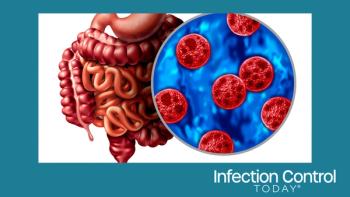
How can you prevent Cyclospora infection? This article outlines practical food safety measures, symptom recognition, diagnostic recommendations, and prevention strategies for patients and health care professionals during the current multistate Cyclospora outbreak.
Cyclospora infections are increasing across the US. This article explains how Cyclospora cayetanensis spreads, common symptoms, current outbreak investigations, and the role IPs and IPC professionals play in surveillance, diagnosis, reporting, and public health collaboration.
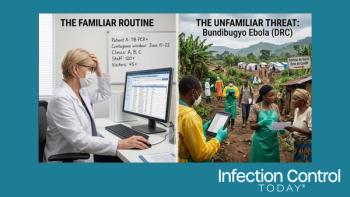
What makes contact tracing effective during an Ebola outbreak? This article explains how IPs and public health teams use the same core principles, such as rapid case identification, exposure assessment, contact monitoring, and community engagement, to reduce disease transmission. Using the ongoing Bundibugyo Ebola outbreak in the DRC as a case study, it highlights why trust, surveillance, and high contact follow-up rates remain essential to successful IPC efforts worldwide.

What are the most common infection control violations in dental practices? This article explains why hand hygiene, improper PPE use, and failure to wear utility gloves continue to challenge dental teams and offers practical, evidence-based strategies to improve OSHA adherence, strengthen infection prevention practices, and enhance patient and staff safety.
APIC 2026 presenters Ekaete Usoh, MPH, MSc, CIC, VA-BC, and Risha Patel, MPH, CIC, shared practical strategies for reducing health care-associated infections through health equity, standardized data tracking, and interdisciplinary collaboration while encouraging infection preventionists to take advantage of APIC's educational and networking opportunities.
Many infection preventionists from nonclinical backgrounds experience imposter syndrome despite demonstrating strong technical expertise and measurable patient safety outcomes. This commentary explores how mentorship, leadership development, and organizational support can strengthen professional identity, improve retention, and help the infection prevention profession embrace diverse educational pathways.

Think you know your infection control acronyms? Test your expertise with our ICT Expert Acronym Challenge! From CLABSI to VRE, this 20-question puzzle covers essential health care-acquired infection prevention terminology that every infection control professional should master. How many can you match correctly? Try the challenge now! Perfect for IPC specialists, infection prevention coordinators, and health care epidemiologists!

Emerging research shows the human microbiome plays a critical role in preventing health care-associated infections, antimicrobial resistance, and dysbiosis, offering new opportunities for infection prevention and patient care.