Environmental Cleaning: The Imperative for Hospital Hygiene
Advertisement
Poll Reveals Cleaning Practices, Resource Needs: After a recent ICT Poll indicated that more than 62 percent of participants thought that environmental cleaning was suboptimal in their healthcare institutions, we decided to conduct a survey of ICT readers that would further explore the state of environmental hygiene practices.
The Environmental Hygiene Imperative: While patient-satisfaction evaluations still indicate a fondness for shiny floors in a hospital, this shiny floor syndrome can no longer supersede the need for thorough, rigorous environmental cleaning. We look at the key issues related to improving environmental hygiene in healthcare institutions.
AHE Updates Practice Guidance for Environmental Cleaning: The Association for the Healthcare Environment (AHE) is updating its "Practice Guidance for Healthcare Environmental Cleaning (PGHEC)," the document that defines the best practices and processes relating to proper environmental hygiene in healthcare facilities.
Don't Let Bed Bugs Disturb Your Healthcare Facility: Bed bugs are on the rise in almost every environment, including healthcare facilities. In order to avoid costly remediation, negative word of mouth, and reputation-damaging media coverage, healthcare facility managers must be properly informed and know how to prepare for and address bed bug issues, should they arise.
AHE and Orkin Release Updated Recommended Practice for Integrated Pest Management: The Association for the Healthcare Environment (AHE) has released an updated Recommended Practice for Integrated Pest Management (IPM), co-authored by experts from Orkin Commercial Services.
A 2026 IDWeek poster details how respiratory cultures and whole genome sequencing clarified a NICU MRSA outbreak, with targeted prevention measures followed by at least 6 months without additional bacteremias or related respiratory clusters.
Researchers recovered a carbapenemase-producing organism from the shaft of a hospital drain auger, prompting calls for standardized reprocessing protocols and further investigation into maintenance equipment as a potential source of environmental dissemination.
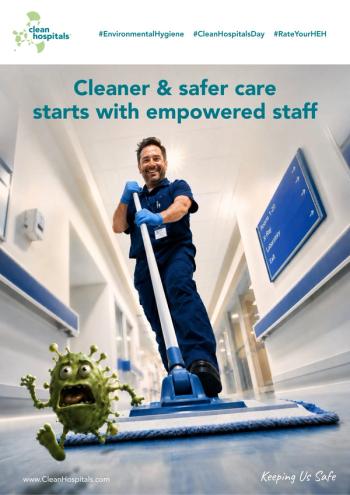
Clean Hospitals President Alexandra Peters, PhD, explains how training, meaningful support, and stronger collaboration with infection prevention teams can empower environmental services staff and strengthen patient safety.
For International Infection Prevention Week, Infection Control Today explores how prevention connects hospital departments with everyday community life and why infection preventionists (IPs), sterile processing department (SPD), professionals, and environmental services (EVS) teams deserve lasting support.
This week in infection prevention: Kenya's imported Ebola case showed how fever screening can miss an ill traveler, Florida's dengue outbreak reached 296 local cases, and new guidance underscores that missed surfaces and shared equipment fuel AMR risk. Our weekly roundup covers these stories and more.
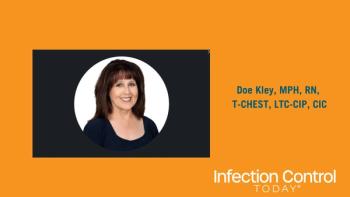
Doe Kley, MPH, RN, T-CHEST, LTC-CIP, CIC, discusses how environmental hygiene supports efforts to contain antimicrobial resistance, examining disinfectant efficacy, dilution failures, shared equipment, and the partnership between infection prevention and environmental services teams.
An infection preventionist examines the DRC’s Ebola response through contact tracing and community engagement, explaining why daily follow-up, timely investigations, and trust reveal challenges that cumulative case counts alone cannot capture.
Four vaccine experts discuss how sustained financing, local research leadership, and community trust can strengthen vaccine development in low- and middle-income countries (LMICs), drawing on practical insights from India and Bangladesh.