
As more and more residents in long-term care facilities get Candida auris, infection preventionists must know how to prevent, prepare for, and control a C auris outbreak. An expert explains how.

Linda Spaulding, RN, CIC, BC, CHEC, CHOP, holds a Certification in Infection Prevention through CIBC and is a Certified Hospital Emergency Management Coordinator. She is the CEO and founder of InCo and Associates International, an internationally known Infection Prevention Consulting Firm. Linda has devoted the last 33 years to Infection Prevention by educating both health care workers and the general public on the importance of infection prevention. Currently, Linda consults with ambulatory surgery centers, long-term and acute care facilities, and other disciplines such as police, fire, rescue, and dental to develop strong, evidence-based infection prevention programs and practices. She is a certified DNV GL Hospital NAIHO Accreditation Surveyor and managed the DNV GL Hospital Certification in Infection Prevention (CIP) Program. She holds a Lead Auditor Healthcare Certificate for ISO 9001-2015. Linda is also a Certified Healthcare Operations Professional (CHOP) through DNV GL.
Linda was a liaison on the Healthcare Infection Control Practices Advisory Committee (HICPAC), which is a federal advisory committee appointed to provide advice and guidance to DHHS and CDC regarding the practice of infection control and strategies for surveillance, prevention, and control of health care-associated infections, and antimicrobial resistance.
Linda has been the principal investigator in over 60 outbreaks. In 2018 Linda assisted the Department of Health in Atlanta, Georgia, with a facility outbreak of New Delhi Metallo-β Lactamase 1 (NDM-1). This outbreak comprised the 6th and 7th cases identified in the United States. In 1997 she identified an outbreak of A-Sydney influenza which had never been seen before in the U.S.
Linda has published numerous articles related to infection prevention and has developed many educational programs on various topics. She also developed a series of training programs for Japan to implement infection control programs in Japanese hospitals. She has written e-learning programs for companies in the U.S., including Fortune 500 companies and Africa, India, and Ireland. Over the last 25 years, Linda has provided consultation for Emergency Management for Acute and Long-Term care facilities working closely with the Emergency Management teams in HI, Florida, and New Mexico. She has also written an award-winning Emergency Management Program for Acute Care Hospitals.
She is on the Editorial Advisory Board for Infection Control Today and was the Infection Control Today’s 2003 Educator of the Year.
As more and more residents in long-term care facilities get Candida auris, infection preventionists must know how to prevent, prepare for, and control a C auris outbreak. An expert explains how.

COVID-19, and the emotional and physical toll it caused, reached all corners of the globe. At a nursing home in Hawaii, the staff describes how the pandemic has affected them.
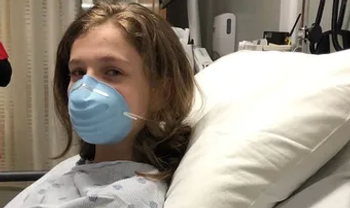
The ability to be an excellent infection preventionist requires lifelong learning and taking the initiative to grow professionally.
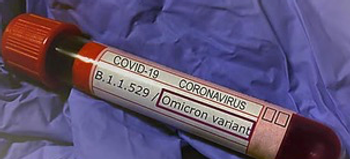
Many health care workers are just tired and fed up. But we have taken oaths to protect and do no harm hence we will continue to try to keep people alive who threaten and laugh at us.
There is no one left to cover sick calls and vacations now. There are no vacations for nurses and doctors. There are no Christmas celebrations or New Year celebrations for these workers.
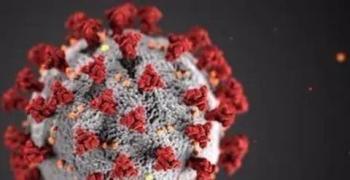
The only thing infection preventionists can do at this point is keep the hospital decision makers up to date daily on what variant is being seen in their area and how fast it is growing.

Vetting new technology and products is a complicated endeavor that takes hours if not weeks before a decision can be made as to whether to bring products into a health care facility. The COVID-19 pandemic did not give health care the luxury of time.

The season of respiratory tract infections is upon us. Influenza, rhinovirus, respiratory syncytial virus, and pertussis—as well as COVID-19—once again are attacking many individuals across the US and worldwide.

Many infection preventionists trust that everyone working in the operating room knows what they are doing and many times shy away from going into the OR. That's a mistake.
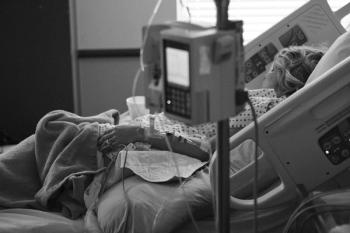
One thing that will haunt me and many health care personnel in both acute care and LTCFs forever is that so many people died without a family member at their bedside.

New infection preventionists can use this checklist to perform IP rounds in the surgical suite, decontamination areas, and sterile processing area.
If you see something, say something. Let coworkers know when they may have breached infection control practices such as forgetting to wash their hands, not wearing PPE properly, or missed opportunities to clean a high-touch surfaces.

Infection control at LTCFs needs to be a balanced approach that addresses the risk of infection, and not just the treatment of infection. Money is saved when this approach is used.

Many healthcare facilities, not only LTCFs, have turned to online training for staff and then designate the employee as competent to do their job. Online training does not prove competency; it provides training.

August 26th 2020

September 22nd 2021

June 2nd 2021

October 29th 2021
April 14th 2021