News

Researchers from Griffith University's Institute for Glycomics, together with the Nationwide Children's Hospital in Ohio, have uncovered groundbreaking evidence to help vaccine developers prevent middle ear infections. A research paper titled 'A biphasic epigenetic switch controls immunoevasion, virulence and niche adaptation in non-typeable Haemophilus influenzae' has been published in the journal Nature Communications.

The first three-dimensional image capturing a critical malaria 'conductor' protein could lead to the development of a new class of antimalarial drugs. Researchers from Melbourne's Walter and Eliza Hall Institute developed WEHI-842, a drug that blocks the malaria parasite protein plasmepsin V, killing the parasite. The discovery is a new step toward developing much needed new drugs for treating and preventing malaria.

This week at the American Crystallographic Association (ACA) 2015 meeting in Philadelphia, researchers from the National Cancer Institute will present three newly determined crystal structures, which collectively provide a starting point for structure-based drug design efforts to combat MERS. The work will be presented by George Lountos, a scientist in the lab of primary investigator David Waugh.

Scientists uncover a port of liver entry for malaria parasites in a report published in the Journal of Experimental Medicine. If these results hold up in humans, drugs that target this entry protein might help prevent the spread of disease.

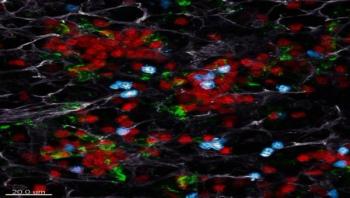
Immune cells that hang around after parasitic skin infection help ward off secondary attack, according to a study in the Journal of Experimental Medicine. These skin squatters may prove to be the key to successful anti-parasite vaccines.

Surgical site infections (SSI) continue to remain a national healthcare issue, raising costs due to prolonged hospitalization, additional diagnostic tests, treatment, and sometimes additional surgery. In fact, research suggests that SSIs can extend hospitals stays by seven to 10 days and cost $27,402 per incident, accounting for up to $10 billion annually in healthcare spending. That’s why Medline is working in partnership with the Joint Commission Center for Transforming Healthcare and Cleveland Clinic to share the latest SSI findings with healthcare leaders and medical device and clinical solution developers. The goal: uncover some of today’s real problems and barriers to spark serious dialogue and solutions.