
News
Advertisement

Advertisement

Advertisement
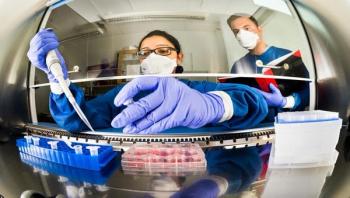
The HIV virus increases the potency of the tuberculosis bacterium (Mtb) by affecting a central function of the immune system. This is the conclusion of a study carried out by researchers at Linköping University in Sweden. The discovery helps to explain why infection with HIV greatly increases the risk that infection by Mtb will progress to active tuberculosis.
Advertisement

Five UCLA researchers were part of an international team that has used X-rays to reveal the structure of a molecule that is toxic to disease-carrying mosquitoes. The findings move the scientific world one step closer to genetically engineering a toxin that would be lethal to species that carry dengue fever and the Zika virus.
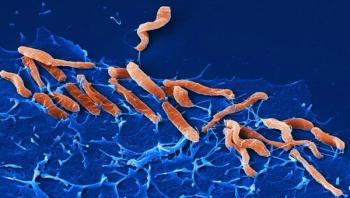
New Receptors Discovered for Helicobacter pylori Open Up New Ways of Preventing, Treating Infections
Helicobacter pylori is a spiral bacterium that can colonize the human stomach - sometimes with fatal consequences. A research group led by professor Markus Gerhard of the Technical University of Munich (TUM) and assistant professor Dr. Bernhard B. Singer of the Institute for Anatomy at the Faculty of Medicine of the University of Duisburg-Essen at Essen University Medical Centre has discovered a completely new approach to preventing or treating infections with this bacterium as well as secondary complications. This research was done in collaboration with the group of professor Han Remaut (VIB - VUBrussels, Belgium).
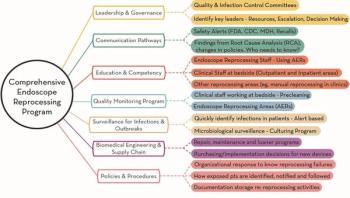
More than 10 million endoscope procedures are performed in the United States each year. There is no doubt that these medical devices have been a major advancement in the treatment of gastrointestinal diseases. It has been well published about the link between inadequately cleaned duodenoscopes and infections. More recently, several studies and media reports have linked outbreaks of multi-drug resistant organ-isms (MDROs) to these devices without any findings of reprocessing breaches.
Q: We have always run the biological test (BI) in the morning immediately after the Bowie-Dick test to make sure we do not forget to perform the test. We run the test pack by itself. We recently had a survey and were cited because we did not run the biological test in the first working load. We have done the BI test this way for years and no one has ever said it was wrong. What is the recommended process?

Certification programs in healthcare were developed to demonstrate competency within a specific field. In regulated professions such as medicine and nursing, certification demonstrates proficiency above and beyond the knowledge and skills required for licensing. Over previous decades, this initial concept has expanded. Certifications are now widely used to showcase specialized, and sometimes advanced, proficiency in a wide variety of fields. This change has been driven by the ever evolving nature of healthcare, the demands of accrediting and regulatory bodies for valid processes to verify practitioner competency, and the lucrative source of revenue these programs provide to their providers.

As personal protective equipment (PPE) continues to play an integral role in prevention of transmission of infection in the healthcare setting, we discover by looking back at the history of protection of healthcare workers (HCWs) and prevention of spread of infection, that the concept is several centuries old.

A mathematical biologist at the University of Vermont and his colleagues have discovered that the pace and tempo of an epidemic can be impacted by how a hospital manages its personnel based on outbreak response and its institutional sick leave policies. Samuel Scarpino, PhD, who led this research, asks people to imagine a scenario in which a healthcare worker contracts influenza; he or she goes home to recover and a healthy replacement worker comes to the hospital. This sort of substitution, called a "relational exchange," can actually accelerate the spread of some epidemics. Scarpino explains that their model is a departure from the traditional "mass-action" disease models that are used by the Centers for Disease Control and Prevention (CDC) and other public health entities that do not account for individuals' social contacts that can influence pathogen transmission.
For more than 25 years, the third week in October has been designated as National Infection Control Week -- a time dedicated to sharing and exploring new research, opportunities and design to support infection control across hospitals and long-term care facilities. In honor of this week, and in response to the growing need for streamlined, new-age hygiene practices and equipment, SCA conducted a global Hygiene Matters Survey to garner insights around the current and future view of healthcare hygiene processes.
Advertisement
Advertisement
Trending on Infection Control Today
1
The World's Game, the World's Pathogens: Infection Prevention at the FIFA World Cup 2026
2
Pertussis Is Not Just a Childhood Disease: Why Lifelong Vaccination Matters More Than Ever
3
Diagnostics Take Center Stage in Ebola Response as Rare Bundibugyo Outbreak Expands
4