




IPC Career
Latest News
Advertisement
Latest Videos



Shorts
0:41
How Electronic Systems Revolutionize Small Hospital Infection Control
11 days ago
0:32
Finding Purpose as a Health Care Professional
3 months ago
0:41
Why One-Size-Fits-All Doesn't Work in Health Care
3 months ago
0:39
Why Every Operating Room Needs a Dedicated Infection Preventionist
3 months ago
0:44
Why You Should Attend Industry Conferences
4 months ago
0:39
Top 5 Backgrounds for Infection Prevention
5 months ago
0:36
The Wide Scope of Infection Control Roles
5 months ago
0:34
Stop Guessing: Are You Paying Enough for Talent?
5 months ago
0:39
Transitioning Out of Public Health Layoffs
5 months ago
0:48
How Hospitals Calculate Your IPC Salary
5 months ago
CME Content

Advertisement
More News

During National EVS Week, appreciation matters, but partnership matters more. Environmental services professionals bring infection prevention expertise and a unique understanding of the health care environment that can help identify barriers, improve cleaning and disinfection practices, and ultimately protect patients.

CBIC and APIC say updated IPU requirements are intended to protect infection prevention education from commercial influence. But differing guidance, questions about industry support, and concerns about educational access leave IPs asking for a clearer, more consistent road map.

How do you celebrate an infection that never happened? That's one of the unusual challenges infection preventionists share with teachers. Both can spend their careers changing outcomes they may never see. Both educate people who don't always want to listen. Both are second-guessed. Both face burnout. And both must somehow keep remembering why they started.
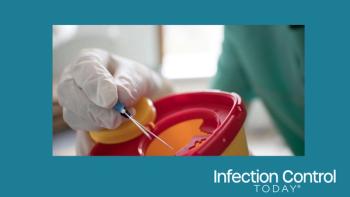
A needlestick injury happens in seconds. Its cause may have started hours earlier. Amy Piser argues that getting closer to “sharps injury zero” requires health care organizations to stop focusing solely on the moment of injury and start examining the systems surrounding it.
Infection Control Today has published several articles on CBIC's updated IPU requirements for Industry Partners. We have been given permission to post the joint response from CBIC and APIC on the coverage by ICT and on social media.
CBIC's new IPU requirements are intended to protect continuing education from commercial influence. But they could also change who provides education, who funds it, and who ultimately pays for it. When “free” education gets more expensive to provide, somebody has to pick up the bill.
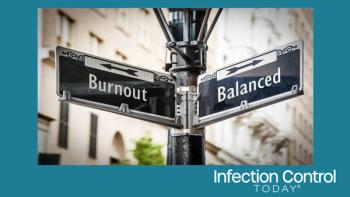
After experiencing severe professional burnout, an infection preventionist found renewed purpose by mentoring others, seeking mentorship herself, and rebuilding connection, confidence, and commitment to her career.
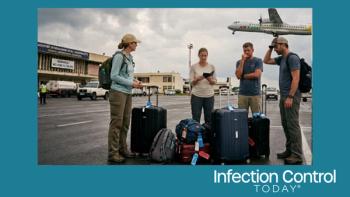
New US Ebola travel restrictions require many travelers leaving the DRC to spend 21 days outside the country before returning home, creating logistical, financial, and operational challenges for health care responders.
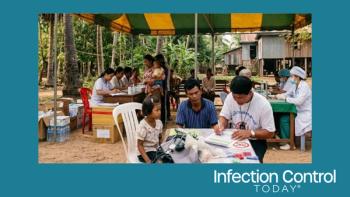
How much infection prevention training should volunteers receive before participating in medical missions? A new perspective in Infection Control Today follows one college student's experience volunteering in rural Cambodia, where he was asked to perform clinical tasks well beyond his training. Years later, he realized just how many infection prevention risks he had unknowingly encountered. The article explores what his experience reveals about volunteer preparation, resource-limited care, and why basic infection prevention education should be considered essential for anyone participating in clinical outreach. Read the full story.

International infection prevention leaders discuss how Ireland and Saudi Arabia educate, recruit, and prepare IPC professionals while advocating for broader, multidisciplinary career pathways worldwide.
What if sterile isn't enough? Sterile processing has traditionally focused on ensuring instruments are cleaned, assembled, and sterilized correctly. But today's health care environment requires something more. This article explores why coordination between sterile processing, the operating room, supply chain, and clinical teams has become just as important as technical excellence. Learn why experts believe surgical readiness should become the next benchmark for sterile processing performance.

Could a badge, cell phone, or home-laundered scrub top contribute to infection transmission? AORN's updated 2025 Guideline for Surgical Attire reinforces that surgical attire is much more than a uniform. From laundering practices and beard covers to cleaning personal devices, the recommendations position attire as a key component of infection prevention and patient safety across the perioperative environment.
Why do outbreaks involving Cyclospora, Ebola, Legionnaires' disease, contaminated medical devices, and recalled consumer products matter to infection preventionists? This editorial examines the common lessons from today's emerging infectious threats and explains how surveillance, environmental safety, health care worker protection, and preparedness strengthen infection prevention and control programs across all health care settings.
Many infection preventionists from nonclinical backgrounds experience imposter syndrome despite demonstrating strong technical expertise and measurable patient safety outcomes. This commentary explores how mentorship, leadership development, and organizational support can strengthen professional identity, improve retention, and help the infection prevention profession embrace diverse educational pathways.

Routine multidisciplinary rounding may be one of the most effective tools for preventing adherence drift in sterile processing. By engaging infection prevention, environmental services, facilities, safety, and SPD leadership, health care organizations can identify risks early, improve accountability, and strengthen patient safety. Read how a structured EOC rounding program can help keep departments survey-ready and adherent.

What should infection preventionists do when a patient presents with possible anthrax exposure after a suspicious incident? This article explores a realistic bioterrorism response scenario, highlighting the critical role of infection preventionists, public health partnerships, and laboratory coordination. It also introduces Bacillus cereus biovar anthracis (Bcbva), an emerging pathogen that can mimic anthrax while appearing to be a common laboratory contaminant. Learn how to recognize potential biosecurity threats, navigate specimen management, and build the public health relationships needed before an emergency occurs.
Live from APIC 2026 in Nashville, the Contagious Conversations team discussed workforce diversity, AI in infection prevention, professional networking, and why APIC remains essential for infection preventionists at every career stage.
Mental wellness remains a critical issue for health care workers. After using Brain-Body Therapy for nearly 2 weeks, I found its combination of guided movement, CBT-informed content, and stress-reduction techniques particularly relevant for infection prevention professionals navigating high-pressure environments. Read my review of this innovative app and why it may help support resilience, stress management, and overall well-being.
Sterile processing departments (SPD) are increasingly being pushed beyond reactive maintenance models as equipment failures, workflow disruptions, and tray defects continue to impact surgical readiness and patient safety. This article explores why SPD may be uniquely positioned for an AI-driven predictive maintenance revolution, examining how systems thinking, IoT integration, human factors research, and real-time equipment monitoring could help reduce disruptions before failures occur. The piece also highlights the growing shift toward treating maintenance as a strategic reliability function tied directly to infection prevention, OR efficiency, and operational resilience across health care systems.
This 6-part series will chronicle the essential strategies and professional insights needed to empower infection preventionists (IPs) in their job search. In partnership with Jonnie Jacobs, an executive recruiter at Clutch Recruitment, this series will offer a comprehensive guide to navigating the current health care job market. This third article in the series focuses on connecting with specialized recruiters and navigating the hiring process.
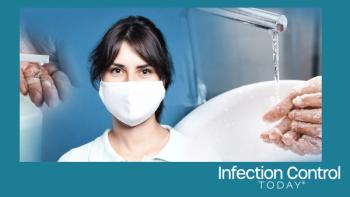
A new podcast, The Safety Spectrum, explores workforce challenges in infection prevention, particularly the barriers faced by qualified professionals without nursing credentials, despite CMS and other regulatory bodies recognizing infection prevention as a multidisciplinary field. The article highlights ongoing staffing shortages, evolving workforce demographics, and the need for more inclusive hiring practices to strengthen patient safety and rebuild the infection prevention profession.
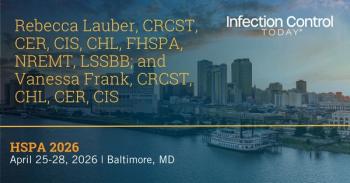
Sterile processing leaders Rebecca Lauber, FHSPA, and Vanessa Frank share insights from their HSPA 2026 presentation on career growth, professional identity, and active learning. Their message is clear: Empowering technicians, strengthening education, and building confidence are key to advancing patient safety and the future of sterile processing.
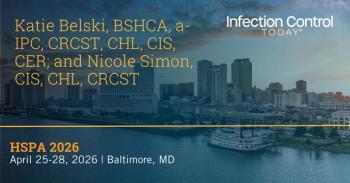
At HSPA 2026 in Baltimore, sterile processing leaders Katie Belski, BSHCA, a-IPC, CRCST, CHL, CIS, CER; and Nicole Simon, CIS, CHL, CRCST, emphasized collaboration, mentorship, and stronger relationships between SPD and other departments to improve communication, resources, and patient safety across health care systems.
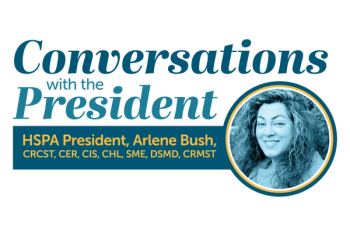
As Arlene Bush, CRCST, CER, CIS, CHL, SME, DSMD, CRMST, concludes her HSPA presidency, she reflects on advocacy, certification efforts, and collaboration, emphasizing mentorship and continued progress in sterile processing ahead of the 2026 conference in Baltimore.
This 6-part series chronicles the journey of 2 infection prevention leaders, Brenna Doran and Jessica Swain, who partnered to research and shed light on the critical issue of IP staffing in the current health care landscape. The fourth article in the series will focus on the impact of geographic variations and staffing models on the support for infection prevention programs.
Advertisement
Advertisement
Trending on Infection Control Today
1
Nursing Home Roommates and MDRO Carriage: MRSA, ESBL, and VRE Study Findings
2
Dengue Prevention: Systematic Review Evaluates Wolbachia and Other Mosquito Control Methods
3
NICU MRSA Outbreak: Whole Genome Sequencing Guides Infection Prevention Investigation
4
Clean Hospitals Day 2026: How to Empower Environmental Services Staff
5