News

Infection prevention continues to be an issue that is top of mind for GI professionals. When thinking of gastroenterology infection prevention, it traditionally has been in terms of reprocessing endoscopes and post-procedure patient phone call to assess for infections. Infection prevention for GI encompasses so much more than those two tasks - it includes correct use of personal protective equipment (PPE), personal hygiene, engineering controls of the physical environment, cleaning and disinfection of surfaces, training, continuing education, written operating procedures, and of course documentation. Earlier this year, SGNA released practice documents focused on infection prevention. The new document, Standard of Infection Prevention in the Gastroenterology Setting, brings to light an important point that is often overlooked when we discuss infection prevention: Prevention for the whole team.
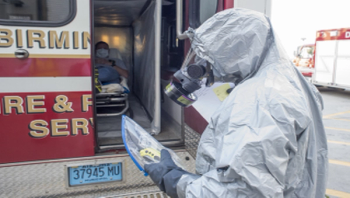

Serious health and safety concerns for healthcare, public safety and support service personnel arose after the 2014 Ebola virus disease that resulted in 11,000 deaths across multiple countries, with four confirmed cases in the United States. In the event of an Ebola or other infectious disease outbreak, the responsibility for patient transfer, assessment and testing falls on the local healthcare and public safety systems. Investigators at the University of Alabama at Birmingham recently received a grant to provide safety and health training to healthcare and public safety workers through the UAB Deep South Biosafety and Infectious Disease Response Training Consortium. Co-program directors, Lisa McCormick, DrPH, and Marjorie Lee White, MD, will develop and implement a training program to equip workers with the skills and knowledge needed to protect themselves and their communities from potential exposure to contaminated materials or infected individuals they may encounter.

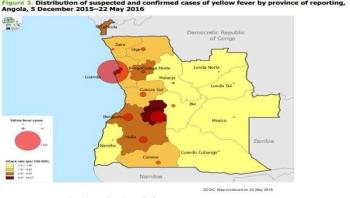
The European Centre for Disease Prevention and Control (ECDC) has updated its rapid risk assessment on the outbreak of yellow fever with the latest developments, more comprehensive information on the current situation in Angola, Democratic Republic of Congo (DRC) and Uganda and an extended threat assessment for the EU. Some of the data used in the assessment were collected during a mission to Angola in May 2016.