Finding infections earlier is only part of the work. At IDWeek 2026, David Weber, MD, MPH, explored how broader surveillance and emerging technologies could help infection preventionists spend more time supporting safer care.
At IDWeek 2026, Rachel Sidebottom discusses research exploring phage-antibiotic combinations, the potential for predictive modeling, and an investigation identifying an ST5 strain of nontoxigenic Corynebacterium diphtheriae circulating in Albuquerque.
Part 1 of 4: How emerging sterile processing leaders are redefining leadership through trust, accountability, psychological safety, and professional development.
This week in infection prevention: Kenya’s Bundibugyo virus response shows why execution, not just planning, determines outcomes, and France reported the first known human Shamonda virus infection. Our roundup also covers brucellosis, blood donor screening, and long-acting HIV antibody findings from IDWeek 2026.
At IDWeek 2026, Samuel Ntow, MBChB, MPH, discussed research findings of reactive infection screening markers in 18.3% of replacement donor records from rural Ghana, highlighting opportunities for further evaluation and linkage to care.
John Rex, MD, CMO of F2G, discusses investigational olorofim’s phase 3 findings, why new antifungals are difficult to develop, and how an oral option could help patients with limited treatment choices.
Kimberley Brown, PharmD, Head of U.S. Medical Affairs at ViiV Healthcare discusses the evolution of HIV care and how innovative long-acting injectables are expanding options across HIV treatment and prevention.
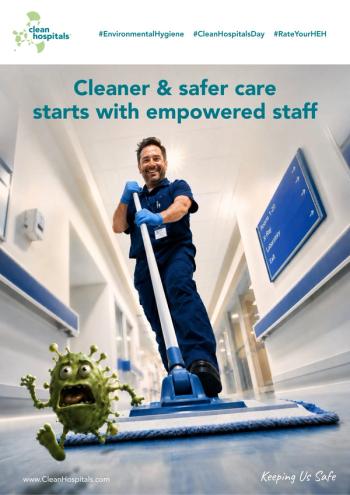
Clean Hospitals President Alexandra Peters, PhD, explains how training, meaningful support, and stronger collaboration with infection prevention teams can empower environmental services staff and strengthen patient safety.