Practice makes perfect, especially when time is of the essence. Two presenters at the AORN discussed the importance of practicing emergency preparedness drills in ambulatory health care settings.
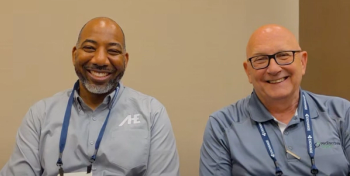
Lori Tamburo Martini, CASC, administrator and Jennifer Erin, MSN, RN, CNOR, nurse educator, both at SOG Surgery Center, LLC, with Infection Control Today® (ICT®) about their presentation at the Association of PeriOperative Nurses (AORN) 2023 Conference in San Antonio, Texas, held from April 1-4, 2023.
ICT: Please tell ICT’s audience what the topic of your presentation is.
Lori Tamburo Martini, CASC: Our topic is “Drill your skills: The importance of emergency preparedness in ambulatory health care.” In our session, we hope that people are going to know how to create a successful drill program and engage their staff, the training and education of the staff, and the regulatory environments surrounding emergency preparedness.
ICT: What do you hope the attendees take away from your presentation?
LTM: We hope the main thing they take away is the staff engagement piece that is so challenging to ensure you have a successful program and understand how to run that drill program as a whole.
ICT: What would you hope infection preventionists take away from your presentation?
Jennifer Erwin, MSN, RN, CNOR: We're always trying to prevent infection in the operating room, and in case a code blue arises, then we have an open wound on the field, we want to make sure that we keep sterility to decrease infection, get the wound closed as quickly as possible and minimize contamination while trying to think resuscitative efforts.
ICT: What is the biggest challenge facing perioperative nurses right now, and how can it be overcome?
Staffing challenges are present for everyone, especially since COVID-19. It put a wrench into things for the nursing world. And having trained our skilled [operating room] nurses are even more at a minimum right now. But in the nursing world in general, fewer people are entering the field and fewer available nurses.
ICT: What are you the most excited about during the AORN conference?
JE: Learning many new things, seeing what is out there. For me, getting to go to the expo [and] seeing what all the products are out there for us to [use].
LTM: I'm excited to see the posters. I submitted one and had to withdraw it [because of] time constraints. I hope to participate next year, so I'm excited to see how those work and get some education from the presenters.
ICT: Do you have anything else you would like to add?
JE: I'm thankful to be here at AORN.
LTM: This is my first time, so I've been enjoying networking and experiencing the conference. It’s a great conference.
This interview has been edited for clarity.