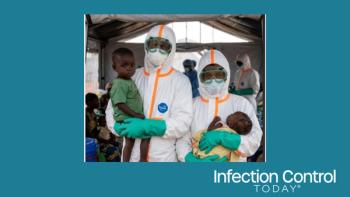
Accurate knowledge regarding Ebola is critical and pertinent for practicing physicians and clinicians given the current risk of hazardous global outbreak and epidemic. The journal Disaster Medicine and Public Health Preparedness has launched a special issue, Ebola Virus and Public Health, to surround the public, medical professionals and media with necessary knowledge in this critical societal moment.
On Oct. 17, 2014, the journal published A Primer on Ebola for Clinicians. The primer was prepared by Dr. Eric Toner, internist and emergency physician, as well as Amesh A. Adalja and Thomas V. Inglesby (all of the University of Pittsburgh Medical Center). The primer discusses the history, epidemiology, microbiology, clinical manifestations, biosafety, prevention, treatment and experimental vaccines to offer an informative and inclusive background on the Ebola virus for clinicians.
The scale of the uncontrolled outbreak in Western Africa makes further exportation to other parts of the world an unfortunate possibility (as citizens across the globe have already witnessed, with cases appearing in Europe and the United States). Those who serve at the frontlines of emergency medicine, critical care, infectious diseases and infection control are in high need and demand, and in some cases, high risk. The primer provided by the UPMC professionals offers clear and concise information on the fundamentals of the virus, including its diagnosis, treatment and control. The public and media are especially apt to benefit from the clear and accurate information provided by the primer, as the popularity of social media makes misinformation about Ebola easily (and rapidly) sharable, believed and misattributed.
Source: Society for Disaster Medicine and Public Health