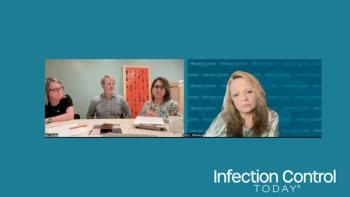
Learning medical techniques can come in many forms, watching, hands-on, reading, and now…virtual reality (VR) training. Other industries are also using VR training because using VR, the training is in a safe environment for both the individual in the training, but also for the patients in their care.“You can step into virtual hospital and take care of patients. And it feels like real scenario, real realistic world,” Jenny Logenius, global brand manager for Essity Hygiene and Health, told Infection Control Today® (ICT®) in an exclusive interview.
At the Clean Hospitals Day Conference held on October 20, 2022, in Geneva, Switzerland, Logenius will be involved in several symposia on hand hygiene, virtual reality (VR), and how the Torq VR Clean Hands Training was developed.
Logenius told ICT® in the interview that she trusts that [the audience] can see the importance of having this strategy implemented completely, that they see that there are new ways to do training that didn't exist before. So you don't have to do training as you don't the past 30 years, there are new ways that can change and are much more engaging for the people using it. And achieving behavior change is very important. It's an eye opener what they can do because the trainings are developed completely different, where you are so active.
“We have seen, the level of engagement has a huge role to play. There is something called the cone of learning. It means that if you're more passive, if you read something, you remember, maybe 10%. If you see and hear something, you remember maybe 50%. But if you simulate something, where if you do it in real life, you remember as much as 90%. This is what we can achieve with these digital tools because you are so active and engaged and using the mind in a different way.”
Logenius reiterated this new type of training is not a replacement but a complement to the current trainings used. “In addition, I hope that the takeaway is also these are more efficient tools to use because you have to train both night staff and day staff, and it's tricky for them to make time to do training. These digital tools can help because you can use them anywhere on any device whenever you want, [even] on the go.
These IR trainings are free of charge and available for both medical professionals and laypersons alike. To reach the trainings directly you can go to this website. To find the trainings in Oculus, please search in AppLab for Tork VR Clean Hands Training.
These quotes have been edited for length and clarity. See video for entire interview.