|Articles|April 12, 2013

Teleflex Receives FDA 510(k) Clearance for ISO-Gard Mask with ClearAir Technology

Teleflex Incorporated announces that its anesthesia and respiratory business unit received 510(k) clearance for the ISO-Gard® Mask with ClearAir Technology, the companys novel product that helps to reduce clinician exposure to hazardous waste anesthetic gases.

The ISO-Gard Mask is designed to reduce waste anesthetic gas (WAG) within a nurses breathing zone to minimize the cumulative effect of low-level exposure to these hazardous gases in the post-anesthesia care unit (PACU). The multi-purpose mask scavenges WAG while simultaneously delivering oxygen to the patient. The patent-pending ClearAir technology provides unidirectional flow of oxygen through the mask to assure maximum FiO2.

Teleflex estimates that anesthetic gases are used in 20 million surgeries in the US annually and up to 100 million globally. When patients are recovering in the PACU, they exhale these gases which are then released into the nurses breathing zone and work environment. The Occupational Safety and Health Administration (OSHA) warns of several potential health effects from WAG exposure, including nausea, dizziness, headaches, and fatigue.

The PACU is currently a non-scavenged environment so other less-effective methods of waste gas removal are often relied upon, making it more difficult to control clinician exposure.

 I was surprised at the level of nitrous oxide and sevoflurane in the PACU from patient off-gassing from a recent study we conducted in a hospital in the Midwest, says James D. McGlothlin, MPH, PhD, CPE. Based on what I personally experienced during this study, I believe that waste anesthetic gases should be controlled in the PACU by a combination of engineering controls (i.e., scavenging systems), including regular maintenance of such equipment, and best practices by those who care for patients in the PACU.

The ISO-Gard Mask with ClearAir Technology is a featured addition to the Teleflex line of Hudson RCI® respiratory products.

Source: Teleflex Incorporated


Related to this article

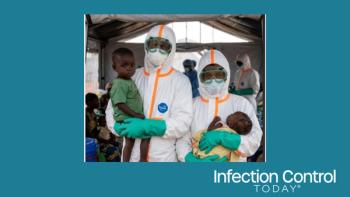
Infection preventionists in full PPE with children in DRC.  (Image credit: author with AI)
Nearly 4 months into the DRC's Bundibugyo virus disease outbreak, some indicators suggest transmission may be slowing. But shifting hotspots, treatment-center capacity problems, community deaths, and incomplete surveillance data show why national case totals alone cannot determine whether containment has been achieved.
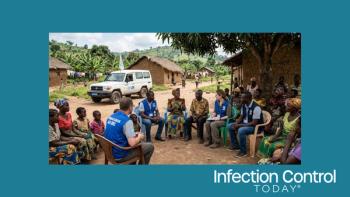
Health care workers from the US speaking with other health care workers in DRC.  (Image credit: author with AI)
Is the Ebola outbreak in the DRC getting better? The answer depends on which numbers you examine. Several important indicators are moving in the right direction, including slower case growth and a declining Rₜ. But major gaps remain in contact tracing, testing, community deaths, safe burial coverage, and treatment capacity in some of the hardest-hit areas. ICT takes a deeper look at the latest outbreak data and why the numbers suggest cautious optimism, not victory.
Dyan Troxell, MSN, RN, director of clinical education at HandCraft Linen Services; J.J. Odom, MBA, CHESP, CMIP, T-CHEST, university director of buildings and grounds for UConn Health and chair-elect of the AHE Board; and Jenna Rivers, MPH, CPH, CIC, manager of infection prevention and control at Moffitt Cancer Center in Tampa, Florida.
At AHE Exchange 2026, ICT spoke with experts representing commercial laundry services, EVS, and infection prevention about the systems behind a successful reusable linen program. They discuss linen quality, reject rates, unnecessary waste, frontline education, data, PAR levels, infection prevention oversight, and why strong relationships between health care facilities and their laundry providers matter.
A group of students raising their hands in class during a lecture  (Adobe Stock 292282454 by Mediteraneo
How do you celebrate an infection that never happened? That's one of the unusual challenges infection preventionists share with teachers. Both can spend their careers changing outcomes they may never see. Both educate people who don't always want to listen. Both are second-guessed. Both face burnout. And both must somehow keep remembering why they started.