|Articles|January 28, 2005

VIRA 38 to Be Provided to Southeast Asian Nations to Combat Bird Flu (H5N1)

HONG KONG -- PRB Pharmaceuticals and Lees Pharmaceuticals announced that they are working with government and hospital officials in Southeast Asia to provide VIRA 38 for the treatment and prevention of bird flu (H5N1).  VIRA 38 is on the market in Hong Kong and the will be available in China and Taiwan soon.

VIRA 38, a composition of plant extracts, first gained notoriety during the Taiwan SARS outbreak of 2003 when it was used by the Taiwan presidential staff and doctors at Sungshan Hospital (SARS management facility) and again in the spring of 2004 when it was discovered that compounds in VIRA 38 block bird flu virus (H5N1) infections.

The World Health Organization has urged our industry to step up efforts to address the bird flu situation.  To meet this challenge, we are donating VIRA 38 to medical staff and select high risk groups in bird flu-afflicted areas, said Dr. Charles Hensley, chairman and CEO of PRB Pharmaceuticals. 

VIRA 38 will be used initially to protect high-risk groups such as hospital medical staff and rural farming households, said Dr. Benjamin Li, CEO of Lees Pharmaceuticals.  It is of critical importance to protect the population at large.  VIRA 38 is currently being used as a preventive measure by workers in live poultry markets in Hong Kong, the source of the original outbreak of bird flu in humans.

Our concern with the situation in Southeast Asia and Vietnam in particular is that as more human bird flu cases occur, the chances become greater the virus will ignite a global pandemic that could kill up to 100 million people worldwide, added Hensley.  This is a deadly game of Russian Roulette.

About VIRA 38

VIRA 38, PRB Pharmaceuticals over-the-counter broad spectrum anti-viral medication is known for its effectiveness in treating and preventing influenza.  VIRA 38 has recently been shown to contain compounds that inhibit the bird flu (H5N1) virus.  Researchers at the Chinese University of Hong Kong have previously discovered these same compounds to be effective against a variety of pathogens including SARS CoV, the virus responsible for causing severe acute respiratory syndrome.

Source: PRB Pharmaceuticals


Related to this article

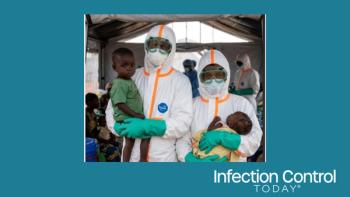
Infection preventionists in full PPE with children in DRC.  (Image credit: author with AI)
Nearly 4 months into the DRC's Bundibugyo virus disease outbreak, some indicators suggest transmission may be slowing. But shifting hotspots, treatment-center capacity problems, community deaths, and incomplete surveillance data show why national case totals alone cannot determine whether containment has been achieved.
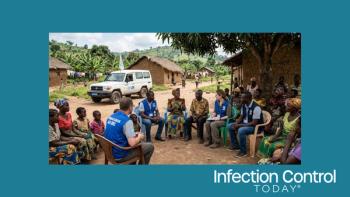
Health care workers from the US speaking with other health care workers in DRC.  (Image credit: author with AI)
Is the Ebola outbreak in the DRC getting better? The answer depends on which numbers you examine. Several important indicators are moving in the right direction, including slower case growth and a declining Rₜ. But major gaps remain in contact tracing, testing, community deaths, safe burial coverage, and treatment capacity in some of the hardest-hit areas. ICT takes a deeper look at the latest outbreak data and why the numbers suggest cautious optimism, not victory.
Dyan Troxell, MSN, RN, director of clinical education at HandCraft Linen Services; J.J. Odom, MBA, CHESP, CMIP, T-CHEST, university director of buildings and grounds for UConn Health and chair-elect of the AHE Board; and Jenna Rivers, MPH, CPH, CIC, manager of infection prevention and control at Moffitt Cancer Center in Tampa, Florida.
At AHE Exchange 2026, ICT spoke with experts representing commercial laundry services, EVS, and infection prevention about the systems behind a successful reusable linen program. They discuss linen quality, reject rates, unnecessary waste, frontline education, data, PAR levels, infection prevention oversight, and why strong relationships between health care facilities and their laundry providers matter.
A group of students raising their hands in class during a lecture  (Adobe Stock 292282454 by Mediteraneo
How do you celebrate an infection that never happened? That's one of the unusual challenges infection preventionists share with teachers. Both can spend their careers changing outcomes they may never see. Both educate people who don't always want to listen. Both are second-guessed. Both face burnout. And both must somehow keep remembering why they started.