|Articles|March 25, 2022

Weekly Rounds: C diff Rates Reduced Nearly 75% With Hydrogen Peroxide Disinfection System

Take 5 minutes to catch up on Infection Control Today’s highlights for the week ending March 25.

Here are 6 highlights from ICT®’s wide-ranging coverage of the infection prevention and control world. Everything from interviews with known opinion leaders, to the news that infection preventionists and other health care professionals can use on their jobs.

1. C Diff Rates Reduced Nearly 75% With Hydrogen Peroxide Disinfection System

The system gives infection preventionists another tool to combat the pathogen despite implementation challenges.

2. Infection Prevention and Control Are Crucial in Dialysis Settings

The hemodialysis setting presents a challenge for environmental cleaning and disinfection because of the demand for rapid turnover of stations.

3. Moderna's Vaccine for Children 6 Months to 6 Years Meets Primary Endpoint in Phase 2/3

The dose is half the antigen amount for adults but with similar amount of titers.

4. Water: Life’s Vital Necessity Can Also Be a Pool for Pathogens

How do you protect against waterborne infections when water itself is nearly ubiquitous?

5. Bug of the Month: I'm Mostly Harmless, Until I Contaminate Your Food

Bug of the Month helps educate readers about existing and emerging pathogens of clinical importance in healthcare facilities today.

6. Calculating Return-to-Work COVID-19 Policies Is a Balancing Act for Hospitals

Investigators concluded that HCPs can safely return to work after 7 days of quarantine if they test negative for COVID-19 on days 5 to 7.


Related to this article

A group of students raising their hands in class during a lecture  (Adobe Stock 292282454 by Mediteraneo
How do you celebrate an infection that never happened? That's one of the unusual challenges infection preventionists share with teachers. Both can spend their careers changing outcomes they may never see. Both educate people who don't always want to listen. Both are second-guessed. Both face burnout. And both must somehow keep remembering why they started.
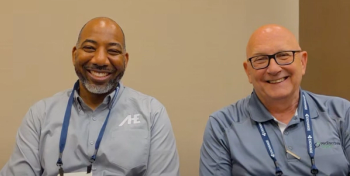
Donald Sipp, Jr, MBA, RESE, CHESP, CHTI-2, CMIP, PMP, and David Green  (Image credit: author)
“Cutting” waste shouldn’t mean cutting people. At AHE Exchange26, David Green and Donald Sipp explored how EVS departments can improve performance by strengthening workplace culture, empowering employees, eliminating inefficient processes, and understanding EVS’s critical role in patient throughput. One case study showed bed turnaround times falling from nearly 2 hours to less than an hour, but the larger lesson wasn't simply about speed. High-performing EVS operations begin with a strong foundation.
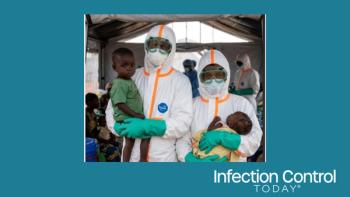
Infection preventionists in full PPE with children in DRC.  (Image credit: author with AI)
Nearly 4 months into the DRC's Bundibugyo virus disease outbreak, some indicators suggest transmission may be slowing. But shifting hotspots, treatment-center capacity problems, community deaths, and incomplete surveillance data show why national case totals alone cannot determine whether containment has been achieved.
Dyan Troxell, MSN, RN, director of clinical education at HandCraft Linen Services; J.J. Odom, MBA, CHESP, CMIP, T-CHEST, university director of buildings and grounds for UConn Health and chair-elect of the AHE Board; and Jenna Rivers, MPH, CPH, CIC, manager of infection prevention and control at Moffitt Cancer Center in Tampa, Florida.
At AHE Exchange 2026, ICT spoke with experts representing commercial laundry services, EVS, and infection prevention about the systems behind a successful reusable linen program. They discuss linen quality, reject rates, unnecessary waste, frontline education, data, PAR levels, infection prevention oversight, and why strong relationships between health care facilities and their laundry providers matter.