Wendy Simpson, MSN, RN, CCRN
Articles by Wendy Simpson, MSN, RN, CCRN
Stethoscope Hygiene in Infection Prevention: Final Expert Insights on Barriers, Hand Hygiene, and Protecting Vulnerable Patients
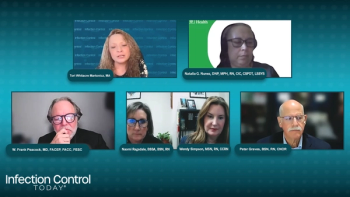
ByNatalia G. Nunez, DNP, MPH, RN, CIC, CSPDT, LSSYB,Dr. W. Frank Peacock, MD, FACEP, FACC, FESC,Naomi Ragsdale, BSBA, BSN, RN,Wendy Simpson, MSN, RN, CCRN,Peter Graves, BSN, CNOR, RN,Tori Whitacre Martonicz, MA Infection prevention leaders share final takeaways on stethoscope hygiene and health care-associated infection prevention. From touch-free diaphragm barriers to accountability and culture change, the message is clear: We cannot “wash our way out” of contamination. Protecting immunocompromised and high-risk patients requires consistent, practical, barrier-based solutions at the bedside.
Stethoscope Hygiene and HAI Prevention: What’s Overhyped, Underrated, and Non-Negotiable in Infection Control?
ByNatalia G. Nunez, DNP, MPH, RN, CIC, CSPDT, LSSYB,Dr. W. Frank Peacock, MD, FACEP, FACC, FESC,Naomi Ragsdale, BSBA, BSN, RN,Wendy Simpson, MSN, RN, CCRN,Peter Graves, BSN, CNOR, RN,Tori Whitacre Martonicz, MA Infection prevention experts weigh in: What’s overhyped in stethoscope hygiene? Disposable scopes. What’s underrated? Real-time auditing, education, and barriers that prevent contamination. What’s non-negotiable? Accountability and a commitment to “do no harm.” Preventing health care-associated infections (HAIs) requires policy and demands practical, measurable action at the bedside.
Do Health Care Leaders Undermine Infection Prevention? Avoiding Checkbox Adherence in IPC
ByNatalia G. Nunez, DNP, MPH, RN, CIC, CSPDT, LSSYB,Dr. W. Frank Peacock, MD, FACEP, FACC, FESC,Naomi Ragsdale, BSBA, BSN, RN,Wendy Simpson, MSN, RN, CCRN,Peter Graves, BSN, CNOR, RN,Tori Whitacre Martonicz, MA Can leadership unintentionally sabotage infection prevention efforts? Experts say yes. Top-down mandates, lack of recognition, and checkbox adherence weaken real change. Sustainable infection prevention and control (IPC) requires collaboration, visibility, frontline input, and measurable monitoring. When leaders partner instead of dictate, adherence improves and IPC becomes culture, not paperwork.
Why Infection Control Policies Fail: Lessons from Stethoscope Hygiene and Real-World Implementation
ByNatalia G. Nunez, DNP, MPH, RN, CIC, CSPDT, LSSYB,Dr. W. Frank Peacock, MD, FACEP, FACC, FESC,Naomi Ragsdale, BSBA, BSN, RN,Wendy Simpson, MSN, RN, CCRN,Peter Graves, BSN, CNOR, RN,Tori Whitacre Martonicz, MA Why do infection prevention policies fail? Experts say it’s rarely about knowledge and often about workflow. If protocols are complex, inconvenient, or lack end-user input, adherence drops. Simplicity, repetition, leadership support, and frontline engagement are what turn policy into sustained practice change in real clinical settings.
How Hospitals Can Measure the Real Infection Prevention Impact of Stethoscope Diaphragm Covers
ByNatalia G. Nunez, DNP, MPH, RN, CIC, CSPDT, LSSYB,Dr. W. Frank Peacock, MD, FACEP, FACC, FESC,Naomi Ragsdale, BSBA, BSN, RN,Wendy Simpson, MSN, RN, CCRN,Peter Graves, BSN, CNOR, RN,Tori Whitacre Martonicz, MA How do you prove stethoscope barriers reduce infections? Experts say tracking usage data, unit comparisons, contamination trends, and outbreak rates is key. Like hand hygiene monitoring, measurable adherence and outcome metrics determine real infection prevention and control value. Without monitoring and leadership follow-up, policy alone won’t drive meaningful change.
Should Stethoscope Barrier Policies Be Mandatory? Experts Discuss Workflow, Adherence, and Implementation Risks
ByNatalia G. Nunez, DNP, MPH, RN, CIC, CSPDT, LSSYB,Dr. W. Frank Peacock, MD, FACEP, FACC, FESC,Naomi Ragsdale, BSBA, BSN, RN,Wendy Simpson, MSN, RN, CCRN,Peter Graves, BSN, CNOR, RN,Tori Whitacre Martonicz, MA Infection prevention leaders weigh whether stethoscope barrier use should become formal policy. Success hinges on workflow integration, accessibility, infrastructure support, and shared accountability. Without proper placement, maintenance, and staff buy-in, even strong policies risk failure. Experts say convenience and operational planning determine whether adherence becomes reality.
Do Stethoscope Barriers Affect Acoustics? Experts Compare Disposable vs Touch-Free Covers in Infection Prevention
ByNatalia G. Nunez, DNP, MPH, RN, CIC, CSPDT, LSSYB,Dr. W. Frank Peacock, MD, FACEP, FACC, FESC,Naomi Ragsdale, BSBA, BSN, RN,Wendy Simpson, MSN, RN, CCRN,Peter Graves, BSN, CNOR, RN,Tori Whitacre Martonicz, MA Clinicians debate acoustic performance, cost, and compliance in stethoscope hygiene. Data show touch-free diaphragm barriers maintain sound quality while reducing contamination risk, unlike disposable stethoscopes, which may compromise diagnosis. Experts highlight workflow fit, proper placement, and eliminating misuse as keys to improving infection prevention in high-risk settings.
Touch-Free Stethoscope Barriers Improve Workflow and Reduce HAI Risk Across Care Settings
ByNatalia G. Nunez, DNP, MPH, RN, CIC, CSPDT, LSSYB,Dr. W. Frank Peacock, MD, FACEP, FACC, FESC,Naomi Ragsdale, BSBA, BSN, RN,Wendy Simpson, MSN, RN, CCRN,Peter Graves, BSN, CNOR, RN,Tori Whitacre Martonicz, MA Experts discuss how touch-free stethoscope diaphragm barriers offer aseptic protection at the point of care. Unlike wipes, barriers prevent contamination rather than partially reducing it. Success depends on workflow integration, strategic placement, and hand hygiene alignment, making infection prevention practical in emergency departments, intensive care units, operating rooms, and outpatient settings.
Stethoscope Diaphragm Covers and Bundled Interventions Reduce Central Line Infections in ICUs
ByNatalia G. Nunez, DNP, MPH, RN, CIC, CSPDT, LSSYB,Dr. W. Frank Peacock, MD, FACEP, FACC, FESC,Naomi Ragsdale, BSBA, BSN, RN,Wendy Simpson, MSN, RN, CCRN,Peter Graves, BSN, CNOR, RN,Tori Whitacre Martonicz, MA After multiple central line infections, intensive care unit (ICU) leaders examined stethoscope hygiene and found major compliance gaps. Plastic sleeves failed, but diaphragm covers integrated into a bundled prevention strategy led to significant infection reduction. Their results, presented at NTI 2025 and forthcoming in Critical Care Nurse, highlight practical, point-of-care solutions.
From Policy to Practice: How Infection Prevention Innovations Gain Real Staff Buy-In
ByNatalia G. Nunez, DNP, MPH, RN, CIC, CSPDT, LSSYB,Dr. W. Frank Peacock, MD, FACEP, FACC, FESC,Naomi Ragsdale, BSBA, BSN, RN,Wendy Simpson, MSN, RN, CCRN,Peter Graves, BSN, CNOR, RN,Tori Whitacre Martonicz, MA New infection prevention technologies only work if staff and leadership truly adopt them. Experts highlight education, workflow alignment, leadership support, financial framing, and small measurable changes as keys to lasting implementation. Without buy-in and practical integration, even clinically validated tools risk becoming just another unused policy add-on.
Stethoscope Contamination in Outpatient and Acute Care: Experts Warn “‘Sort of Clean’ Isn’t Good Enough”
ByNatalia G. Nunez, DNP, MPH, RN, CIC, CSPDT, LSSYB,Dr. W. Frank Peacock, MD, FACEP, FACC, FESC,Naomi Ragsdale, BSBA, BSN, RN,Wendy Simpson, MSN, RN, CCRN,Peter Graves, BSN, CNOR, RN,Tori Whitacre Martonicz, MA Infection prevention experts warn that stethoscope hygiene remains inconsistent across emergency departments and high-volume outpatient settings. Research shows cleaning reduces bioburden but does not eliminate pathogens. Leaders argue stethoscopes should be treated like hands, with stronger accountability, barriers, and workflow-driven solutions to reduce health care-associated infection risk.
Stethoscopes as Hidden HAI Vectors: Infection Prevention Experts Call for Stronger Hygiene Protocols
ByNatalia G. Nunez, DNP, MPH, RN, CIC, CSPDT, LSSYB,Dr. W. Frank Peacock, MD, FACEP, FACC, FESC,Naomi Ragsdale, BSBA, BSN, RN,Wendy Simpson, MSN, RN, CCRN,Peter Graves, BSN, CNOR, RN,Tori Whitacre Martonicz, MA Infection prevention leaders discuss why stethoscope hygiene continues to “fall through the cracks” in health care settings. From emergency departments to outpatient care, experts warn that inconsistent cleaning makes stethoscopes a persistent source of health care-associated infection (HAI) risk and call for practical, evidence-based solutions.
