
News
Advertisement
Advertisement
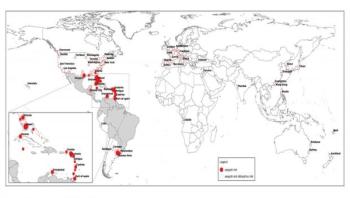
More cities than previously assumed could soon grapple with the Zika virus if two species of mosquitos are found to be equally effective carriers of the disease, a University of Texas at Austin disease ecologist and his colleagues argue in the current edition of The Lancet Infectious Diseases.
Advertisement

Mosquitoes are deadly efficient at spreading disease. Despite vaccines and efforts to eradicate the pesky insects, they continue to infect humans with feared diseases like Zika virus, malaria and West Nile virus. Gaining the upper hand on mosquitoes requires speed. Their life cycle is typically two weeks or less and they need only warm weather and standing water to breed.
Advertisement


Drug-resistant bacteria are fast becoming one of the big worries of the 21st century. Now researchers at the University of Copenhagen have discovered a previously unknown weakness -- an Achilles' heel of bacteria. Their discovery, a crucial step in bacteria's energy metabolism, may be the first step in developing an entirely novel form of antibiotics.


A University of Saskatchewan (U of S) research team has discovered a way to prevent bacteria from developing resistance to antibiotics, potentially helping to blunt the edge of a looming threat to public health around the world.

Rapid testing for the Zika virus is a critical need in the recent Ebola-affected countries of Liberia, Sierra Leone and Guinea, says a Georgetown University professor, because of the recent Zika outbreak on nearby Cape Verde and the similarity in symptoms between Zika and early Ebola.

Researchers have developed a new technique for killing bacteria in seconds using highly porous gold nanodisks and light, according to a study published today in Optical Materials Express, a journal published by The Optical Society. The method could one day help hospitals treat some common infections without using antibiotics, which could help reduce the risk of spreading antibiotic resistance.
Advertisement
Advertisement
Trending on Infection Control Today
1
Hantavirus Concerns and Cruise Ship Hygiene: What Infection Preventionists Need to Know
2
Aging with HIV: What the Next Major Challenge Is for Drug Development
3
IP LifeLine: Connecting With Specialized Recruiters and Navigating the Hiring Process
4
Empowering Careers and Confidence in Sterile Processing: Voices From HSPA 2026
5