
News
Advertisement
Advertisement
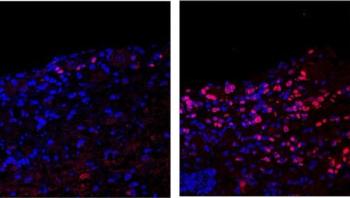
Herpes simplex virus (HSV) infections last a lifetime. Once a person has been infected, the virus can remain dormant (latent) for years before periodically reactivating to cause recurrent disease. This poorly understood cycle has frustrated scientists for years. Now, National Institutes of Health (NIH) scientists have identified a set of protein complexes that are recruited to viral genes and stimulate both initial infection and reactivation from latency. Environmental stresses known to regulate these proteins also induce reactivation.
Bacteria are everywhere. And despite widespread belief, not all bacteria are "bad." However, to combat those that can cause health issues for humans, there has been an over-reliance on the use of antibiotics -- so much so, that many of them are now proving ineffective due to bacteria developing increased resistance to them.
Advertisement

Dr. Robert Davey, a scientist at Texas Biomedical Research Institute, is part of a team of researchers working to find new drugs that will stop Ebola virus from growing inside infected cells. Dr. Christopher Basler, a professor in the Institute for Biomedical Sciences at Georgia State University, has received a five-year, $4.1 million federal grant for this project. Davey and his team will work closely with Basler to validate all new drugs identified in the effort. The work will involve seeing if the drugs block infection of cells by live Ebola virus and will be done in the biosafety level 4 laboratory at TxBiomed.
Advertisement
Scientists at the Scripps Research Institute (TSRI) have found a way to tether HIV-fighting antibodies to immune cells, creating a cell population resistant to the virus. Their experiments under lab conditions show that these resistant cells can quickly replace diseased cells, potentially curing the disease in a person with HIV.

An antimicrobial protein caused a dramatic reduction in the creamy white lesions associated with oral thrush in a preclinical study, report microbiologists with McGovern Medical School at the University of Texas Health Science Center at Houston (UTHealth). Findings appeared in the Proceedings of the National Academy of Sciences.

Researchers from Harvard Medical School have discovered that the body’s immune system initially detects the presence of anthrax spores by recognizing RNA molecules that coat the spores’ surface. But this prompts an unfavorable immune response that hinders the body’s fight against anthrax once the spores have germinated into live bacteria, according to the study “TLR sensing of bacterial spore-associated RNA triggers host immune responses with detrimental effects,” which will be published April 11 in the Journal of Experimental Medicine

The relationship between the infection prevention and risk management departments at a hospital is a crucial one, and it provides the foundation upon which patient safety and quality improvement efforts can be built.

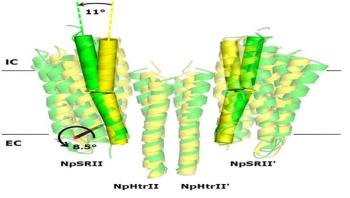
An international team including researchers from MIPT's Laboratory for Advanced Studies of Membrane Proteins have proposed an explanation of the way bacteria process external signals. By identifying the detailed structure of the protein complex used by bacteria, the scientists gained insights into the ability of these microorganisms to detect even small changes in the environment and adapt to them. The research findings were published in Scientific Reports.

Imaging CoE scientists have solved a 40-year old mystery and shed light on an evolutionary arms race played out between cytomegalovirus (CMV) and the immune system. Human CMV, also known as human herpesvirus 5, infects more than 50 percent of adults worldwide and is the leading cause of birth defects in the developed world.
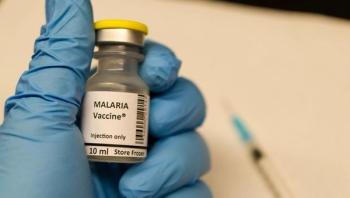
Despite decades of malaria research, the disease still afflicts hundreds of millions and kills around half a million people each year -- most of them children in tropical regions. Part of the problem is that the malaria parasite is a shape-shifter, making it hard to target. But another part of the problem is that even the parasite's proteins that could be used as vaccines are unstable at tropical temperatures and require complicated, expensive cellular systems to produce them in large quantities. Unfortunately, the vaccines are most needed in areas where refrigeration is lacking and funds to buy vaccines are scarce. A new approach developed at the Weizmann Institute of Science, recently reported in Proceedings of the National Academy of Science (PNAS), could, in the future, lead to an inexpensive malaria vaccine that can be stored at room temperature.
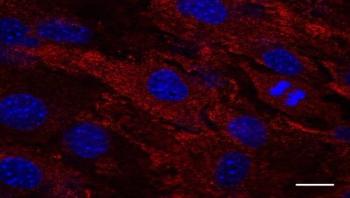
Researchers in Germany have developed a transgenic mouse that could help scientists identify new influenza virus strains with the potential to cause a global pandemic. The mouse is described in a study, “In vivo evasion of MxA by avian influenza viruses requires human signature in the viral nucleoprotein,” that will be published April 10 in the Journal of Experimental Medicine.
Advertisement
Advertisement
Trending on Infection Control Today
1
The World's Game, the World's Pathogens: Infection Prevention at the FIFA World Cup 2026
2
Pertussis Is Not Just a Childhood Disease: Why Lifelong Vaccination Matters More Than Ever
3
Diagnostics Take Center Stage in Ebola Response as Rare Bundibugyo Outbreak Expands
4