
News
Advertisement

Viruses and their hosts are in a eternal game of one-upmanship. If a host cell evolves a way to stop a virus from spreading, the virus will look for a new path. And so on and so forth. A team of scientists led by Ronald Harty, a professor of pathobiology and microbiology at the University of Pennsylvania's School of Veterinary Medicine, has identified a mechanism that appears to represent one way that host cells have evolved to outsmart infection by Ebola and other viruses. In a new paper, he and colleagues reveal that host cells sequester viral proteins away from the plasma membrane within the cell, thus preventing viruses from spreading.
Advertisement

Following the recent Zika outbreak in Miami-Dade County, a multidisciplinary team of physicians with the University of Miami Health System and Miller School of Medicine published a case study today in The New England Journal of Medicine, describing in detail the nation's first locally-transmitted case of Zika.
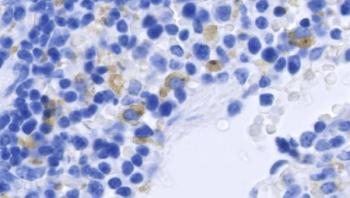
The worst of the global Zika virus outbreak may be over but many key questions remain, such as why the virus persists in certain tissues after the systemic infection has cleared; how does the immune system counteract the virus and protect against reinfection; what determines the likelihood of long-term complications? New research from La Jolla Institute for Allergy and Immunology lays the groundwork to parse how the virus interacts with its host and causes disease by pinpointing CD8+ T cells, a subset of T cells more commonly known as cytotoxic or killer T cells, as important gatekeepers that control Zika infection or limit the severity of disease. The findings mapping the structural landmarks or epitopes recognized by CD8+ cells appear in the January 12, 2017, issue of Cell Host & Microbe and provide an important tool to track Zika-specific T cells in the context of different disease models.
Advertisement
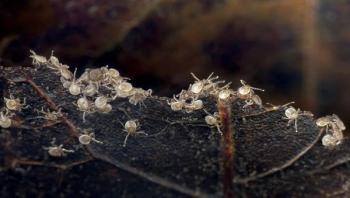
The ticks that transmit Lyme disease to people die of dehydration when exposed to a combination of high temperature and lowered humidity, a new USGS-led study has found. In an earlier related study, the researchers found that southern black-legged ticks, unlike northern ones, usually stay hidden under a layer of leaves, where they are less likely to encounter people. The research group, whose findings were published Jan. 11 in the journal PLOS ONE, hypothesizes that southern ticks typically shelter under leaves to retain moisture, and that this behavior is a key reason why Lyme disease is very uncommon in the South.

Advertisement


Using 20,000 virus samples and weather statistics, researchers have now discovered more details about how outdoor temperature and flu outbreaks are linked.

In the future, it will be possible to carry out tests of new drugs on bacteria much more efficiently using microfluidic devices, since each of the hundreds and thousands of droplets moving through the microchannels can act as separate incubators. So far, however, there has been no quick or accurate method of assessing the oxygen conditions in individual microdroplets. This key obstacle has been overcome at the Institute of Physical Chemistry of the Polish Academy of Sciences.

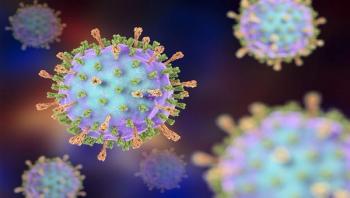
Mumps emerged among highly vaccinated populations in the Netherlands, and this offered a unique opportunity to study mumps virus transmission. In particular the extent to which asymptomatic infections in vaccinated people contribute to ongoing mumps virus transmission is uncertain. Hahné, et al. (2017) say insight into this could help project the future burden of mumps in vaccinated populations. They therefore studied the relative infectiousness of symptomatic and asymptomatic cases.

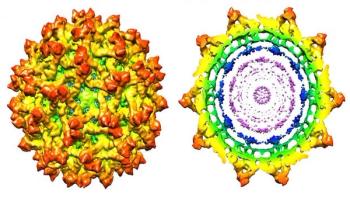
Researchers at Purdue University have determined the high-resolution structure of immature Zika virus, a step toward better understanding how the virus infects host cells and spreads.
Advertisement
Advertisement
Trending on Infection Control Today
1
How to Teach Staff to Think Like an Infection Control Preventionist
2
Presented at APIC 2026, Whole Genome Sequencing Helps Investigators Trace Pseudo-Outbreak to Contaminated Ultrasound Gel
3
Cleaning Beyond Adherence at APIC26: Memorial Hermann Uses Multimodal Education to Strengthen Device Disinfection Practices
4
Can Virtual Competencies Replace Hands-On Training? APIC 2026 Study Links In-Person Education to Major CAUTI Reduction
5