
News
Advertisement

An international study led by the University of Southampton shows the UK and France experience the highest number of malaria cases imported from other countries. Research led by WorldPop, based at the University, examined and mapped the movement of the disease from endemic countries (those where malaria is regularly found in the population) to around 40 countries defined as being malaria-free or non-endemic (such as the UK).
Advertisement



Researchers have been trying for decades to develop a vaccine against the globally endemic hepatitis C virus (HCV). Now scientists at the Scripps Research Institute (TSRI) have discovered one reason why success has so far been elusive.
Advertisement
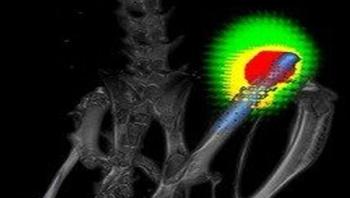
In a proof-of-concept study with mice, scientists at The Johns Hopkins University show that a novel coating they made with antibiotic-releasing nanofibers has the potential to better prevent at least some serious bacterial infections related to total joint replacement surgery. A report on the study, published online the week of Oct. 24 in Proceedings of the National Academy of Sciences, was conducted on the rodents’ knee joints, but, the researchers say, the technology would have “broad applicability” in the use of orthopaedic prostheses, such as hip and knee total joint replacements, as well pacemakers, stents and other implantable medical devices. In contrast to other coatings in development, the researchers report the new material can release multiple antibiotics in a strategically timed way for an optimal effect.

Viruses hijack the molecular machinery in human cells to survive and replicate, often damaging those host cells in the process. Researchers at the University of California San Diego School of Medicine discovered that, for cytomegalovirus (CMV), this process relies on a human protein called CPEB1. The study, published October 24 in Nature Structural and Molecular Biology, provides a potential new target for the development of CMV therapies.

Transfers of nursing home residents to and from the hospital frequently expose these frail, older adults to medication errors and poor follow-up care resulting in near or serious harm to 1 in 4 nationwide.



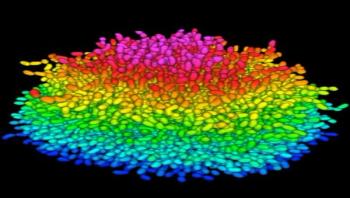
Princeton researchers have for the first time revealed the mechanics of how bacteria build up slimy masses, called biofilms, cell by cell. When encased in biofilms in the human body, bacteria are a thousand times less susceptible to antibiotics, making certain infections, such as pneumonia, difficult to treat and potentially lethal.
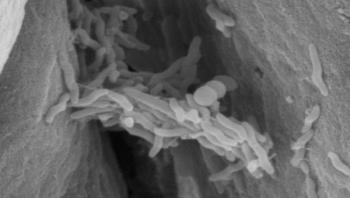
A team at Griffith's Institute for Glycomics identified a unique sensory structure that is able to bind host-specific sugar and is present on particularly virulent strains of Campylobacter jejuni.
The Clemson family has gained a new namesake: Legionella clemsonensis, a novel strain of the Legionella bacteria, the most common cause of waterborne bacterial outbreaks in the United States.
Advertisement
Advertisement
Trending on Infection Control Today
1
The World's Game, the World's Pathogens: Infection Prevention at the FIFA World Cup 2026
2
Pertussis Is Not Just a Childhood Disease: Why Lifelong Vaccination Matters More Than Ever
3
Diagnostics Take Center Stage in Ebola Response as Rare Bundibugyo Outbreak Expands
4