
News
Advertisement
Advertisement
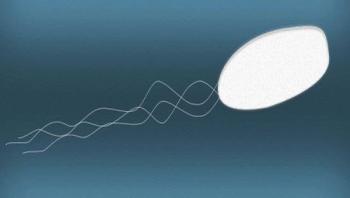
When looking at bacteria, you typically see also flagella: long hairs that protrudes from the bacteria's body. The key function of the flagella is movement - what scientists call "motility." The flagella give the bacteria the ability to swim in their environment by rotating like propellers. Bacteria can have a different number of flagella, and flagella are important because there is a clear correlation between motility and infection. Dr. Hideyuki Matsunami of the Trans-Membrane Trafficking Unit at the Okinawa Institute of Science and Technology Graduate University (OIST), together with a team of scientists, explored some aspects of the formation of flagella in research that may have implications for contrasting bacterial infections. They published their findings in Scientific Reports

As an arm of the innate immune system, white blood cells called neutrophils form the first line of defense against invading pathogens. Neutrophils spend most of their lives racing through the bloodstream, patrolling for bacteria or other foreign particles. Once they arrive at tissues besieged by infectious agents, they halt on a dime and then blast through the vessel wall to reach the inflammatory attack site. They do this by activating integrins, a class of adhesion receptors that can switch on in less than a second.
Advertisement

Before the infamous Black Death, the first great plague epidemic was the Justinian plague, which, over the course of two centuries, wiped out up to an estimated 50 million (15 percent) of the world's population throughout the Byzantine Empire----and may have helped speed the decline of the eastern Roman Empire. No one knows why it disappeared.

In a study of children with brain shunts at Children's of Alabama, a University of Alabama at Birmingham investigational biomarker outperformed the current "gold standard" test for detecting bacterial infections in the shunts.
Advertisement
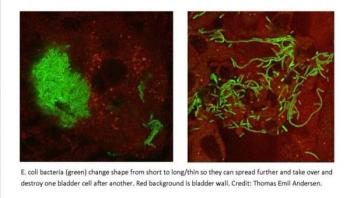
Every year, millions of people are treated for cystitis, but despite its prevalence, the disease is still a scientific mystery. Now a research team from University of Southern Denmark has succeeded in identifying how the bacteria responsible for the disease cause the disease to develop. This is a cause for optimism that more effective treatment methods can be developed.


As researchers gain increasing experience with UV-C light, they are reporting encouraging results related to efficacy against some of the most problematic pathogens in hospitals today.


Tuberculosis (TB) is the leading cause of death worldwide among people infected with HIV. But as yet, no test can reliably show when latent TB infections in people with HIV starts progressing to active-and potentially fatal-TB disease. Now, a researcher at Albert Einstein College of Medicine has received a five-year, $3.7 million National Institutes of Health grant to identify biomarkers that signal an increase in activity by Mycobacterium tuberculosis (Mtb), the bacterium that causes TB, in people with HIV.
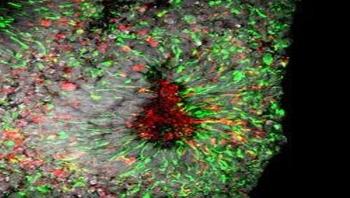
Scientists report that a specialized drug screen test using lab-grown human cells has revealed two classes of compounds already in the pharmaceutical arsenal that may work against mosquito-borne Zika virus infections. In a summary of their work, published in Nature Medicine on Aug. 29, the investigators say they screened 6,000 existing compounds currently in late-stage clinical trials or already approved for human use for other conditions, and identified several compounds that showed the ability to hinder or halt the progress of the Zika virus in lab-grown human neural cells.

People with blood type O often get more severely ill from cholera than people of other blood types. New research from Washington University School of Medicine in St. Louis may explain why.

Advertisement
Advertisement