
News
Advertisement
Advertisement
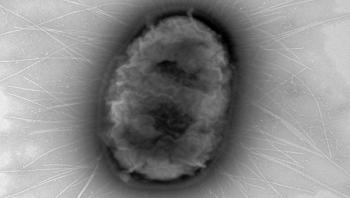
The difficulty in subduing the pandemic strain of drug-resistant E. coli, called H30, may go beyond patient vulnerability or antibiotic resistance. This form of the disease-pathogen may have an intrinsic ability to cause persistent, harmful, even deadly infections.
Advertisement

Researchers at the University of Wisconsin-Madison School of Veterinary Medicine (SVM) have developed one of the first mouse models for the study of Zika virus. The model will allow researchers to better understand how the virus causes disease and aid in the development of antiviral compounds and vaccines.
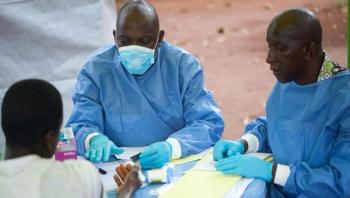
The World Health Organization (WHO), partners and affected countries are stepping up planning for how to use an Ebola vaccine in response to an outbreak. The Ebola outbreak that struck Guinea, Liberia, and Sierra Leone in 2014 prompted the search, on an exceptionally accelerated schedule, for a vaccine to prevent the disease. Although there has been more than one promising candidate, the vesicular stomatitis virus-ebola virus (VSV-EBOV) vaccine was selected based on an algorithm produced by the WHO Scientific and Technical Advisory Committee on Ebola Experimental Interventions for the critical Phase III trial in Guinea and Sierra Leone. The committee considered various parameters, including efficacy in non-human primates the ability to provoke an immune response in humans in the early days after vaccination, and availability.


Normalization of deviance is, well, normal. That’s why infection preventionists (IP) and perioperative leaders must continue to team up to ad-ress it. Normalization of deviance works like this: when we first get our learner’s driving permit, we bring the car to a complete halt at every stop sign. Every few blocks, we check whether we are following the speed limit. But over time, as we gain confidence, we might slide through familiar stop signs or inch over the speed limit. If nobody catches us – or we don’t wreck – we are lulled into believing our behavior is okay.

In light of the recent news articles making headlines across the country in regard to improperly sterilized reusable medical devices, the issue of requiring certification of Central Service (CS) technicians has become more important than ever.

Q: Recently we had a consultant visit our department. She said I was performing the Bowie-Dick test wrong. I place the test pack on top of a wire basket which is placed over the drain line. This is how I was shown to do the test and we all do it the same way. The consultant could not explain why this is wrong. Can you explain the correct process and why?

Responding to the needs of healthcare facilities to prevent healthcare-associated infections (HAIs), Kenall Manufacturing has introduced a new line of Indigo-Clean™ light fixtures specifically designed for operating rooms. Indigo-Clean™ operating room (OR) light fixtures provide bright, high-quality, white light to illuminate the surgical field, while continuously disinfecting the environment. The announcement was made at the Association for Professionals in Infection Control and Epidemiology (APIC) Spring Academy being held this week in San Diego.
Healthcare institutions face the question of whether to use disposable or reusable medical devices. Although in certain situations one category is clearly a better choice than the other, choosing between disposable products and reusable devices is more frequently a difficult and unclear decision. Both devices are characterized by compelling pros and cons that may force healthcare facilities into a complex and multi-faceted decision-making process.
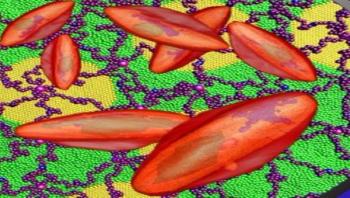
The most dangerous malaria parasite, Plasmodium falciparum, is responsible for nearly half a million deaths annually across Africa and Southeast Asia. Of increasing concern, this parasite is now developing resistance to common antimalarial drugs. Gaining a better understanding of the parasite’s development in the body is urgently required. Now, a multi-university team, which includes Penn State, has broken the code that may lead to new defenses against the deadly parasite.

Changes in the tests that diagnose foodborne illness are helping identify infections faster but could soon pose challenges to finding outbreaks and monitoring progress toward preventing foodborne disease, according to a report published yesterday in CDC’s Morbidity and Mortality Week Report.

Consumers don't buy leafy greens and other healthy supermarket produce anticipating the food might make their families sick. Or at least, they didn't used to. But high profile recalls of fruits and veggies seem to be a new normal in the American food landscape. The recalls follow outbreaks of foodborne illnesses caused by microbes like E. coli. These outbreaks can send unsuspecting veggiephiles rushing to the nearest toilet or, worse yet, the hospital. Some outbreaks can even result in deaths.
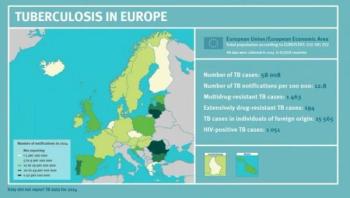
New data released by the European Centre for Disease Prevention and Control (ECDC) and WHO/Europe ahead of World TB Day show that an estimated 340,000 Europeans developed tuberculosis (TB) in 2014, corresponding to a rate of 37 cases per 100,000 population.
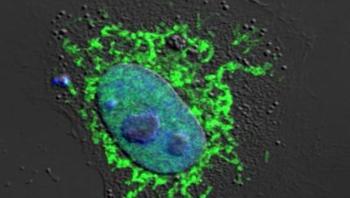
Scientists at the University of North Carolina (UNC) School of Medicine and Sanford Burnham Prebys Medical Discovery Institute (SBP) have identified a human (host) protein that weakens the immune response to HIV and other viruses. The findings, published today in Cell Host & Microbe, have important implications for improving HIV antiviral therapies, creating effective viral vaccines, and advance a new approach to treat cancer.
Advertisement
Advertisement