News


Netherlands study details ESBL-producing Enterobacteriaceae strategy.


Disposable designs will improve patient safety

Bug of the Month helps educate readers about existing and emerging pathogens of clinical importance in healthcare facilities today. Each column explores the Bug of the Month's etiology, the infections it can cause, the modes of transmission, and ways to fight its spread.

First impressions are important -- they can set the stage for the entire course of a relationship. The same is true for the impressions the cells of our immune system form when they first meet a new bacterium.

The National Institutes of Health and partners today announced plans to conduct a Phase 3 HIV vaccine efficacy trial at multiple clinical research sites in North America, South America and Europe. The trial, called HPX3002/HVTN 706 or Mosaico, will assess whether an investigational vaccine regimen designed to induce immune responses against a variety of global HIV strains can safely and effectively prevent HIV acquisition among men who have sex with men and transgender people.

Bug of the Month helps educate readers about existing and emerging pathogens of clinical importance in healthcare facilities today. Each column explores the Bug of the Month's etiology, the infections it can cause, the modes of transmission, and ways to fight its spread.

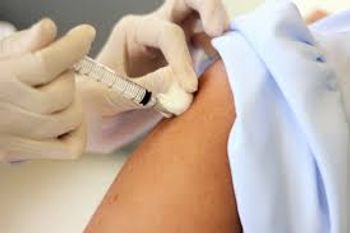
It appears that an influenza vaccine does not just work when it comes to influenza. A new study shows that elderly people who have been admitted to an intensive care units have less risk of dying and of suffering a blood clot or bleeding in the brain if they have been vaccinated.

Previous infection with either Zika virus or dengue virus has no apparent effect on the clinical course of subsequent infection with the other virus, according to a study published August 1 in the open-access journal PLOS Pathogens by David O'Connor of the University of Wisconsin-Madison, and colleagues.

More than 1 million sepsis survivors are discharged annually from acute-care hospitals in the United States. Although the majority of these patients receive post-acute care (PAC) services, with more than one-third coming to home health care (HHC), sepsis survivors account for a majority of readmissions nationwide. Effective interventions are needed to decrease these poor outcomes.

Roundworm infections can be reduced significantly simply by improving the treatment and quality of drinking water in high risk regions, according to an international team of researchers led by Tufts University.

How do we clean an instrument has always been the question of the day in sterile processing departments all over the world; the answer is to come. The sad truth is, in some instances, the cleaning process was derived from someone in leadership making up a rule.

When it comes to the culture of a hospital, nothing is as important as the employees who work for it and aim to provide excellent patient care. When it comes to a hospital's balance sheet, particularly the physical assets, nothing is as important as the actual hospital and other ancillary buildings.

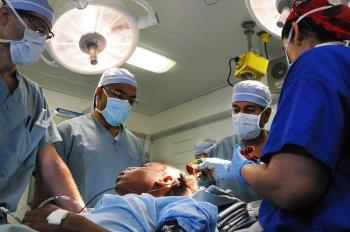
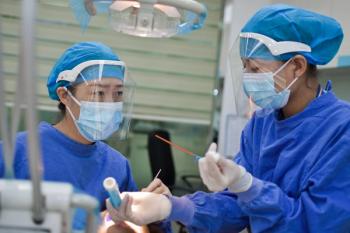
Common sense dictates that limiting surgical patients' exposure to any reservoir that could harbor pathogenic organisms could help prevent surgical site infections (SSIs). Wearing proper surgical attire is a cornerstone of SSI prevention, yet there has been strident disagreement on some of the finer points of surgical attire and its impact on SSI rates.

Recent news headlines reported two deaths and 179 exposures from contaminated surgical instruments used for endoscopic retrograde cholangiopancreatography (ERCP) at a university medical center in California.1 Similar infections also occurred in Washington, Illinois, and Pennsylvania.

There are many misconceptions about using ISOs for endoscope repair. Perhaps the one with wide-ranging implications is the misconception that using an ISO for service will invalidate the device’s 510K, instructions for use (IFU), or automated endoscope reprocessor (AER) validation.

Scientists using an experimental treatment have slowed the progression of scrapie, a degenerative central nervous disease caused by prions, in laboratory mice and greatly extended the rodents’ lives, according to a new report in JCI Insight. The scientists used antisense oligonucleotides (ASOs), synthetic compounds that inhibit the formation of specific proteins.

A rare, short-lived population of immune cells in the bloodstream may serve as 'periscopes' to monitor immune status via lymph nodes deep inside the body, according to researchers in the Perelman School of Medicine at the University of Pennsylvania. Their findings are published this month in the Journal of Clinical Investigation (JCI).

Understanding how antibiotic scaffolds are constructed in nature can help scientists prospect for new classes of antibiotics through DNA sequencing and genome mining. Researchers have used this knowledge to help solve the X-ray crystal structure of the enzyme that makes obafluorin -- a broad spectrum antibiotic agent made by a fluorescent strain of soil bacteria.

Researchers at the University of Illinois at Chicago have identified a molecular switch that causes immune cells called macrophages to clean up cellular debris caused by infections instead of contributing to inflammation and tissue injury.

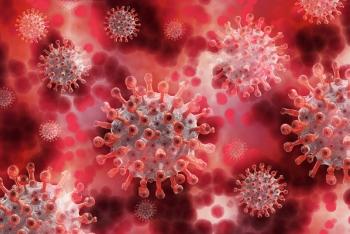
Comparing a living cell to a virus is a bit like comparing the Sistine Chapel to a backyard dog house. Lacking the intricate machinery of living cells, viruses represent biology stripped down to an extreme level. They are the true minimalists of the biological world.

Today, the Food and Drug Administration (FDA) announces it has cleared for marketing four previously cleared tests with new indications to aid in the diagnosis of Lyme disease. The tests cleared today are the first time that a test has been indicated to follow a new testing paradigm in which two tests called enzyme immunoassays (EIA) are run concurrently or sequentially, rather than the current two-step process in which a separate protein test called a Western Blot must be run after the initial EIA test.

Data from more than 12,000 multiple sclerosis (MS) patients formed the basis of a study by the Technical University of Munich (TUM) which investigated the population's vaccination behavior in relation to MS. It showed that five years before their diagnosis, MS patients were statistically less likely to receive vaccinations than comparator groups. Consequently, there was no positive correlation between vaccinations and the development of MS.

Cigarette smoke can make MRSA bacterial strains more resistant to antibiotics, new research from the University of Bath has shown.