
News
Advertisement
Q: I was at a conference recently and the speaker said that emergency eyewash stations are needed at all locations where chemicals are used. Can you provide more information on this?A: The American National Standards Institute (ANSI) has a standard, American National Standard for Emergency Eyewash and Shower Equipment, Z358.1-2014. This document “establishes minimum performance and use requirements for eyewash and shower equipment” for anyone whose eyes or body have been exposed to hazardous materials or chemicals. This standard is also an excellent reference for “performance and use requirements for personal wash units and drench hoses, which are considered supplemental to emergency eyewash and shower equipment.”
Advertisement
Advertisement
The Centers for Disease Control and Prevention (CDC) today issued updated guidance and information to prevent Zika virus transmission and health effects.
Advertisement

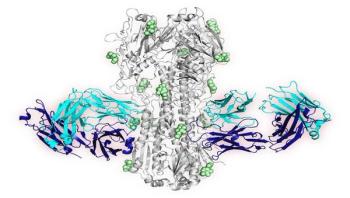
Scientists have identified three types of vaccine-induced antibodies that can neutralize diverse strains of influenza virus that infect humans. The discovery will help guide development of a universal influenza vaccine, according to investigators at the National Institute of Allergy and Infectious Diseases (NIAID), and the National Human Genome Research Institute (NHGRI), both part of the National Institutes of Health (NIH), and collaborators who conducted the research. The findings appear in the July 21 online edition of Cell.
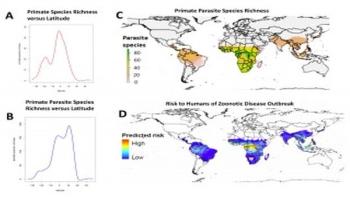
Ecologists at the University of Georgia are leading a global effort to predict where new infectious diseases are likely to emerge. In a paper published in Ecology Letters, they describe how macroecology-the study of ecological patterns and processes across broad scales of time and space-can provide valuable insights about disease.

No one knows exactly how it happened. It may have entered through a cut or bite wound, the blood of a chimpanzee seeping into an exposed fingertip or forearm or foot. But in the early 1900s, probably near a West African rainforest, it's thought that a hunter or vendor of bush meat -- wild game that can include primates -- acquired the first strain of a simian immunodeficiency virus that virologists consider the ancestor of HIV.

Researchers from UT Southwestern Medical Center have identified a new way that tuberculosis bacteria get into the body, revealing a potential therapeutic angle to explore. One of the world's most deadly diseases, tuberculosis infects more than 8 million people and is responsible for 1.5 million deaths each year. According to the Centers for Disease Control and Prevention, approximately one-third of the world's population is infected with tuberculosis. The bacterium that causes tuberculosis, Mycobacterium tuberculosis, or Mtb, previously was thought to infect the body only through inhalation and subsequent infection of cells in the lungs.
Advertisement
Advertisement