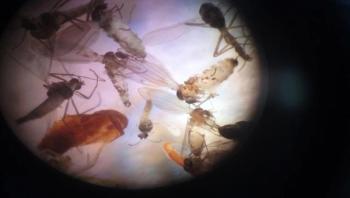
How many researchers does it take to change a light bulb? And how many lives could they save by changing it? The answer to both questions is more people than you might expect. In the developing world, light bulbs might as well be insect magnets. The light they emit – particularly the blue wavelengths of LED lights – is attractive to a range of insects, drawing them out from the night and straight to people's homes. Many insect species are attracted to light, which means that the type of bulb you use can actually increase the risk of catching vector-borne diseases.