
News
Advertisement
Advertisement
Advertisement

A good immune system relies on a key 'energy producing' protein in immune cells to develop immunity to vaccines and disease, an international team of scientists has found. The protein, called HuR (human antigen R) is critical for controlling metabolism in B cells, which make antibodies that are essential in fighting infections and in developing long-term immunity after vaccination.
Advertisement

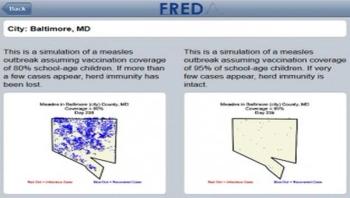
To help the public better understand how measles can spread, a team of infectious disease computer modelers at the University of Pittsburgh has launched a free, mobile-friendly tool that lets users simulate measles outbreaks in cities across the country. The tool is part of the Pitt team’s Framework for Reconstructing Epidemiological Dynamics, or FRED, that it previously developed to simulate flu epidemics. FRED is based on anonymized U.S. census data that captures demographic and geographic distributions of different communities. It also incorporates details about the simulated disease, such as how contagious it is.
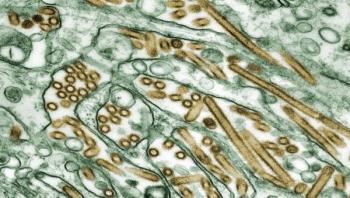
Since 2003, the H5N1 influenza virus, more commonly known as the bird flu, has been responsible for the deaths of millions of chickens and ducks and has infected more than 650 people, leading to a 60 percent mortality rate for the latter. Luckily, this virus has yet to achieve human-to-human transmission, but a small number of mutations could change that, resulting in a pandemic. Now a team of investigators from St. Jude Children's Research Hospital, Stanford University Medical Center, and MacroGenics have developed an antibody which has proven 100 percent protective against the virus in two species of animal models. The research is published ahead of print February 11, in the Journal of Virology, a publication of the American Society for Microbiology.
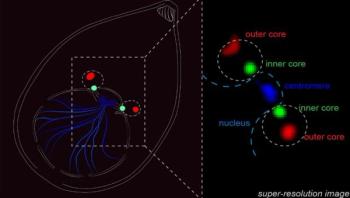
A University of South Florida College of Public Health professor and his team of researchers have become the first to uncover part of the mysterious process by which malaria-related parasites spread at explosive and deadly rates inside humans and other animals.

Advertisement
Advertisement