
News
Advertisement
Advertisement
Advertisement
Advertisement
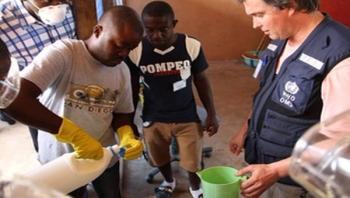
Only people who have been sick with Ebola virus disease and recovered from this traumatic experience can explain what it was like and what their needs were during the illness. That is why a group of six Ebola survivors were asked to play a critical role in a new training program for healthcare workers on Ebola care, which was established by the World Health Organization (WHO) in consultation with the Ministry of Health and with support from USAID.
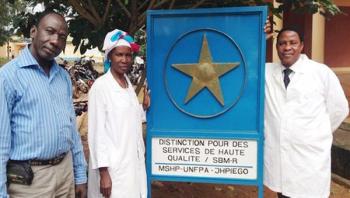
The Telimele district, with its 300,000-strong population, was relatively far from the country’s Ebola epicenter in the southeastern forest region. Dr. Maurice Ony Beuvogui, the director of the district hospital in Telimele, believed his 44-bed hospital was ready to meet the challenge. It was one of a few in the country with quality certification for infection prevention and control. As the outbreak progressed across the country, the national preparedness plan was activated and the district hospital staff attended training sessions on infection prevention and received Ebola protective equipment. They hoped it would not be needed.
Advertisement
Advertisement
Trending on Infection Control Today
1
How to Teach Staff to Think Like an Infection Control Preventionist
2
APIC 2026: How Active Surveillance and Genomic Sequencing Helped Control a NICU CLABSI Outbreak
3
From Exposure Event to Action Plan at APIC 2026: Providence Develops Playbook for Managing Large-Scale Patient Notifications
4
Cleaning Beyond Adherence at APIC26: Memorial Hermann Uses Multimodal Education to Strengthen Device Disinfection Practices
5