
News
Advertisement

The director-general of the World Health Organization (WHO), Margaret Chan, and presidents of west African nations impacted by the Ebola virus disease outbreak will meet Friday in Guinea to launch a new joint $100 million response plan as part of an intensified international, regional and national campaign to bring the outbreak under control.
Advertisement
Advertisement
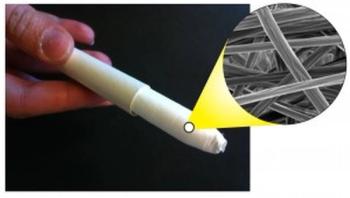
Soon, protection from HIV infection could be as simple as inserting a medicated, disappearing fabric minutes before having sex. University of Washington bioengineers have discovered a potentially faster way to deliver a topical drug that protects women from contracting HIV. Their method spins the drug into silk-like fibers that quickly dissolve when in contact with moisture, releasing higher doses of the drug than possible with other topical materials such as gels or creams.
The 31-year-old Moore Clinic operated by the Johns Hopkins AIDS Service at the School of Medicine is a historic operation - the second-oldest AIDS clinic in the country. But when Jason Farley, PhD, MPH, CRNP, looks nowadays at the makeup of Moore’s caregiving staff, he worries that he’s seeing too much history.

“It was great that Mauricio and I arrived the same day; we were able to share first, very shocking, impressions and to go through the process of adapting to difficult working conditions together,” says Dr. Catherine Houlihan, an infectious disease doctor from the United Kingdom deployed through the World Health Organization (WHO) to help respond to the Ebola outbreak in Sierra Leone.
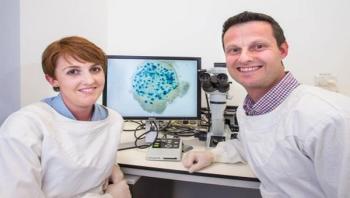
Scientists at Australian National University investigating the herpes virus have been surprised to find an ongoing conflict in the cells of sufferers, even when the virus is apparently dormant Herpes Simplex Type 1 is a virus that causes cold sores. It remains in the body’s nervous system indefinitely after infection. Around 80 percent of Australians carry the virus, although it is usually in a dormant state.
VIRGO, the parent company of Infection Control Today magazine, has been acquired by global exhibition and information leader Informa plc.

Fifteen years ago, MIT professor John Essigmann and colleagues from the University of Washington had a novel idea for an HIV drug. They thought if they could induce the virus to mutate uncontrollably, they could force it to weaken and eventually die out - a strategy that our immune system uses against many viruses.
Advertisement
Advertisement
Trending on Infection Control Today
1
How to Teach Staff to Think Like an Infection Control Preventionist
2
APIC 2026: How Active Surveillance and Genomic Sequencing Helped Control a NICU CLABSI Outbreak
3
From Exposure Event to Action Plan at APIC 2026: Providence Develops Playbook for Managing Large-Scale Patient Notifications
4
Cleaning Beyond Adherence at APIC26: Memorial Hermann Uses Multimodal Education to Strengthen Device Disinfection Practices
5