France’s first reported human Shamonda virus infection raises questions about transmission and vulnerable patients. Explore what investigators know, what remains uncertain, and why infection preventionists should follow this emerging story.
John Rex, MD, CMO of F2G, discusses investigational olorofim’s phase 3 findings, why new antifungals are difficult to develop, and how an oral option could help patients with limited treatment choices.
An analysis of 147 million US hospital admissions identified 875 adults with brucellosis diagnoses, highlighting demographic and regional differences while emphasizing exposure histories and uncertainty about underdiagnosis.
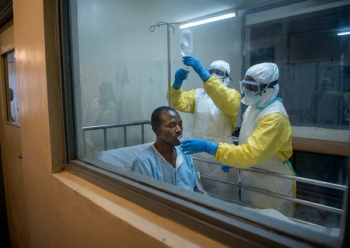
Kenya’s secondary Ebola cases raise urgent questions about hospital readiness. Explore what the response reveals about contact tracing, health care worker protection, and the implementation of infection prevention plans.
An ICU study found that alcohol-based hand rub applied after patient care reduced glove bioburden, while staff raised feasibility concerns. Researchers stress that the practice does not replace glove changes or hand hygiene.
A study of 4,851 nursing home residents linked shared rooms to higher odds of matching MDRO carriage, while universal decolonization was associated with lower concordant carriage across MRSA, ESBL, and VRE.
A retrospective hospital study found no significant differences in mortality or readmissions between infectious disease e-consults and in-person consultations, despite more diagnoses of bacteremia among e-consult patients. Researchers recommend further evaluation across settings.
Presented at IDWeek 2026, a living review of 64 studies found the strongest evidence for dengue prevention from mosquito modification, while highlighting substantial uncertainty and research gaps in other approaches to Aedes vector control.