Environmental services (EVS) professionals are often recognized for the critical role they play in creating clean, safe health care environments. However, their influence extends beyond only cleaning and disinfection. Every interaction with a patient, family member, colleague, or community member can help shape how people experience health care.
That was the message Stacy Palmer, senior vice president and chief operating officer of The Beryl Institute, brought to EVS leaders as the closing session speaker at the Exchange26: 2026 Association for the Health Care Environment (AHE) Education & Solution Summit in New Orleans, held from August 16 to 19
The Beryl Institute is a global community of practice focused on improving the human experience in health care. At Exchange26, Palmer explained that while patient experience remains important, the organization's work increasingly recognizes the interconnected experiences of patients, the health care workforce, and communities.
“We talk a lot about patient experience, but also understand how important that workforce experience and community experience is,” Palmer told Infection Control Today® (ICT®) in an exclusive interview. “So, we've really shifted our language to be more about transforming human experience.”
From Patient Experience to Human Experience
Palmer's AHE presentation focused on 8 guiding principles for experience excellence, concepts explored in Return on Human Experience, a book she coauthored with The Beryl Institute President and CEO Jason Wolf.
Central to that framework is the idea that improving the human experience should not be considered an optional addition to health care operations.
“Focusing on improving patient or human experience is more about just a nice to do,” Palmer said. “There truly is a bottom-line impact.”
The 8 principles include having a formal definition of experience, accountable leadership, a strong organizational culture, caring for the workforce, patient and family engagement, recognizing the importance of every touchpoint, community well-being, and attention to access and equity.
For Palmer, defining what an organization means by “experience” is an important starting point.
“It's hard to hold people accountable for experience excellence if they don't really even understand what that means and what that means to them,” she said.
Accountability must also extend to leadership. Palmer said organizations that are successful at improving experience often have a designated leader, such as a chief experience officer or director of patient experience, who has access to senior executives.
Every Touchpoint Matters
The concept is particularly relevant to EVS because patient experience is not created solely during encounters with physicians and nurses.
“We talk about all touchpoints matter,” Palmer said. “It's not just the clinical interactions, but every touchpoint that a person has within your organization makes an impact on their overall experience.”
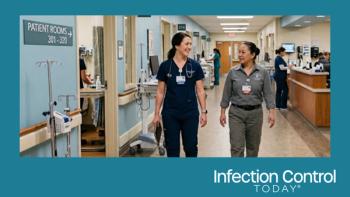
That places EVS professionals squarely within the human experience of health care. An EVS team member may enter a patient's room during an uncertain or frightening period. A simple introduction, explanation of why they are there, respectful interaction, or willingness to listen can become part of how that patient remembers the entire hospitalization.
At the same time, Palmer's framework recognizes that organizations cannot expect employees to consistently create positive patient experiences without considering the workforce's own experience.
Culture, she said, means creating environments “where people want to be there, they want to be their best, and they want to contribute to the success of the organization.”
That includes understanding and acting on workforce needs and vulnerabilities rather than focusing solely on what employees are expected to provide for patients.
Giving EVS a Larger Role
Palmer's presentation also emphasized formal patient and family engagement. Rather than simply collecting satisfaction data, organizations should establish ways for patients and families to contribute feedback that can be used to improve care and operations.
For EVS leaders, that feedback can offer another way to understand how environmental cleanliness, communication, responsiveness, and interactions with EVS personnel affect the overall patient experience.
The framework expands even further through community well-being, access, and equity. Palmer encouraged health care organizations to consider how they can improve the many aspects of care: access to care, providing education, addressing disparities, and contributing to the health of the communities they serve.
Together, the principles challenge a limited view of both patient experience and EVS. A clean room is important, and disinfecting high-touch surfaces obviously matters. But so does the person who does the cleaning and the interaction that happens during the process. For EVS professionals, that’s a crucial point: They create the environment where the patient experience takes place and is a part of the experience itself.