This week's coverage in Infection Control Today centered on a common thread: the systems, partnerships, and data that let infection prevention teams catch problems before patients are harmed.
This week in infection prevention: Kenya's imported Ebola case showed how fever screening can miss an ill traveler, Florida's dengue outbreak reached 296 local cases, and new guidance underscores that missed surfaces and shared equipment fuel AMR risk. Our weekly roundup covers these stories and more.
This week's coverage in Infection Control Today® kept returning to one theme: the distance between the protocols we have and the way pathogens actually move, from airport thermometers and shared devices to the hand hygiene habits of busy clinics.
Kenya confirmed its first imported Bundibugyo virus disease case after a 40-year-old man traveled through the Democratic Republic of the Congo, Uganda, and Kenya while ill, passing thermal screening at airports in both Uganda and Kenya. Officials suggest medication may have masked his fever. He tested positive on October 5 and died that night, and Kenya traced 28 contacts, mostly health care workers, along with 23 airline passengers and four crew.
Author Brenna Doran, PhD, MA, ACC, CIC, AL-CIP, argues that temperature checks and self-reporting have clear limits and that contact tracing and hospital IPC readiness carry the weight.
The Florida Department of Health's Week 39 update lists 296 locally acquired dengue cases across eight counties, 259 of them in Hillsborough County, including the death of an 80-year-old Tampa woman. Of serotyped cases, 273 were DENV-2. Ubong Johnson, MD, notes that about 1 in 20 symptomatic patients develop severe disease, that treatment should not wait for test results, and that aspirin and NSAIDs should be avoided. No dengue vaccine is currently available in the US.
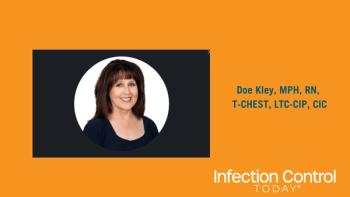
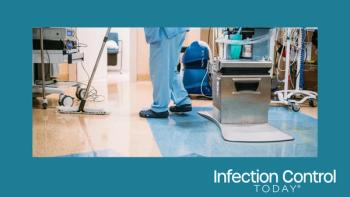
Doe Kley, MPH, RN, CIC, of Clorox Purell ProCare, says environmental hygiene is a frontline defense against antimicrobial resistance (AMR). She cites a 2024 Rutala study finding 65% of long-term care resident rooms held at least 1 multidrug-resistant organism, and argues that most failures are process problems, not disinfectant resistance: 90% of 10 hospitals had at least one dispenser delivering low concentrations, and only 16% of mobile equipment is cleaned between patients. Her mantra: "You use it, you clean it."
Suchandrima Bhowmik, MS, reviews AI tools for early sepsis detection in ICU and NICU patients. A 2026 review of 37 studies found several adult models with AUROC above 0.90, flagging risk 3 to 24 hours before diagnosis, and Duke's Sepsis Watch has been linked to 27% lower sepsis-related mortality. Limitations include false alarms, single-site testing, and uncertain effects on outcomes; the author therefore urges real-time, multisite validation.
Published for Global Handwashing Day, Jamar Shaw, MD, MPH, CIC, cautions that "Gel in, gel out" can become a mental shortcut that obscures the purpose of hand hygiene. “Organisms do not recognize doorways,” he writes, urging teams in exam rooms, infusion chairs, and procedure areas to apply the World Health Organization’s 5 Moments to actual care sequences.
The Joint Commission leaders speak on AI: How can hospitals pursue AI’s potential while protecting patients from harm? The Joint Commission leaders Jonathan Perlin and James Merlino see governance, transparency, and ongoing monitoring as essential parts of the answer.
“We're not the technology experts, but we're pretty good at governance and policy,” Perlin says.
In an interview with Infection Control Today’s sister brand, Chief Healthcare Executive®, the leaders discuss opportunities to strengthen handoffs, support earlier sepsis detection, and reduce avoidable harm. They also outline the organizational safeguards needed to evaluate AI applications and respond when safety concerns emerge.
Read the interview:
Arizona pneumonic plague case: A fatal Arizona case highlights the importance of asking patients about exposure to sick animals when evaluating severe respiratory illness.
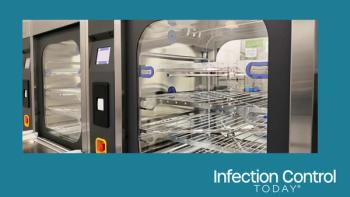
Growth of medical device cleaning market: The global medical device cleaning market is projected to grow from $2.87 billion in 2026 to $3.93 billion by 2031, representing a compound annual growth rate of 6.5%, according to