What happens when one disinfectant cannot satisfy every IFU? At AHE in New Orleans, Diane Cullen discusses weighted risk assessment, documenting difficult decisions, and why infection prevention and EVS need to work together.
At AORN 2026, Colleen Becker, PhD, MSN, RN, CCRN-K, highlights how nursing education must evolve with technology, generational learning styles, and workforce shortages to better prepare nurses for modern health care challenges.
At the 2026 AORN Global Surgical Conference & Expo (AORN26) (Association of periOperative Registered Nurses) held in New Orleans, LA, April 11 to 14, 2026, Colleen Becker, PhD, MSN, RN, CCRN-K, senior director of perioperative education for AORN, offered a forward-looking perspective on one of the most pressing issues facing the profession: how to educate a rapidly changing nursing workforce.
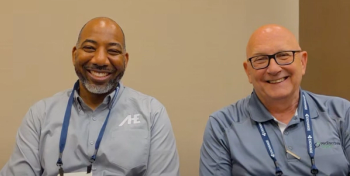
Dr Becker and I spoke in a small room at the conference center, a quiet moment in a chaotic yet fun weekend of perioperative nurse learning and networking. We spent some time chatting about
Then our discussion turned to nursing education and how the nursing profession had changed. Becker’s focus was clear. Nursing education is no longer just about delivering information. It must be understood and applied as a science.
“The topic is education landscape because we have so much evolving… and I don’t think people realize what’s going on,” Becker said.
According to Becker, the profession has already undergone a significant transformation. Nursing education began in hospital-based diploma programs, shifted into academic institutions, and has now moved into hybrid, technology-driven formats. This evolution is not slowing. Instead, it is accelerating, shaped by digital tools, workforce demands, and new expectations from learners.
At the center of this transformation is a fundamental shift in thinking. Education must be evidence-based, research-driven, and tailored to how nurses learn and apply knowledge in real-world settings.
“Viewing education as a science… can really benefit the learners and the nurses with whom we work,” Becker explained.
One of the biggest challenges in this landscape is the workforce's diversity. Becker noted that at least 5 generations are currently working in nursing, each with different educational backgrounds, preferences, and expectations. This creates a complex environment for educators who must design programs that are effective for all learners.
The contrast can be striking. Becker described a moment at the conference that highlighted this divide.
“I was talking to a nurse today… she had everything printed out. She says, ‘I have to have my paper.’… However, the person standing next to her, you could see the look on her face that was completely foreign to her. She had to have it on her phone,” Becker said.
These differences are not just preferences. They reflect deeper shifts in how information is consumed, processed, and retained. For Becker, the solution is not to choose one method over another, but to design education that is flexible, accessible, and grounded in application.
“It’s really all about application-based learning… something that they can turn around and becomes tangible that same day,” she said.
This approach moves away from traditional paper-and-pencil testing toward case studies and real-world scenarios that mirror clinical practice. The goal is not just knowledge acquisition, but immediate usability.
Hospitals and facilities also have a place in this discussion, Becker said. “What do the nurses want from an educational perspective, and what do those hospitals and facilities want from an educational perspective? And tying that together, how do those overlap?”
Then she asked about associations like AORN can do for their members. “What can associations provide? It's becoming even more evident that education is the revenue driver of associations, so to continue that, you really need to meet the needs of your learners, as well as those who employ and develop them. It's the intersection of those discussions from a science perspective.”
Another critical issue Becker addressed is the growing demand for nurses. Workforce projections indicate a need for approximately 100,000 new nurses each year through 2035. At the same time, the population is aging, and a large segment of experienced nurses is approaching retirement.
“You need 100,000 new nurses a year… and that’s on the heels of not only the boomers retiring, but they’re going to need care,” Becker said.
This dual pressure creates a significant challenge. The health care system must replace retiring nurses while also expanding capacity to care for an aging population. Education plays a central role in meeting that demand.
At the same time, the types of nursing roles are evolving. Becker pointed to emerging areas such as telehealth, virtual care, and informatics as some of the fastest-growing specialties. Informatics nurses, for example, help design and optimize systems that make health care technology more usable for clinicians.
These positions may benefit both older nurses and their patients. “That's another group of nurses that you have a lot of knowledge and expertise sitting out there, and how can that be leveraged? So just because somebody achieves an age in life doesn't mean that they're not still a value.”
“There’s more of a desire to recruit those,” she said, noting that these roles may also appeal to newer generations entering the field.
Despite these changes in the nursing field, Becker emphasized that technology, including artificial intelligence (AI), will not replace nurses. Instead, it should be viewed as a tool that supports education and practice.
“I get asked often if I’m worried that AI is going to take our jobs. And my answer is no,” she said, pointing to the irreplaceable human elements of nursing, including ethical decision-making and patient-centered care.
Ultimately, Becker’s message is about alignment. Education must meet the needs of learners, health care organizations, and the broader system. It must also address barriers, such as a shortage of experienced educators, by developing new ways to train those who teach.
“Here’s where we are, here’s where we’re headed… and how can we mitigate those challenges?” she said.
My chat with Dr Becker wasn’t going to resolve the issue of the future of nursing education, but bringing it to the fore is imperative. The future of nursing education will not be defined by a single method or model but will be shaped by adaptability, evidence, and a deeper understanding of how nurses learn across generations.