An imported case of Bundibugyo virus disease in Kenya raises questions about airport screening, clinical recognition, and potential exposures, highlighting the importance of coordinated contact tracing and hospital infection prevention readiness.
Brenna Doran, PhD, MA, ACC, CIC, AL-CIP, is a certified coach and CEO of Innovative Partnership Institute, LLC.
An imported case of Bundibugyo virus disease in Kenya raises questions about airport screening, clinical recognition, and potential exposures, highlighting the importance of coordinated contact tracing and hospital infection prevention readiness.

The knowledge used to prevent infections can also be misused. Through a personal reflection on gaming, AI, and biological research, an infection preventionist explores why faster answers make human judgment, peer consultation, and accountability increasingly important.
High contact follow-up rates suggest progress, but who is being missed? Inside the DRC’s Ebola response, shortages, strained treatment centers, and gaps in community trust reveal a more complicated story.

During National EVS Week, appreciation matters, but partnership matters more. Environmental services professionals bring infection prevention expertise and a unique understanding of the health care environment that can help identify barriers, improve cleaning and disinfection practices, and ultimately protect patients.
Nearly 4 months into the DRC's Bundibugyo virus disease outbreak, some indicators suggest transmission may be slowing. But shifting hotspots, treatment-center capacity problems, community deaths, and incomplete surveillance data show why national case totals alone cannot determine whether containment has been achieved.

CBIC and APIC say updated IPU requirements are intended to protect infection prevention education from commercial influence. But differing guidance, questions about industry support, and concerns about educational access leave IPs asking for a clearer, more consistent road map.
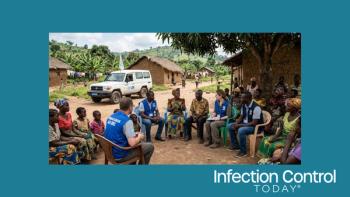
Is the Ebola outbreak in the DRC getting better? The answer depends on which numbers you examine. Several important indicators are moving in the right direction, including slower case growth and a declining Rₜ. But major gaps remain in contact tracing, testing, community deaths, safe burial coverage, and treatment capacity in some of the hardest-hit areas. ICT takes a deeper look at the latest outbreak data and why the numbers suggest cautious optimism, not victory.
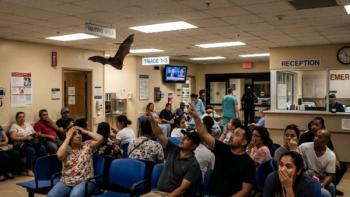
There’s a bat in the hospital. Now what? Before anyone swats it, grabs it, or throws it away, infection prevention needs staff to understand one thing: That bat may be critical evidence in determining whether patients and employees need rabies PEP. One bat. One bad decision. A potentially enormous exposure investigation.
CBIC's new IPU requirements are intended to protect continuing education from commercial influence. But they could also change who provides education, who funds it, and who ultimately pays for it. When “free” education gets more expensive to provide, somebody has to pick up the bill.
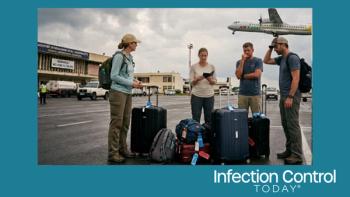
New US Ebola travel restrictions require many travelers leaving the DRC to spend 21 days outside the country before returning home, creating logistical, financial, and operational challenges for health care responders.
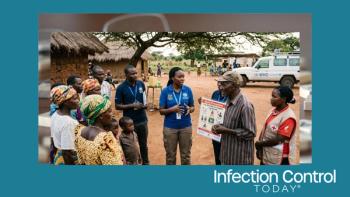
What does a measles exposure investigation have in common with an Ebola outbreak? More than you might think. A new perspective explores how trust, surveillance, and contact tracing shaped Uganda's successful Ebola response.
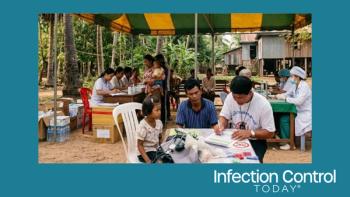
How much infection prevention training should volunteers receive before participating in medical missions? A new perspective in Infection Control Today follows one college student's experience volunteering in rural Cambodia, where he was asked to perform clinical tasks well beyond his training. Years later, he realized just how many infection prevention risks he had unknowingly encountered. The article explores what his experience reveals about volunteer preparation, resource-limited care, and why basic infection prevention education should be considered essential for anyone participating in clinical outreach. Read the full story.
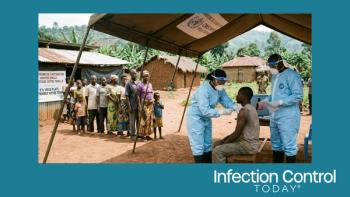
The latest Ebola outbreak is raising new challenges for global public health. Existing Ebola vaccines were designed for a different viral strain, leaving health care workers and communities to rely on supportive care while researchers test promising new treatments and vaccine candidates. Learn what this means for infection prevention professionals.
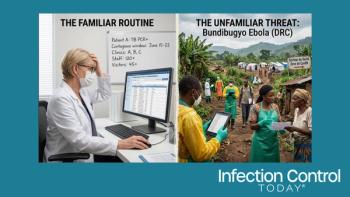
What makes contact tracing effective during an Ebola outbreak? This article explains how IPs and public health teams use the same core principles, such as rapid case identification, exposure assessment, contact monitoring, and community engagement, to reduce disease transmission. Using the ongoing Bundibugyo Ebola outbreak in the DRC as a case study, it highlights why trust, surveillance, and high contact follow-up rates remain essential to successful IPC efforts worldwide.
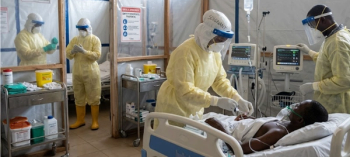
More than 100 health care workers have been infected during the current Ebola outbreak in the Democratic Republic of the Congo and Uganda. While the risk to US health care facilities remains low, the outbreak provides powerful lessons about PPE readiness, surveillance, staffing, and community trust. This commentary explores why infection preventionists should pay close attention, not because Ebola is coming here, but because the challenges are universal.
As the Ebola outbreak in the Democratic Republic of the Congo and Uganda grows, this commentary examines why sustained investment in NETEC and the National Special Pathogen System remains essential for US preparedness.
What determines whether an Ebola outbreak explodes? According to a new CDC model, it may be less about the virus and more about how long it spreads before it's recognized. Early detection remains one of the most powerful tools in infection prevention.

What should infection preventionists do when a patient presents with possible anthrax exposure after a suspicious incident? This article explores a realistic bioterrorism response scenario, highlighting the critical role of infection preventionists, public health partnerships, and laboratory coordination. It also introduces Bacillus cereus biovar anthracis (Bcbva), an emerging pathogen that can mimic anthrax while appearing to be a common laboratory contaminant. Learn how to recognize potential biosecurity threats, navigate specimen management, and build the public health relationships needed before an emergency occurs.
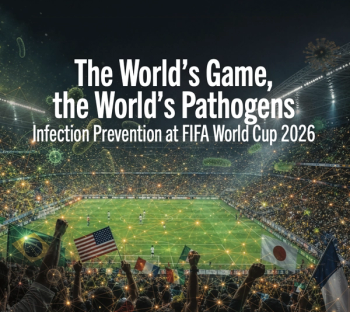
The 2026 FIFA World Cup will present one of the most complex infectious disease challenges ever faced by infection preventionists and public health officials. Spanning 3 countries, 16 host cities, and millions of international travelers, the tournament creates opportunities for the spread of respiratory illnesses, foodborne diseases, sexually transmitted infections, vector-borne pathogens, and rare high-consequence diseases. While the matches will last only a few weeks, surveillance efforts will need to continue for months afterward as infections such as tuberculosis and other travel-associated diseases emerge.
The Bug of the Month helps educate readers about existing and emerging pathogens that are clinically important in today's health care facilities.
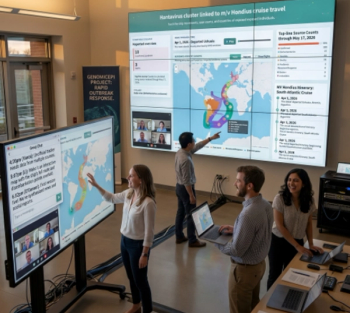
The MV Hondius hantavirus outbreak exposed a critical surveillance gap: by the time official alerts were issued, exposed passengers had already dispersed across multiple countries. This article explores how infection preventionists can use emerging open-source dashboards, real-time data aggregation tools, and internal informatics systems to bridge the dangerous lag between exposure events and actionable public health intelligence. From cruise ship outbreaks to facility-level exposures, the piece examines how digital surveillance may help IPs shift from reactive outbreak reconstruction to faster, proactive containment strategies.

The 2026 Bundibugyo Ebola outbreak is rapidly escalating across the DRC and Uganda, exposing how fragile global outbreak preparedness becomes when surveillance systems, community engagement programs, and frontline public health infrastructure are allowed to erode. This article examines how delayed detection, funding cuts, weakened infection prevention capacity, and growing community resistance are complicating containment efforts for a strain with no approved vaccine or targeted treatment. The outbreak is becoming a stark reminder that global health security depends on sustained investment long before the next emergency begins.
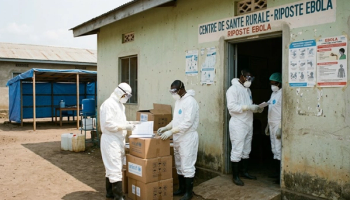
The 2026 Ebola outbreak is forcing infection prevention teams to confront a difficult question: Are hospitals truly prepared for a high-consequence infectious disease event today? With the rare Bundibugyo strain spreading across Central Africa and no licensed vaccine or approved treatment available, experts say now is the time for facilities to reopen, review, and test the HCID response plans many have not touched since 2015.
This 6-part series will chronicle the essential strategies and professional insights needed to empower infection preventionists (IPs) in their job search. In partnership with Jonnie Jacobs, an executive recruiter at Clutch Recruitment, this series will offer a comprehensive guide to navigating the current health care job market. This third article in the series focuses on connecting with specialized recruiters and navigating the hiring process.
This 6-part series chronicles the journey of 2 infection prevention leaders, Brenna Doran and Jessica Swain, who partnered to research and shed light on the critical issue of IP staffing in the current health care landscape. The fourth article in the series will focus on the impact of geographic variations and staffing models on the support for infection prevention programs.
A national survey of infection preventionists reveals deep concerns about staffing shortages, lack of leadership support, limited authority, and outdated surveillance systems. IP professionals warn that without structural investment, modernization, and executive recognition of their operational value, patient safety, regulatory compliance, and hospital financial stability remain at risk.

Infection preventionists are experts at stopping pathogens, but many of the field’s hardest challenges are human. Contagious Conversations is a new video series that opens the candid, sometimes uncomfortable discussions about who belongs in infection prevention, how teams hire and grow, and what it will take to build a stronger workforce. Expect curiosity, honesty, and practical takeaways, not hot takes.
Infection preventionists are experts at stopping pathogens, but many of the field’s hardest challenges are human. Contagious Conversations is a new video series that opens the candid, sometimes uncomfortable discussions about who belongs in infection prevention, how teams hire and grow, and what it will take to build a stronger workforce. Expect curiosity, honesty, and practical takeaways, not hot takes.

This article is the first in a 3-part series exploring the "invisible shields" that protect our everyday world from biological threats. In an era defined by rapid climate shifts and 24-hour global travel, biosecurity has evolved from a niche laboratory concern into a critical pillar of national defense. However, this evolution coincides with a period where diplomatic trust is at a historic low and international cooperation is increasingly fragile.
Infection prevention professionals are facing a critical breaking point. New survey data reveal widespread understaffing, rising burnout, and systemic undervaluation that threaten patient safety, outbreak readiness, and health system resilience.