

News|Articles|June 22, 2026
Can Hantavirus Spread Between People? What to Know About the Cruise Ship Outbreak and Pandemic Risk
Author(s)Nsisong Asanga, MBBCh, MPH, FIMC
A recent hantavirus outbreak linked to an Atlantic cruise ship has raised questions about whether the virus could spark another global health emergency. While experts say the risk of a COVID-19-style pandemic remains low, the outbreak highlights the unique concerns surrounding the Andes virus, the only hantavirus known to spread from person to person. Learn how hantaviruses are transmitted, why the Andes virus is different, the symptoms clinicians should recognize, and what infection prevention and public health professionals need to know about this emerging outbreak.
Advertisement
Although it seldom makes headlines,
Fortunately, the evidence says otherwise, and experts are equally reassuring. “With appropriate isolation, quarantine, and infection control procedures, this outbreak should be limited. There is little reason for concern about another global pandemic from this Andes virus outbreak,” says
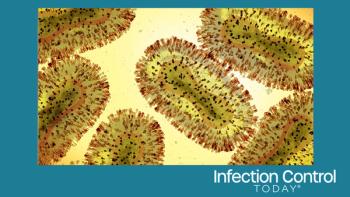
Hantaviruses belong to the family Hantaviridae and the order Bunyavirales. They are enveloped, negative-sense, single-stranded RNA viruses with a genome comprising small (S), medium (M), and large (L) segments. These segments encode a nucleocapsid protein, glycoproteins Gn and Gc, and the RNA-dependent RNA polymerase.2 Gn and Gc allow for entry into a host through integrins on endothelial cells.
An infection with hantavirus produces 2 main clinical syndromes: hantavirus cardiopulmonary syndrome (HCPS), which is more prevalent in the Americas, and hemorrhagic fever with renal syndrome (HFRS), which is common in Eurasia. HCPS is a more severe disease, with a case fatality rate of between 40 and 50%.3 Since there are no approved antiviral medications or vaccines for hantavirus, early diagnosis and prevention are particularly important.4,5
Rodents are the primary hosts of these viruses. A specific hantavirus species lives in a specific kind of rodent, without making it sick. These infected rodents then transmit the infection to humans, who are incidental hosts. Hantaviruses are typically transmitted to humans by inhaling the “aerosolized feces, urine or saliva from infected rodents,” says Yonts.
Hantaviruses are categorized into 2 groups based on their geographic distribution and the clinical symptoms they cause. Old-world hantaviruses, including Hantaan, Seoul, Sobrava, and Puumala, cause Hemorrhagic Fever with Renal Syndrome (HFRS), a syndrome characterized by acute kidney injury and hemorrhage. “Despite the scarier name, HFRS is generally milder and has a lower mortality rate 91-15%) ed rus Caithe New World hantaviruses," says Yonts.
New world viruses such as Sin Nombre virus (SNV), found in the Southwestern US, and Andes virus (ANDV), found in Argentina and Chile, cause a severe cardiopulmonary syndrome called Hantavirus Cardiopulmonary Syndrome (HCPS), which has a high mortality rate (20-50%).2
SNV causes most of the HCPS cases in North America. While ANDV causes more HCPS cases in South America. ANDV is the only hantavirus that can be transmitted from person to person, making it an important strain.1 The virulence of hantavirus varies widely from strain to strain, with Hantaan and ANDV causing the most severe disease.
High viral loads and an overactive immune response are associated with poor prognosis in both HFRS and HCPS, suggesting that a dysregulated immune response contributes to the disease’s pathogenesis.7
“Historically. HCPS cases have been associated with exposures involving prolonged or intense contact with dried rodent feces or urine,” says Yonts. Such exposures typically occur while dry cleaning or sweeping a cabin, basement, or empty home at the beginning of spring, or the deconstruction or remodeling of structures in which rodents are present,” she adds.
The ANDV is usually carried by long-tailed pygmy rice rats in rural Chile and Argentina. Inhalation is more likely to happen in poorly ventilated spaces.8 This may be in domestic environments or in the workspace. Infection can also occur through direct contact with infected material or by being bitten by a rodent, but these routes are uncommon.
Person-to-person transmission is extremely rare and likely occurs by inhaling respiratory droplets from infected individuals during the acute febrile phase.
Symptoms of HCPS typically develop 2 to 4 weeks after exposure, although they can happen anywhere from 1 to 8 weeks. For HFRS, the incubation is shorter, somewhere between 2 and 3 weeks.3
HCPS has 4 clinical phases. There is a nonspecific prodromal phase that lasts 3 to 5 days. During this phase, patients experience fever, myalgia, fatigue, and gastrointestinal symptoms. Afterward, there is a cardiopulmonary phase characterized by rapid noncardiogenic pulmonary edema, hypoxia, and shock in severe cases.9 The disease is often severe enough for patients to require mechanical ventilation and vasopressin support.
“Hantavirus infections, particularly those causing HCPS, can be severe because the virus targets the vascular endothelium. This leads to increased capillary permeability, causing fluid leakage into tissues (especially the lungs). The result can be rapid progression to pulmonary edema, respiratory failure, and shock, often within 24–48 hours in severe cases,” says
A diuretic phase signals the start of recovery, and the convalescent phase, during which symptoms subside (despite persistent fatigue), can take weeks. HFRS with acute kidney injury and hemorrhage as its key features has 5 phases: febrile, hypotensive, oliguric, diuretic, and convalescent phases.6 In some cases, especially during the oliguric phase, there is a need for dialysis.
Hantavirus should be suspected in people with a suspicious, unexplained febrile illness with nonspecific symptoms, especially in the context of rodent exposure. Geographical location can offer more clues. During the cardiopulmonary phase, a presumptive diagnosis can be made if the patient meets 4 of the following 5 criteria: thrombocytopenia, left shift in the granulocytic lineage, absence of toxic granulation in the myeloid series, hemoconcentration, and an immunoblast population greater than 10% of the total leukocyte count.9
Other laboratory findings suggestive of HCPS include thrombocytopenia, elevated lactate dehydrogenase, and immunoblasts on peripheral blood film.2 Hantavirus is confirmed by serology, which detects specific antibodies, or by reverse transcriptase-polymerase chain reaction.
There are no FDA-approved drugs for the treatment of hantavirus. Therefore, supportive care is crucial. In HCPS, fluid management is critical. Pulmonary edema can be worsened by aggressive fluid resuscitation. In HFRS, patients may need dialysis, especially during the oliguric phase.
Rodent control is the mainstay of prevention, reducing contact with rodents and their droplets. Rodent access to homes and outbuildings should be sealed, their breeding grounds destroyed, and their food sources eliminated.
When cleaning areas likely to have been contaminated by rodents, individuals should wear gloves and a face mask. Wetting areas with disinfectants or bleach before cleaning can stop droplets from rising into the air.
“Families should avoid sweeping or vacuuming rodent-contaminated areas,” warns
In settings where person-to-person transmission is a risk, people with nonspecific symptoms resembling hantavirus should be kept away from others. Clinicians should consult reputable sources, such as the US CDC, for updates. They should consider hantavirus in patients presenting with respiratory symptoms who have a compatible exposure history, including possible rodent exposure in high-risk areas, such as the Southwest US, or during travel or aboard ships.
“Early recognition is important because patients can deteriorate rapidly and may require intensive supportive care. Providers should obtain detailed travel and environmental exposure histories and coordinate promptly with local or state public health authorities if hantavirus is suspected. While rare, awareness is critical because the initial presentation can resemble more common respiratory infections,” says Dyjack.
Development of vaccines against hantavirus is ongoing and has seen some progress. Phase 1 trials of vaccines for Hataan and Puumala viruses showed that the vaccines were well-tolerated and safe.11 The vaccine performance was satisfactory in inducing an immune response. More research is urgently needed on vaccines, treatments, diagnostics, and genomic sequencing to track emerging strains and understand outbreaks better.12
Hantavirus disease has been a neglected zoonosis that has infected thousands for centuries. The current outbreak with human-to-human transmission among people in upper economic groups has brought the condition to the fore, highlighting gaps in our understanding and management. We can only hope this translates to stronger political will to tackle this condition and improve the current tools for prevention, diagnosis, and treatment.
References
- Hantavirus disease. World Health Organization. May 6, 2026. Accessed June 19, 2026.
https://www.who.int/news-room/fact-sheets/detail/hantavirus - Chen RX, Gong HY, Wang X, Sun MH, Ji YF, Tan SM, et al. Zoonotic Hantaviridae with global public health significance. Viruses. 2023;15(8):1705. doi:10.3390/v15081705
- Andes Hantavirus: Epidemiology, Outbreaks and Guidance. Gov UK. May 10, 2021. Updated June 12, 2026. Accessed June 19, 2026.
https://www.gov.uk/guidance/andes-hantavirus-epidemiology-outbreaks-and-guidance - About Hantavirus. May 13, 2024. CDC. Accessed June 19, 2026.
https://www.cdc.gov/hantavirus/about/index.html - Statement on Multi-Country Hantavirus Cluster Associated with Cruise Ship Travel. AfricaCDC. May 6, 2026. Accessed June 19, 2026.
https://africacdc.org/news-item/statement-on-multi-country-hantavirus-cluster-associated-with-cruise-ship-travel/ - Mir S. Hantavirus Induced kidney disease. Frontiers in Medicine. January 17, 2022. Accessed June 19, 2026.
https://www.frontiersin.org/journals/medicine/articles/10.3389/fmed.2021.795340/full - Saavedra F, et al. Immune response during hantavirus diseases: implications for immunotherapies and vaccine design. Immunology. 2021 Jul;163(3):262-277. doi: 10.1111/imm.13322. Epub 2021 Mar 18. PMID: 33638192; PMCID: PMC8207335.
- You Can Prevent Hantavirus. CDC. June 15, 2021. Accessed June 19, 2026.
https://www.cdc.gov/hantavirus/media/pdfs/2025/01/HantavirusBrochure-508.pdf - Kennedy M, Mctabi O, Rickman C. Hantavirus Cardiopulmonary syndrome: Another Reason to Avoid Mice. J Investig Med High Impact Case Rep. 2024 Jan-Dec;12:23247096241274572. doi: 10.1177/23247096241274572. PMID: 39171739; PMCID: PMC11342309.
- Diseases, Disorders and Injuries. Canadian Center for Occupational Health. June 1, 2026. Accessed June 19, 2026.
https://www.ccohs.ca/oshanswers/diseases/hantavir.html - Hooper, J.W., Kwilas, S.A., Josleyn, M. et al.Phase 1 clinical trial of Hantaan and Puumala virus DNA vaccines delivered by needle-free injection. npj Vaccines 9, 221 (2024).
https://doi.org/10.1038/s41541-024-00998-7 - Vaheri A, Henttonen H, Mustonen J. Hantavirus research in Finland: highlights and perspectives. Viruses. 2021;13(8):1452. doi:10.3390/v13081452
Advertisement
Related Content
Advertisement



Latest CME


Advertisement
Advertisement
Trending on Infection Control Today
1
Next-Generation Mpox Vaccine Shows Promise for Durable Protection and Future Outbreak Preparedness
2
New US Ebola Travel Restrictions: What Infection Preventionists Need to Know About the 21-Day Return Policy
3
Burnout to Balance: How Mentorship Helped One Infection Preventionist Reclaim Her Purpose
4
Can We Prepare for the Next Pandemic Without Studying Dangerous Pathogens? Experts Question New Gain-of-Function Policy
5