|Articles|May 24, 2001

CDC Nails Nurses

ATLANTA, Ga-Officials at the Centers for Disease Control and Prevention (CDC) have published a new guideline on hand hygiene that states healthcare workers (HCWs) should not wear artificial nails.

The guideline says artificial nails or nail extenders should not be worn by nurses who treat patients. Artificial nails harbor pathogens that can cause nosocomial infections. Three unusual surgical site infections were recently linked back to an operating room staff member who wore artificial nails.

The guideline also recommends the use of waterless alcohol-based agents for routine hand antisepsis.

Organizations participating in the development of the guideline include the Healthcare Infection Control Practices Advisory Committee (HICPAC), the Association for Professionals in Infection Control and Epidemiology (APIC), the Society for Healthcare Epidemiology of America (SHEA), and the Infectious Diseases Society of America (IDSA).

Information from icanNews


Related to this article

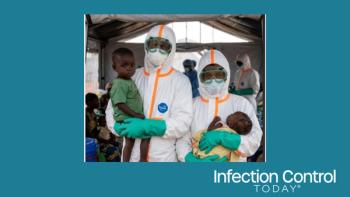
Infection preventionists in full PPE with children in DRC.  (Image credit: author with AI)
Nearly 4 months into the DRC's Bundibugyo virus disease outbreak, some indicators suggest transmission may be slowing. But shifting hotspots, treatment-center capacity problems, community deaths, and incomplete surveillance data show why national case totals alone cannot determine whether containment has been achieved.
Dyan Troxell, MSN, RN, director of clinical education at HandCraft Linen Services; J.J. Odom, MBA, CHESP, CMIP, T-CHEST, university director of buildings and grounds for UConn Health and chair-elect of the AHE Board; and Jenna Rivers, MPH, CPH, CIC, manager of infection prevention and control at Moffitt Cancer Center in Tampa, Florida.
At AHE Exchange 2026, ICT spoke with experts representing commercial laundry services, EVS, and infection prevention about the systems behind a successful reusable linen program. They discuss linen quality, reject rates, unnecessary waste, frontline education, data, PAR levels, infection prevention oversight, and why strong relationships between health care facilities and their laundry providers matter.