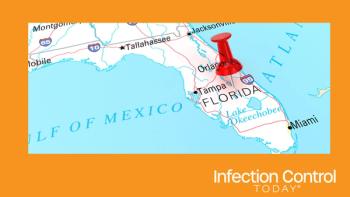
Florida’s dengue outbreak highlights the importance of recognizing symptoms, identifying warning signs, and preventing mosquito bites. Ubong Johnson, MD, explains local transmission, diagnostic testing, treatment, and practical prevention measures.
ATLANTA and WASHINGTON, D.C. -- The Centers for Disease Control and Prevention (CDC) has announced the appointment of Dr. Henry Falk as the new director of the Center for Disease Control and Prevention's (CDC) National Center for Environmental Health (NCEH). In addition, Falk will continue as assistant administrator of the Agency for Toxic Substances and Disease Registry (ATSDR).
"Dr. Falk has over 30 years experience in protecting public health. In addition, his early disease investigations as an Epidemic Intelligence Service officer helped lead to the creation of the National Center for Environmental Health. The nation's environmental health capacity will be stronger as a result of Dr. Falk's leadership," said HHS Secretary Tommy G. Thompson.
"The appointment of Dr. Falk to lead NCEH and ATSDR is the first step in a process to consolidate administration and management activities of these two organizations, both of which have tremendous expertise in environmental public health issues," said Dr. Julie Gerberding, CDC director. "This consolidation will help leverage this expertise and increase synergies in order for CDC to continue to be the nation's premier public health agency when it comes to environmental issues."
Falk has served as the assistant administrator for ATSDR since July 1999. Previously he served as director of the division of environmental hazards and health effects at NCEH for 14 years. Under Falk's leadership, ATSDR has expanded its cooperative agreement program, which provides technical assistance and funds for states and other partners to conduct public health assessment activities at waste sites. The agency has also accomplished its goal of having a Pediatric Environmental Health Specialty Unit in each federal region to serve as a resource for physicians, parents and others, and initiated a series of public health activities in many key sites, including Libby, Mont., where ATSDR has assisted Libby residents who were exposed to asbestos in vermiculite mined there for many years.
Falk received his doctor of medicine (MD) degree from the Albert Einstein College of Medicine in New York City in 1968 and a master of public health (MPH) degree from the Harvard School of Public Health in Boston in 1976. Falk began his career with CDC in 1972 as an Epidemic Intelligence Service (EIS) officer stationed at Texas Children's Hospital in Houston.
Former NCEH director Dr. Richard Jackson will serve as senior advisor to Gerberding as part of the CDC executive leadership team. In making the announcement, Gerberding thanked Jackson for his contributions to the agency's environmental health agenda over the past decade. Jackson will focus his attention and expertise on a broad range of public health challenges including the expansion of external collaborations.
Source: CDC