A team of American infectious disease and critical care experts is alerting colleagues caring for Ebola patients that how they remove their personal protective gear can be just as crucial as wearing it to prevent exposure to the deadly virus.
In a commentary published online on Aug. 26 in the Annals of Internal Medicine, the physician-specialists from Johns Hopkins and the University of North Carolina say rigorous steps exist - and must be taken - to avoid inadvertent contact of frontline caregivers’ exposed skin and mucous membranes to infected body fluids.
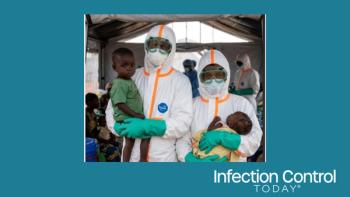
Personal protective equipment, including goggles or face shields, gloves and gowns, are effectively decreasing West African caregivers’ exposure to infected bodily fluids, but workers are still at risk “if removal of protective clothing that is contaminated with infectious bodily fluids is not done in a manner that prevents exposure,” say the authors, who include Trish M. Perl, MD, MS, and Noreen Hynes, MD, MPH, two Johns Hopkins infectious disease experts.
Perl is senior epidemiologist for the Johns Hopkins Health System and a consultant to the Johns Hopkins Office of Critical Event Preparedness and Response (CEPAR), which is overseeing and coordinating Johns Hopkins’ readiness for any potential Ebola patient. Hynes is the director of the Geographic Medicine Center in the Division of Infectious Diseases. William Fischer II, MD, of the University of North Carolina School of Medicine also co-authored the commentary.
“The physical exhaustion and emotional fatigue that come with caring for patients infected with Ebola may further increase the chance of an inadvertent exposure to bodily fluids on the outside of the personal protective equipment, leading to unwanted contact when the gear is removed,” the authors say. “The impulse to wipe away sweat in the ever-present hot, humid environment during personal protective equipment removal may lead to inadvertent inoculation of mucous membranes” in and on the nose, mouth and eyes.
According to the World Health Organization, the unprecedented outbreak of Ebola in West Africa has resulted in a “high proportion of doctors, nurses and other healthcare workers who have been infected.” Last week it came to light that another U.S. doctor had been exposed to Ebola. Rick Sacra was working in an obstetrics unit of a hospital in the Liberian capital of Monrovia. He is now being treated at the Nebraska Medical Center in Omaha.
To date, says the World Health Organization, more than 240 healthcare workers have developed the disease in Guinea, Liberia, Nigeria and Sierra Leone. More than 120 have died, including prominent doctors in Sierra Leone and Liberia.
Despite the challenges of preventing inadvertent exposure from improper personal protective equipment removal, they say that healthcare workers are generally aware of and are using proper precautions.
For example, treatment sites in Africa administered by Médecins Sans Frontières, a medical humanitarian organization, have established a systematic process to mitigate the risks associated with removal of personal protective equipment, including a buddy system in which healthcare workers walk each other through each step of the removal process to help ensure safety.
Closer to home, CEPAR, in collaboration with Perl, has established a number of clinical guidelines and tools to ensure Johns Hopkins hospitals, outpatient clinics and primary care offices take adequate precautions when encountering patients who have had a history of recent travel to West Africa.
Such precautions include proper procedures for the donning and doffing of PPE for any patient identified as having such a travel history and who has symptoms associated with Ebola.
“Despite its lethal nature, Ebola transmission can be interrupted with simple interventions and by focusing on basics. Improvement in basic healthcare infrastructure and providing an adequate supply of personal protective equipment, along with a ritualized process for donning and doffing personal protective equipment, are desperately needed to prevent further unnecessary infection and loss of life among the heroic healthcare workers who are on the front lines of this war,” the authors write in the commentary.
Source: Johns Hopkins Medicine