WASHINGTON, D.C. -- An intensive program of handwashing education and promotion in Pakistan decreased the incidence of diarrhea by more than 50 percent among children, according to a study in the June 2, 2004 issue of The Journal of the American Medical Association (JAMA).
Stephen P. Luby, MD, of the Centers for Disease Control and Prevention, presented the findings of the study at a JAMA media briefing at the National Press Club in Washington, D.C.
Nearly 2 million children worldwide die annually from diarrheal disease, according to background information in the article. Previous studies have estimated that handwashing promotion interventions could prevent 1 million child deaths per year. Washing hands with soap prevents diarrhea, but children at the highest risk of death from diarrhea are younger than 1 year, too young to wash their own hands. Previous studies could not adequately assess the impact of household handwashing on diarrhea in infants.
Luby and colleagues evaluated whether promotion of handwashing with soap among adult and children household members decreased diarrhea among children at the highest risk of death from diarrhea. The study was conducted among 36 low-income neighborhoods in urban squatter settlements in Karachi, Pakistan. Eligible households located in the study area had at least two children younger than 15 years, at least one of whom was younger than 5 years.
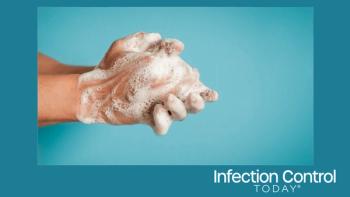
As part of the intervention, field workers visited participating households at least weekly from April 2002 to April 2003 in 25 neighborhoods to provide education to all household members old enough to understand about proper handwashing with soap after defecation and before preparing food, eating, and feeding a child. They used slide shows, videotapes, and pamphlets to illustrate health problems resulting from contaminated hands. Within intervention neighborhoods, 300 households (1,523 children) received a regular supply of antibacterial soap and 300 households (1,640 children) received plain soap. A total of 11 neighborhoods (306 households and 1,528 children) were randomized to the control group, which did not receive handwashing education or soap.
The researchers found that children younger than 15 years living in households that received handwashing education and plain soap had a 53 percent lower incidence of diarrhea compared with children living in households that did not receive such education or soap.
"Infants living in households that received handwashing promotion and plain soap had 39 percent fewer days with diarrhea vs. infants living in control neighborhoods. Severely malnourished children younger than 5 years living in households that received handwashing promotion and plain soap had 42 percent fewer days with diarrhea vs. severely malnourished children in the control group," the authors wrote.
The authors found similar reductions in diarrhea in households using both plain and antibacterial soap. The authors report, "We found no significant difference in diarrheal disease among persons living in households receiving antibacterial soap compared with plain soap. This is not surprising because triclocarban [in the antibacterial soap] is a bacteriostatic agent that inhibits the growth of some gram-positive bacteria but is not effective against gram-negative bacteria, viruses, or parasites that cause infectious diarrhea." The authors note that the act of handwashing with soap physically removes pathogens that may cause diarrhea from hands that might otherwise transmit these pathogens to vulnerable infants.
"Although visiting households weekly to provide free soap and encourage handwashing was effective in reducing diarrhea, this approach is prohibitively expensive for widespread implementation. The next essential step is to develop effective approaches to promote handwashing that cost less and can be used to reach millions of at-risk households. Studies evaluating the durability of behavioral change from handwashing promotion are also important to assess cost-effectiveness. In the interim, existing public health programs should experiment with integrating handwashing promotion into their current activities," the authors conclude.
Source: JAMA