Drug-Resistant Ringworm Has Reached 29 Countries—and It's Harder to Treat Than It Looks
What Is Trichophyton indotineae? Drug-Resistant Ringworm Spreads to 29 Countries | September 17, 2026
An emerging dermatophyte, Trichophyton indotineae, has now been confirmed in 29 countries, and it is resistant to terbinafine—the standard first-line oral treatment for ringworm. First described in India in 2016, the fungus carries a mutation in the squalene epoxidase gene that renders it resistant to terbinafine, and it closely resembles other fungi under the microscope, making routine lab tests unreliable for diagnosis.
Contributing author Nsisong Asanga, MBBCh, MPH, FIMC, explains that advanced identification tools such as MALDI-TOF mass spectrometry using the free MSI application—now deployed across a 27-country network—are key to accurate detection. Clinicians who encounter terbinafine-resistant or worsening ringworm should consider itraconazole and counsel patients on hygiene and transmission prevention.
The Measles Outbreak Is Not What Politicians Are Saying It Is
What Is Causing the 2026 US Measles Outbreak? Vaccination Rates, Travel, and Immigration Examined | September 15, 2026
As confirmed US measles cases topped 3,294 as of September 10—with a third death reported in Pennsylvania—Kevin Kavanagh, MD, dissects the political narrative blaming illegal immigration and finds the data tell a more complicated story. The US MMR vaccination rate is approximately 92%, well below the 95% threshold for herd immunity, and the percentage of counties meeting that threshold has dropped from 50% to 28% in recent years.
The federal government stopped tracking childhood vaccination rates at the state level in early 2026, the same year the outbreak accelerated. Kavanagh notes that legal travelers, US citizens returning from abroad, and declining domestic vaccination coverage are all established drivers of outbreaks—and that measles, as the most transmissible disease known to humanity, doesn't need many gaps to exploit.
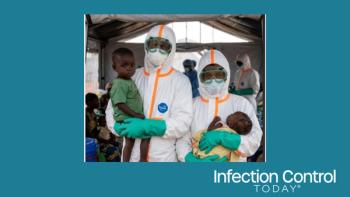
Four Months Into the Bundibugyo Outbreak: What the Numbers Are—and Aren't—Telling Us
Chasing the Bundibugyo Outbreak: How Static Numbers Hide a Moving Epidemic | September 15, 2026
Brenna Doran, PhD, CIC, AL-CIP, takes a rigorous data-driven look at the DRC's ongoing Bundibugyo virus disease outbreak and finds that national totals obscure the real picture. As of September 10, cumulative confirmed cases in North Kivu had grown 164% and Haut-Uélé by 265% in just over a month, even as Ituri's numbers leveled off—a clear geographic shift in transmission.
Three out of 4 deaths last week occurred outside a treatment center, and North Kivu's treatment center is operating at 141% capacity while Bas-Uélé has no center at all. The encouraging signs, including diagnostic time cut from 10 days to 1–2, contact follow-up rising to 88%, and lab capacity scaling to 3,180 samples per day, are real, but Doran argues the tide has only just begun to turn, and no single metric tells the whole story.
A 10-Year NIH-Funded Study Asks: What Happens Between Cleanings?
Biocidal Hospital Surfaces and HAI Reduction: What a 10-Year NIH-Funded Study Found | September 14, 2026
A decade of Veterans Health Administration data, analyzed using Bayesian statistical modeling, found a 90% probability of a 50% reduction in HAIs attributable to continuously active EOScu copper-infused surfaces. Erica Mitchell, Ken Trinder, and Kate Mitchell of EOS Surfaces discuss the study with ICT, emphasizing that even a freshly cleaned high-touch surface can be recontaminated within minutes—and that passive technologies can help bridge the gap between episodic cleaning events. The panel was emphatic that no technology is a silver bullet and encouraged infection preventionists to continue scrutinizing the evidence behind any product claim.
National EVS Week: Partnership, Not Just Appreciation
National EVS Week 2026: Why Environmental Services Is Essential to Infection Prevention and Patient Safety | September 16, 2026
In recognition of National EVS Week (September 14–20), Brenna Doran argues that environmental services professionals are not just cleaning staff—they are infection prevention partners whose knowledge of facility workflows, cleaning barriers, and patient environments makes them indispensable to IPC teams.
The article calls on infection preventionists and facility leaders to move beyond annual recognition and build ongoing collaborative relationships with EVS. During a week when the profession celebrates its frontline workforce, the message is practical: the best cleaning programs are built on sustained engagement, not just gratitude.
ICT Marks 30 Years With Its First Digital Magazine
Infection Control Today Launches First Digital Magazine for Infection Prevention Professionals | September 16, 2026
Infection Control Today celebrated its 30th anniversary this week by publishing its first-ever digital magazine, bringing together long-form editorial content on outbreak analysis, biosecurity, respiratory testing, sterile processing, professional leadership, and conference coverage. The September 2026 issue represents a new publishing milestone for the brand as it expands its format options for readers.
Also on the Radar
CBIC's New Education Rules Are Generating Questions in the Field (September 11) — A trio of authors, including Deborah Ellis, PhD, CIC, and Brenna Doran, examine updated CBIC industry IPU requirements intended to protect IPC education from commercial influence. Differing guidance between CBIC and APIC, unanswered questions about industry-supported educational events, and concerns about access for smaller facilities are leaving infection preventionists without a clear road map.
AI Literacy Is Becoming an IPC Competency (September 10) — Bassel Molaeb, MPH, CIC, FAPIC, and Carole Kamangu, MPH, RN, CIC, explain how artificial intelligence tools can support surveillance, pattern identification, and training—while stressing that human judgment and clinical context remain non-negotiable.