Knowing the protocol is only the beginning. In The Clean Bite, Sherrie Busby explores how explaining the why, addressing staff concerns, and creating clear procedures can help dental teams make infection control part of everyday practice.
This week's coverage in Infection Control Today centered on a common thread: the systems, partnerships, and data that let infection prevention teams catch problems before patients are harmed.
What helps infection prevention teams turn information into action? This week’s Infection Control Today® coverage explores that question through national recognition for UPMC’s genomic surveillance program, electronic tools that give small-hospital IPs more time for prevention, and the partnerships needed to keep reprocessing practices aligned with validated requirements. We also examine how purposeful rounding and listening to environmental services staff can help teams recognize risks that might otherwise be missed.
A family’s loss of 5 children to measles in 8 days brings the stakes of prevention into deeply personal focus. Alongside that account, practical lessons in dental safety and a creative approach to teaching children handwashing remind us that prevention depends on both understanding the evidence and helping people put it into practice.
When Reprocessing Processes Drift: Why IPC and Sterile Processing Must Act Together Annetta L. McKnight examines how medical device reprocessing can slowly depart from validated requirements. Her warning is that "a followed procedure can still leave patients at risk if it no longer matches validated requirements." She argues that utility failures and equipment malfunctions call for multidisciplinary risk assessment involving sterile processing, IPC, engineering, and leadership, with IPC involved early in policy governance. Read more:
More Time for Prevention: What Small-Hospital IPs Reported After Electronic Surveillance Research, presented by Karen Jones at the APIC Annual Conference, surveyed small-hospital IPs before and after adopting electronic surveillance. More than 80% reported having more time for deep dives into their HAIs, and two-thirds gained time for unit rounds and direct communication with clinical staff. The findings suggest automation can shift IP work from data collection toward prevention. Read more:
How Purposeful Infection Prevention Rounding Supports Patient Safety and EVS Collaboration: Tommy Davis argues that IPs often overfocus on environmental deficiencies during rounds while overlooking higher-risk clinical practices such as central line care, hand hygiene, and waste disposal. He advocates structured rounding across all infection prevention domains. He also notes that EVS staff hold valuable frontline insight but may be discouraged from speaking up by professional hierarchies. Read more:
Measles Took 5 Children in 8 Days. A Century Later, Their Story Still Matters Karen M. Jones, MPH, RN, CIC, FAPIC, recounts how her grandmother lost five children to measles within eight days in 1926. She connects that history to today's outbreaks, with the CDC reporting the highest case counts since 1991. Kindergarten vaccination coverage has slipped from 95.2% to 92.4%, and roughly 95% of current cases are in unvaccinated people. Jones emphasizes trust-building and clear communication about the 97% effectiveness of two MMR doses. Read more:
The Clean Bite: Making Dental Infection Control Part of Every Day. Sherrie Busby says protocols stick when teams understand the reasoning, concerns are addressed, and workflows are clear. She cites research that 44% to 47.1% of dental sharps incidents occur during post-treatment instrument processing.
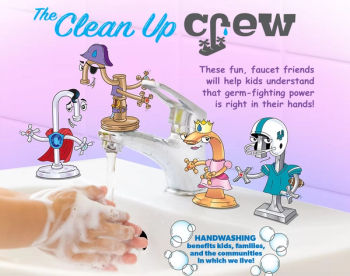
Making Handwashing Memorable: What Cartoon Faucets Can Teach Children. Artist Matthew Caliman's "Cleanup Crew" uses cartoon faucet characters, songs, and games to build children's hand hygiene habits, though the program lacks evaluation data so far.
UPMC's Genomic Surveillance Award Opens the Door to Funding Conversations UPMC received the John M. Eisenberg Patient Safety and Quality Award for its Enhanced Detection System for Healthcare-Associated Transmission (EDS-HAT), which uses whole-genome sequencing to find outbreaks. Over two years, the system detected 172 outbreaks involving 476 patients that might otherwise have gone unnoticed, preventing an estimated 62 infections and 5 deaths with nearly $700,000 in net savings. Alexander Sundermann noted that the recognition could help IPs make the case to leadership for sustainable funding, which he called "the hardest thing we've faced to date." Read more: