|Articles|March 29, 2012

Medline Announces Second Annual National Pink Glove Dance Video Competition

Joined by a dancing flash mob of more than 1,000 OR nurses from throughout the United States and Canada, Medline Industries, Inc., announced its second annual National Pink Glove Dance Video Competition in support of breast cancer awareness and prevention. The nurses were gathered for Medlines 7th Annual Breast Cancer Awareness Forum, held in conjunction with the 59th Annual Association of periOperative Registered Nurses (AORN) Congress, taking place this week in New Orleans.

The second annual competition, which will officially kick off July 2, is open to any organization in the United States and Canada that wants to gather a group of people to produce and submit their own pink glove dance video. The deadline to receive the videos is Sept. 28. All videos will be posted on the internet beginning Oct. 12 when the public can go online to vote on their favorite video. The winners will be announced Nov. 2, with the winning teams receiving a donation in their name to the breast cancer charity of their choice. For more information on the competition, go to www.pinkglovedance.com.

"The Pink Glove Dance competition encourages anyone who wants to create their own video to participate and do their part to bring hope and support to those affected by breast cancer," says Medlines president Andy Mills. It is especially gratifying to have all of these nurses participating in their own video today because we created the pink glove dance in part to honor these healthcare providers who care for those afflicted with this terrible disease.

To view this newest Pink Glove Dance video featuring OR nurses from all over North America, go to www.pinkglovedance.com.    

Medline donates more than $1 million to National Breast Cancer Foundation At Medlines annual breast cancer awareness breakfast forum today, Mills presented the National Breast Cancer Foundation (NBCF) with a check for $200,000 to help fund mammograms for underserved women. Medline has now donated more than $1 million dollars to the NBCF as part of Medlines campaign to promote early detection and awareness of breast cancer. Studies show that early detection of breast cancer can increase the five-year survival rate by more than 95 percent.

We are proud to do our part to help women get mammograms regardless of their ability to pay, Mills adds. We are committed to continue to support screening and early detection, which we all know, saves lives.

The donation to NBCF was derived, in part, from the proceeds from Medline's Generation Pink® gloves and other pink products Medline manufactures and sells such as canes, walkers, apparel and other health care items.

Medlines inaugural pink glove dance competition was held last fall and attracted 139 entries from hospitals, nursing homes, schools and other organizations across 40 U.S. states and Canada. The national competition quickly became a national social media phenomenon with more than 1.2 million views, half a million online votes and thousands of tweets, blogs and texts. In all, more than 17,000 people were featured in the videos, which are all available for viewing at pinkglovedance.com.

Last years national winner was Lexington Medical Center in West Columbia, S.C., with 61,054 votes more than four times the population of their entire city (14,061). Their creative video features a dancing environmental services assistant, as well as hundreds of hospital staff, including a number of breast cancer survivors, all dancing in pink gloves to Katy Perry's hit song "Firework" all in the name of breast cancer awareness.

The original Pink Glove Dance video premiered in November 2009 and featured 200 Portland, Ore. hospital workers wearing Medlines pink gloves and dancing in support of breast cancer awareness and prevention. Today, that original video has more than 13 million views on YouTube® and has been the inspiration for hundreds of pink glove dance videos and breast cancer awareness events across the country. A sequel was produced in 2010 featuring 4,000 healthcare workers and breast cancer survivors throughout North America.



Related to this article

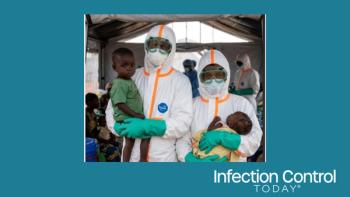
Infection preventionists in full PPE with children in DRC.  (Image credit: author with AI)
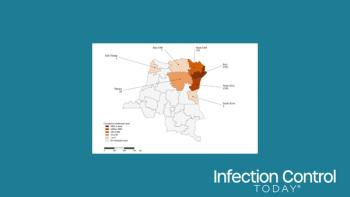
Nearly 4 months into the DRC's Bundibugyo virus disease outbreak, some indicators suggest transmission may be slowing. But shifting hotspots, treatment-center capacity problems, community deaths, and incomplete surveillance data show why national case totals alone cannot determine whether containment has been achieved.
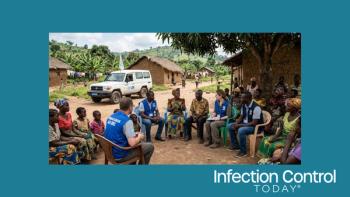
Health care workers from the US speaking with other health care workers in DRC.  (Image credit: author with AI)
Is the Ebola outbreak in the DRC getting better? The answer depends on which numbers you examine. Several important indicators are moving in the right direction, including slower case growth and a declining Rₜ. But major gaps remain in contact tracing, testing, community deaths, safe burial coverage, and treatment capacity in some of the hardest-hit areas. ICT takes a deeper look at the latest outbreak data and why the numbers suggest cautious optimism, not victory.
Dyan Troxell, MSN, RN, director of clinical education at HandCraft Linen Services; J.J. Odom, MBA, CHESP, CMIP, T-CHEST, university director of buildings and grounds for UConn Health and chair-elect of the AHE Board; and Jenna Rivers, MPH, CPH, CIC, manager of infection prevention and control at Moffitt Cancer Center in Tampa, Florida.
At AHE Exchange 2026, ICT spoke with experts representing commercial laundry services, EVS, and infection prevention about the systems behind a successful reusable linen program. They discuss linen quality, reject rates, unnecessary waste, frontline education, data, PAR levels, infection prevention oversight, and why strong relationships between health care facilities and their laundry providers matter.
A group of students raising their hands in class during a lecture  (Adobe Stock 292282454 by Mediteraneo
How do you celebrate an infection that never happened? That's one of the unusual challenges infection preventionists share with teachers. Both can spend their careers changing outcomes they may never see. Both educate people who don't always want to listen. Both are second-guessed. Both face burnout. And both must somehow keep remembering why they started.