An ICU study found that alcohol-based hand rub applied after patient care reduced glove bioburden, while staff raised feasibility concerns. Researchers stress that the practice does not replace glove changes or hand hygiene.
For International Infection Prevention Week, Infection Control Today explores how prevention connects hospital departments with everyday community life and why infection preventionists (IPs), sterile processing department (SPD), professionals, and environmental services (EVS) teams deserve lasting support.
In honor of Global Handwashing Day, Jamar Shaw, MD, MPH, CIC, explains how applying the WHO 5 Moments to actual care sequences can reduce transmission risks in ambulatory settings.
This week's coverage in Infection Control Today centered on a common thread: the systems, partnerships, and data that let infection prevention teams catch problems before patients are harmed.
What might infection prevention rounds miss when visible conditions dominate the conversation? Tommy Davis, PhD, CMIP, a member of ICT's executive advisory board, makes the case for structured observations of clinical workflows, shared accountability, and greater attention to environmental services staff’s insights.
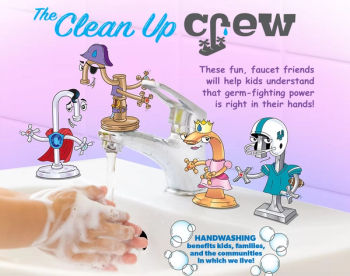
Artist and designer Matthew Caliman shares how personal loss inspired the Cleanup Crew, a handwashing education project using cartoon faucets, songs, and games to help families revisit an essential health message.
A study of 4,851 nursing home residents linked shared rooms to higher odds of matching MDRO carriage, while universal decolonization was associated with lower concordant carriage across MRSA, ESBL, and VRE.
A retrospective hospital study found no significant differences in mortality or readmissions between infectious disease e-consults and in-person consultations, despite more diagnoses of bacteremia among e-consult patients. Researchers recommend further evaluation across settings.