News|Articles|February 11, 2026

Surgical Site Infections Don’t Start in the Wound. They Start in the Room

From Joseph Lister to modern airflow engineering, operating room safety depends on more than sterile technique. This in-depth review explains why EVS, airflow control, objective cleaning verification, and SPD coordination are critical to reducing surgical site infections and building high-reliability perioperative environments.

Abstract

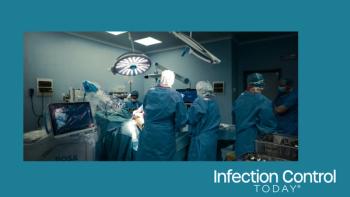
At the peak of the COVID-19 pandemic, the author assumed an expanded operational role within the health care environment due to significant staffing shortages caused by mandatory quarantine protocols. In addition to serving in an executive leadership capacity during daytime hours, the author performed direct environmental services (EVS) responsibilities in the surgical suite during evening shifts to maintain a safe and sterile operative environment. This dual-role experience provided a unique opportunity for immersive, practice-based observation and served as preliminary field exposure informing subsequent case study research.

Operating rooms (ORs) require environmental control standards that exceed those of most other clinical spaces. Open tissues, invasive devices, and high procedural complexity increase the risk of exogenous contamination and subsequent surgical site infection (SSI). Systematic environmental cleaning and disinfection, including standardized, monitored, and evidence-based interventions, interrupts transmission pathways and functions as an essential adjunct to aseptic technique.

This review traces the historical evolution of OR hygiene, integrates contemporary evidence from perioperative environmental studies, and situates current practice within the scientific framework described in Block’s Disinfection, Sterilization, and Preservation. Classic hospital housekeeping scholarship by Charlotte A. Aikens, RN; Sarah J. MacLeod, and Grace H. Brigham is examined alongside modern infection prevention literature to clarify EVS workflows, airflow dynamics, cross-contamination risks, medical waste realities, and the operational boundary between EVS and sterile processing departments (SPD).

Historical Foundations of Surgical Environmental Hygiene

Modern surgical cleanliness originated in the antiseptic reforms of Joseph Lister, OM, PC, FRS, FRCSE, FRCPGlas, FRCS, who applied germ theory to operative practice and demonstrated that environmental and instrument decontamination reduced postoperative sepsis. His methods reframed the operating space as a controllable microbial environment rather than an unavoidable source of contamination.

In parallel, Florence Nightingale institutionalized sanitation, ventilation, and order as pillars of patient survival, embedding environmental hygiene into hospital administration. Early twentieth-century hospital housekeeping manuals further professionalized these practices, translating cleanliness into routinized protocols, staffing structures, and supervisory accountability.1-3

Charlotte A. Aikens’ Hospital Housekeeping offered pragmatic guidance for cleaning, supply preparation, and the governance of domestic affairs in institutions, signaling a move from improvisation to protocol.1 In the domestic sphere, but influential for methods of soil removal, agent selection, and workflow, Sarah J. MacLeod’s The Housekeeper’s Handbook of Cleaning compiled laboratory-tested strategies for cleaning materials and surfaces, many of which presage modern notions of soil chemistry and method standardization.2 By midcentury, Grace H. Brigham’s Housekeeping for Hotels, Motels, Hospitals, Clubs, Schools reflected a cross-sector professionalization of housekeeping with explicit hospital applications, including standardized routes, staffing, inspection practices, and the importance of training, which are elements that still underpin EVS programs.3

By the early 2000s, objective verification tools such as fluorescent surface markers and adenosine triphosphate (ATP) bioluminescence assays transformed environmental hygiene from subjective assessment to measurable performance.4,5 These tools revealed persistent deficiencies in OR cleaning thoroughness and catalyzed data-driven quality improvement.

A surgically contaminated environment characterized by suboptimal environmental hygiene, inadequate ventilation control, and lapses in personnel adherence to aseptic protocols is comparable to conducting operative procedures in an uncontrolled, open-air setting exposed to environmental bioburden. Although immediate physiologic stability may be achieved, the postoperative surveillance period frequently reveals the downstream consequences of microbial contamination, often manifesting as SSIs and other health care-associated infections (HAIs) attributable to preventable breaches in environmental and procedural controls.

Environmental Cleaning and Patient Safety

Environmental surfaces in ORs serve as reservoirs for microbial transfer. A multicenter evaluation using fluorescent markers found that only one-third of high-touch OR surfaces were effectively cleaned during terminal disinfection, with peripheral objects demonstrating the lowest performance.4,6 Such findings confirm that environmental cleaning variability is a systemic risk factor.

A recent scoping review emphasized that OR cleaning effectiveness is inconsistent across institutions and often fails when improvement efforts target isolated elements (eg, product choice) rather than the entire work system, including workflow design and human factors.7 Environmental hygiene must therefore be approached as a complex sociotechnical process.

Air quality research further supports the conclusion that environmental control contributes to SSI prevention. Studies demonstrate that optimized airflow patterns and reduced turbulence over sterile fields are associated with lower airborne microbial counts and, in select procedures, reduced SSI rates.8,9 Surface decontamination and airflow management operate synergistically: Clean surfaces reduce particulate re-entrainment, while stable airflow minimizes redeposition.8


Top 5 Takeaways

1. OR Environmental Hygiene Is Clinical Care

Operating room cleaning is not housekeeping. It is a patient safety intervention. Surface disinfection, airflow management, and waste control directly influence SSI risk.

2. Clean Must Be Verified, Not Assumed

Fluorescent markers and ATP testing transformed OR hygiene from subjective assessment to measurable performance. Without objective monitoring, cleaning reliability declines.

3. Airflow and Human Behavior Are Interconnected

Door openings, equipment movement, and staff traffic alter airflow patterns and particle dispersion. Environmental cleaning and ventilation must be managed together as a system.

4. EVS and SPD Are Distinct but Interdependent

EVS manages environmental surfaces. SPD manages instrument reprocessing. Breakdown in either space increases the risk of contaminated devices entering the sterile field.

5. High-Reliability OR Hygiene Requires Systems Thinking

Standardized workflows, clear standard operating procedures, engineered room flow, real-time audit feedback, and coordinated EVS–SPD operations are necessary to sustain cleaning performance above 90 percent and reduce exogenous contamination risk.

Airflow, Behavior, and Cross-Contamination

Airborne particles in the OR originate from staff movement, equipment manipulation, and door openings. Experimental studies using fluorescent particle tracers show that activities such as repositioning overhead lights or activating forced-air warming devices can disperse particles toward the sterile field.10 These findings underscore that human behavior influences microbial dispersion as much as ventilation engineering.

Mitigation strategies include strict door discipline, minimized unnecessary equipment movement, and airflow designs that promote laminar or directed flow over sterile zones.8 Environmental cleaning supports these controls by removing reservoirs that could otherwise be aerosolized.

EVS Workflow in the Operating Suite

  • Prefirst case damp dusting

EVS personnel perform high-to-low damp dusting of overhead lights, booms, monitors, and horizontal ledges before sterile supplies enter. This removes settled particulates that airflow or staff movement could mobilize.6

  • Between-case turnover cleaning

Turnover cleaning follows a clean-to-dirty, high-to-low sequence. High-touch surfaces near the patient and anesthesia workspace are disinfected with Environmental Protection Agency- (EPA)-registered agents using manufacturer-specified contact times. Visual coverage aids and standardized wipe systems improve dwell-time compliance.11,12 Single-use microfiber textiles are frequently employed in high-risk zones to reduce cross-contamination.13

  • Terminal cleaning

End-of-day terminal cleaning includes all horizontal surfaces, mobile equipment, wheels, cords, and floors, with particular attention to peripheral items identified as common audit failures.6 Fluorescent marking and ATP assays provide objective verification and feedback loops that sustain performance above 90% in long-term programs.4,5

  • Chemistry and method science

Foundational disinfection science emphasizes that soil removal precedes effective microbial inactivation and that disinfectant performance depends on compatibility with surface materials and organic load.14 These principles guide product selection in OR environments, where varied substrates (vinyl, stainless steel, cables, polymer surfaces) demand chemical compatibility and residue control.

  • Medical waste considerations

ORs generate substantial volumes of regulated medical waste (RMW) and nonregulated packaging waste. Increased use of single-use cleaning textiles and protective barriers reduces cross-contamination but increases waste streams.13 Effective segregation at the point of generation, sharps discipline, and adherence to infectious waste handling principles are essential.14 Recycling initiatives must not compromise infection prevention or regulatory compliance.

  • EVS–SPD role delineation

SPD is responsible for medical device reprocessing, including decontamination, inspection, assembly, packaging, sterilization, and sterile storage under validated conditions.14 The sterile processing environment is of equal critical importance, as it serves as the controlled setting in which reusable surgical instruments are prepared for transfer to the operating room. Compromise of environmental controls in this setting increases the risk that extraneous particulate matter or microbial contaminants may become entrapped within instrument sets or packaging systems. Subsequent introduction of these contaminated devices into the sterile field can facilitate microbial inoculation of surgical tissues, thereby elevating the risk of SSIs and other procedure-related HAIs.

In most hospitals, EVS is responsible for environmental surfaces in both ORs and SPD workspaces but does not reprocess instruments. Clear handoffs and defined boundaries prevent workflow overlap while supporting aseptic integrity.

A High-Reliability Model for OR Environmental Hygiene

  1. Standardize procedures: Develop detailed SOPs covering precase, turnover, and terminal cleaning, including peripheral surfaces.6
  2. Engineer the workflow: Align supply placement and room flow with a unidirectional cleaning path; coordinate with surgical teams to reduce airflow disruptions.8,10
  3. Use objective monitoring: Employ fluorescent markers and ATP testing with real-time feedback.4,5
  4. Close the feedback loop: Integrate audit data into staff training and performance dashboards.7
  5. Coordinate with SPD: Maintain role clarity while aligning environmental and device hygiene strategies.14

Conclusion

EVS professionals are expected to demonstrate advanced expertise in disinfection science and practice, often exceeding that of other health care personnel, owing to their central role in establishing and maintaining a care environment that supports healing and minimizes pathogen transmission. Regardless of whether a surgical intervention involves superficial incisional, deep incisional, or organ/space procedures, EVS functions as a critical partner in the continuum of care, contributing directly to infection prevention, SSI risk reduction, and overall patient safety through evidence-based environmental hygiene practices.

From Lister’s antiseptic practices to modern human-factors-informed cleaning systems, the evolution of OR hygiene demonstrates that environmental cleaning is integral to clinical care. Airflow control, surface disinfection, waste segregation, and coordinated EVS–SPD operations collectively reduce exogenous contamination risk. When grounded in scientific principles and verified through objective monitoring, OR environmental hygiene becomes a reproducible, high-reliability safety practice.4-8,14

References

  1. Aikens CA. Hospital Housekeeping. D.T. Sutton; 1906/1910.
  2. MacLeod SJ. The Housekeeper’s Handbook of Cleaning. 1915.
  3. Brigham GH. Housekeeping for Hotels, Motels, Hospitals, Clubs, Schools. Ahrens; 1955/1962 rev ed.
  4. Carling PC, Church N, Jefferson J. Operating room environmental cleaning—evaluation using a new targeting method. Am J Infect Control. 2007.
  5. Fieldhouse S, Bastaki BB, Ledgerton A, et al. Assessing the effectiveness of hospital cleaning using fluorescence: a proof of concept study and comparison with ATP testing. J Hosp Infect. 2025;166:38–45.
  6. Feusner B, Alderman S, Heishman C. Equipment and surface location in operating rooms and potential impact on terminal clean effectiveness. Am J Infect Control. 2023.
  7. Xie A, Sax H, Daodu O, et al. Environmental cleaning and disinfection in the operating room: a systematic scoping review through a human factors and systems engineering lens. Infect Control Hosp Epidemiol. 2024;45(7):880–889. doi:10.1017/ice.2023.280. Accessed online at https://www.cambridge.org/core/journals/infection-control-and-hospital-epidemiology/article/environmental-cleaning-and-disinfection-in-the-operating-room-a-systematic-scoping-review-through-a-human-factors-and-systems-engineering-lens/542AB8D088D864124D7965F37398153F.
  8. Wagner J, Gormley T, Markel TA, Greeley D. Operating room improvements based on Environmental Quality Index risk prediction can help reduce surgical site infections. Med Res Arch. 2022.
  9. Cooper RA. Surgical site infections: epidemiology and microbiological aspects in trauma and orthopaedic surgery. Int Wound J. 2013;10(Suppl 1):3–8.
  10. Cutler HS, Romero JA, Minor D, Huo MH. Sources of contamination in the operating room: a fluorescent particle powder study. Am J Infect Control. 2020;48(8):948–950.
  11. Operating Room—Topic hub. Infection Control Today. Accessed January 23, 2026. https://www.infectioncontroltoday.com/topic/operating-room
  12. Revolutionizing hospital cleanliness: how color additives transform infection prevention. Infection Control Today. December 9, 2024. Accessed
  13. The rise of disposable products in health care cleaning and linens. Infection Control Today; April 25, 2025. https://www.infectioncontroltoday.com/view/rise-disposable-products-health-care-cleaning-linens
  14. McDonnell G, Hansen J, Eds. Block’s Disinfection, Sterilization, and Preservation. 6th ed. Wolters Kluwer; 2020. Available online via Lippincott Williams & Wilkins Ovid Platform: https://internalmedicine.lwwhealthlibrary.com/book.aspx?bookid=2960.

Newsletter

Stay prepared and protected with Infection Control Today's newsletter, delivering essential updates, best practices, and expert insights for infection preventionists.