Top 3 Takeaways
- Match the response to the barrier. Appointment shortages point to a capacity problem. Differences in uptake across neighborhoods warrant a closer look at access and trust. Track failed bookings and abandoned calls alongside completed vaccinations.
- Look below the county average. Two counties can report the same MMR coverage while facing different risks. Dai recommends examining school-level vaccination and exemption rates, registry data, and missed well-child visits to identify where gaps cluster.
- Test readiness before an outbreak. Dai urges health systems to review travel and exposure screening at triage, verify staff immunity records, check isolation capacity, and coordinate with labs and community partners before demand surges.
ICT: When an outbreak creates sudden demand for vaccination, testing, and contact tracing, how should public health leaders prioritize limited resources? What approaches could help them respond quickly while reaching underserved populations?
TD: Speed matters enormously. MMR can help if given within 72 hours after exposure, so you don’t have much time.
My work on the COVID vaccine allocation showed that sequencing can matter as much as total supply. Testing capacity also needs to be lined up ahead of time. My research has shown why commercial labs may underprovide testing capacity during outbreaks.
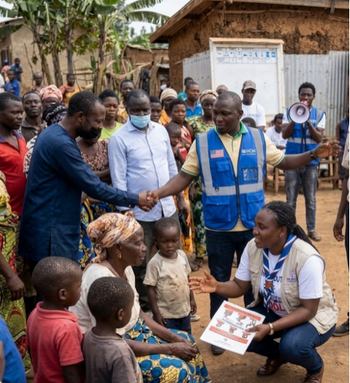
And I would bring vaccination to people in every way we can: schools, churches, workplaces, community events. During COVID-19, the places that moved quickly used many channels. Making people navigate the health system on their own is how we lose them.
ICT: What can your work at the intersection of marketing and operations teach us about vaccine misinformation? How should organizations coordinate communication with convenient, reliable vaccination services so that willingness to get vaccinated translates into action?
TD: Creating demand is useless if you cannot serve it. Suppose a parent finally decides to vaccinate, then finds a three-week wait or a clinic that is only open during work hours. You may lose that person.
There is also a measurement problem. Health systems count vaccinations, but they usually do not count people who tried and gave up. During COVID-19, a 71-year-old woman made 184 calls trying to get an appointment. From the system’s perspective, that demand was basically invisible.
So communication and access have to move together. If you tell people to get vaccinated, give them somewhere easy to go. And track abandoned calls and failed appointment attempts, not just completed vaccinations.
ICT: How could travel patterns inform measles preparedness for hospitals and public health agencies? What would it take to turn information about population movement into practical decisions about staffing, supplies, and patient screening?
TD: Measles travels very well with people. I have studied how transportation networks affect health care, including how airline routes change organ sharing and how vaccination changes mobility patterns.
For measles, hospitals in places with heavy international travel or strong links to outbreak areas should take that seriously. Ask about travel and exposure at triage. Make sure staff immunity records are current. Check isolation rooms before you need them. Keep MMR and immunoglobulin available.
Public health agencies can also use travel patterns to decide where to send vaccination teams. Around holidays or school openings, that can be especially useful.
ICT: Where could artificial intelligence meaningfully improve measles surveillance or outbreak response, and where should its use be approached cautiously? How can organizations avoid allowing incomplete data or biased models to misdirect their efforts?
TD: Many clinicians have never seen measles. AI could help there.
An EHR system could flag a patient with fever, rash, and relevant travel or exposure history and remind the care team to consider measles before that patient sits in a crowded waiting room. AI could also help identify kids who are overdue for vaccination or help with outreach.
My concern is missing data. The people at highest risk may also be the people least visible in the data. If a child rarely sees a clinician, the model may interpret missing information as low risk.
How AI is used also matters. I often distinguish between AI as a gatekeeper and AI as a second opinion. For measles, I would use it as a second opinion. Let it flag people or communities for another look. I’d be much more cautious about letting it decide who does or does not get outreach.
ICT: How do political uncertainty and changes in public health funding affect the capacity to interrupt measles transmission and sustain elimination? What investments would you prioritize to build a response that remains effective through changes in leadership and policy?
TD: The hardest part is that outbreak capacity has to be built before the outbreak.
We need people, labs, registries, and relationships with schools and communities. Those things take years to build and can disappear pretty quickly when funding becomes unstable.
We saw something similar with [personal protective equipment]. After H1N1, manufacturers expanded capacity and then demand disappeared. When COVID-19 arrived, the country was badly underprepared.
The same applies to measles. I would protect stable funding for local immunization programs, regularly test local surge capacity, and make sure manufacturers and providers have some reason to maintain capacity between outbreaks.
I would also worry about policies that increase the number of visits required for vaccination. Every extra visit is another chance for a child to fall through the cracks.