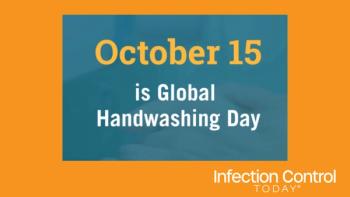
In honor of Global Handwashing Day, Jamar Shaw, MD, MPH, CIC, explains how applying the WHO 5 Moments to actual care sequences can reduce transmission risks in ambulatory settings.
Feb. 7, 2005 is National Black HIV/AIDS Awareness and Information Day. This annual observance day was created to raise awareness among African-Americans about HIV/AIDS and its devastating impact on communities.
AIDS has killed more than 20 million people since the first cases were diagnosed in 1981, including 2.9 million in 2003 alone. In the United States, nearly 406,000 people were living with AIDS at the end of 2003, and African Americans accounted for 42 percent of these AIDS cases. Among women, minoritiesparticularly African-Americansare hit by the vast majority of AIDS cases. Rates of HIV/AIDS diagnoses in African-American women are 19 times higher than those of white women and 5 times higher than those of Hispanic women in the 32 states with stable HIV/AIDS reporting. African-Americans also suffer the vast majority of deaths caused by AIDS, accounting for more than half of all U.S. AIDS-related deaths in 2003.
These numbers are not just statisticsthey represent real people. They underscore the need to heighten awareness of HIV/AIDS among African-Americans.
In recognition of National Black HIV/AIDS Awareness and Information Day, the U.S. Department of Health and Human Services has launched the NBHAAD Web site, which provides information on prevention, testing, treatment, and vaccine research. NBHAAD was created by the Community Capacity Building Coalition, a group composed of national organizations from across the country funded by the Centers for Disease Control and Prevention. To learn about the coalition, visit the About NBHAAD page or www.blackaidsday.org.