

What is a COVID-19 infection? With the definition not consistent, the answer is far from simple.

KEVIN KAVANAGH, MD, is the founder of the patient advocacy group Health Watch USAsm, a member of the Infection Control Today's® Editorial Advisory Board, and a frequent contributor to Infection Control Today®.
Health Watch USAsm 2023 Webinar:
Long COVID: Patients, Workers & Society Webinar.
Webinar on Nov. 1, 2023. No charge for viewing or obtaining continuing education credits. CE planned and applied for ANCC Nursing, Physician Cat I ANA along with a number of other allied health professions.
Speakers Include:
Ambassador Deborah Birx, MD, past White House Coronavirus Coordinator. Presentation: "Impact of Long COVID on the United States. "
Pam Belluck, New York Times Reporter -- Presentation: "How Long COVID is affecting people's jobs and their needs at work."
Peter Hotez, MD, PhD, Dean of the National School of Tropical Medicine and Professor of Pediatrics and Molecular Virology & Microbiology at Baylor College of Medicine. will present on "Global Vaccines and Vaccinations: The Science vs The Anti-science."
Conference Objectives:
After attending the sessions about Long COVID, the participants will be able to:
* Describe the manifestations of Long COVID in different age groups.
* Discuss the different presentations of Long COVID.
* Identify the impacts of Long COVID on the healthcare workforce.
For more information go to: https://healthconference.org/
Agenda: https://www.healthconference.org/healthconference.org-files/2023Conference_downloads/_Agenda-3.pdf
Speaker's Bios: https://www.healthconference.org/healthconference.org-files/2023Conference_downloads/_Bios-Speakers-2023-HWUSA-Conference-9.pdf
Download Brochure: https://www.healthconference.org/healthconference.org-files/2023Conference_downloads/20231101-HWUSA_Brochure-5.pdf
Conference Registration - Space is limited:https://docs.google.com/forms/d/e/1FAIpQLSc3sHSOLLNNBwAXcDJlJo5NcuknMexia6H-0SsXJbjmK5YbFQ/viewform
Continuing Education:
Four AMA PRA Category 1 Continuing education credit hours have been approved for Physicians, Nursing Home Administrators and PA/Nurse Practitioners. The Kentucky Board of Nursing has approved the course for 4.8 credit hours. Through the corresponding Kentucky agency/board, Dentistry, Physical Therapy and EMS has been approved for 4 credit hours. Respiratory, Occupational Therapy, Social Work, Dietitian and Community Health Worker approval is pending.
American Nurses Credentialing Center (AANC) approval for 5 hours of continuing education is pending (Connecticut Nurses Association).
For more information, go to: https://healthconference.org/
What is a COVID-19 infection? With the definition not consistent, the answer is far from simple.

In this opinion article, the authors discuss their concerns about the recent HICPAC/CDC proposals on infectious diseases.
In his analysis, Kevin Kavanagh, MD, explores the measures taken by the infectious disease sector in response to the pandemic, pointing out both effective and ineffective approaches. He also discusses how the pandemic has affected the treatment of other infectious diseases.

COVID-19, schools, and children are sensitive topics. Some worry about transmission in schools, while others don't see it as a concern. Which is it?
The rate of unemployment, long COVID, and immune system issues are still causing problems globally.

Although the public health emergency for COVID-19 is officially over, infection rates, precautions, and safety measures for communities around the United States still need to be addressed.

Establishing a permanent system for monitoring the persistence and emergence of dangerous pathogens is necessary, especially COVID-19.

Kevin Kavanagh, MD, discusses how Russian bots have tried to convince the United States public that masking is unnecessary. What do the latest studies say?

The decline in the overall health of United States citizens has been blamed on good public health strategies, but the data doesn't support that idea. So, what does the data show? ICT examines what studies show.

NIH News Release: "...findings suggest that SARS-CoV-2 infection damages the CD8+ T cell response, an effect akin to that observed in earlier studies showing long-term damage to the immune system after infection with viruses such as hepatitis C or HIV."

Information presented at this week's Congressional Committee needs a much deeper evaluation and consideration. The Cochrane Masking study may even vindicate the federal government's initial COVID-19 response.

Specifically for older individuals and immunocompromised individuals, a year could be too long.
Post-COVID-19 immune dysfunction is supported by epidemiological, clinical, and laboratory evidence. Attributing, with little to no evidence, that masking and lack of exposure is the primary driver of increases in bacterial and viral infections discourages critical interventions needed to stop the spread of disease.
Catching COVID-19 to prevent a more severe case is not a good strategy, says Kevin Kavanagh, MD.
The FDA's Vaccines and Related Biological Products Advisory Committee laid out a simpler direction for SARS-CoV-2 development and deployment.

Kevin Kavanagh, MD, examines the current bird flu outbreak and the possible dangers it holds for humans.
Kevin Kavanagh, MD, explains his concern about immunodysfunction and the possibility of its effects on hospitals.

Kevin Kavanagh, MD, discusses the continued concerns about COVID-19 vaccine efficacy reduction and what he believes should be done to protect against the further spread.

A study from Canada suggests that not being vaccinated for COVID-19 could mean an individual is at higher risk for an automobile accident. What if it is from brain damage from contracting COVID-19?
With many of the new COVID-19 vaccines not as effective against the new variants, reducing their spread without pharmaceuticals is even more critical.
Kevin Kavanagh, MD, reviews a book examining the results of Sweden's controversial decisions made during the early COVID-19 pandemic.
As the festive holidays begin, even with vaccinations and boosters, COVID-19 still remains a concern for long COVID-19 and other severe long-term effects.
CDC discusses potential proposals to redefine spread and to produce uniform guidelines across different types of facilities because public health interventions do not cause immunological debt but instead may prevent immunocompromising infections.
Despite study results that the univalent BA.5 booster produced much higher increase in antibodies, why was the hybrid bivalent Ancestral/BA.5 booster with a significantly lower increase chosen to be distributed, and how does this put the population at risk?
The additive effects of long COVID-19 with repeat infections, combined with the long-term persistence of long COVID-19 systems, does not bode well for the United States’ workforce. N95 masks, vaccines, boosters, and improvements in ventilation are keys to prevention.
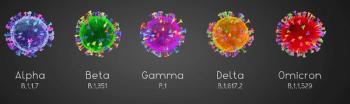
Starting September first, the first of the autumn boosters began to be available, but individuals may be concerned about their efficacy and safety. Infection Control Today® looks at the data.

Last week the Centers for Disease Control and Prevention relaxed recommendations which neither control or prevent a rapidly evolving and disabling disease, COVID-19. However, we must maintain effective efforts to control spread of the virus.

It is apparent we cannot simply vaccinate our way back to normal. We must also encourage the public to adopt public health strategies, including the wearing of N95 masks, avoiding close contact with strangers, and improved indoor ventilation. Now, more than ever, infection preventionists are needed to turn this tide around.

With the World Health Organization declaring monkeypox a global emergency, Infection Control Today® looks at what lessons SARS-CoV-2 gave but were not followed, and what could be next.
It is easy to become complacent, but the SARS-CoV-2 pandemic is not over, and long COVID-19 and the new variants are causing rising concern.