News

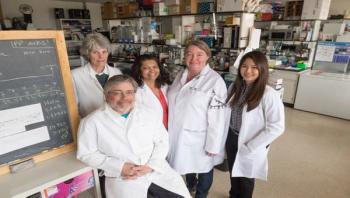
To combat potential outbreaks of the Zika virus, some countries have considered using pesticides so strong that they are banned elsewhere. But if you could quickly determine that mosquitoes were not carrying the Zika virus, the use of harmful pesticides could be avoided, as well as the cost of widespread spraying. That’s the premise behind a new study published May 3 in Science Translational Medicine, authored by assistant professor Joel Rovnak, graduate student Nunya Chotiwan, and research associate Connie Brewster in Colorado State University’s Department of Microbiology, Immunology and Pathology.
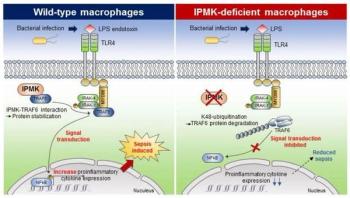
Professor Seyun Kim's team from Korea Advanced Institute of Science and Technology (KAIST) reported the mechanism by which cellular signaling transduction network is exquisitely controlled in mediating innate immune response such as sepsis by the enzyme IPMK (Inositol polyphosphate multikinase) essential for inositol biosynthesis metabolism.

Nonalcoholic fatty liver disease (NAFLD) - a condition that can lead to liver cirrhosis and cancer - isn’t typically detected until it’s well advanced. Even then, diagnosis requires an invasive liver biopsy. To detect NAFLD earlier and more easily, researchers in the NAFLD Research Center at University of California San Diego School of Medicine, Human Longevity, Inc. and the J. Craig Venter Institute report that the unique microbial makeup of a patient’s stool sample - or gut microbiome - can be used to predict advanced NAFLD with 88 to 94 percent accuracy.

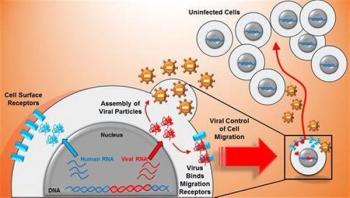
Research at the University of Illinois at Urbana-Champaign has provided the first evidence that viruses and hosts share highly similar regulatory sequences in their promoters--the initiation sequences of human genes that code for functional proteins.

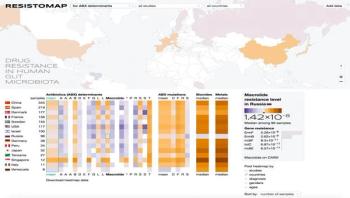
Russian scientists have created an interactive world map of human gut microbiota potential to resist antibiotics (resistome). Their ResistoMap will help identify national trends in antibiotic use and control antibiotic resistance on the global scale.

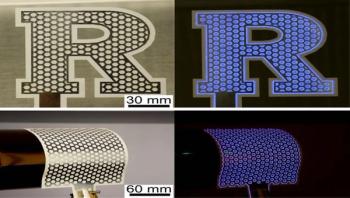
Imagine wearing clothes with layers of paper that protect you from dangerous bacteria. A Rutgers-led team has invented an inexpensive, effective way to kill bacteria and sanitize surfaces with devices made of paper.

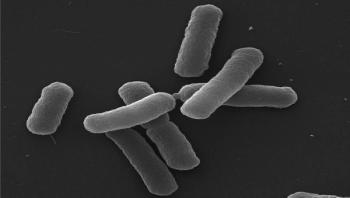
Bacteria need mutations -- changes in their DNA code -- to survive under difficult circumstances. When necessary, they can even mutate at different speeds. This is shown in a recent study by the Centre of Microbial and Plant Genetics at KU Leuven (University of Leuven), Belgium. The findings open up various new avenues for research, ranging from more efficient biofuel production methods to a better treatment for bacterial infections and cancer.