News

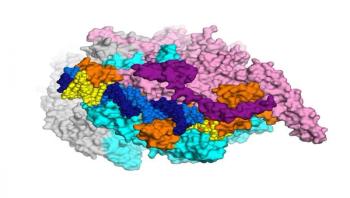
The most frightening aspect of Zika virus has been its ability to produce severe fetal birth defects during pregnancy, especially microcephaly--a small head. Now, scientists from the Florida campus of the Scripps Research Institute (TSRI) have uncovered the details behind the virus's unique ability to cross the placental barrier and expose the fetus to a range of birth defects that often go beyond microcephaly to include eye and joint injury, and even other types of brain damage.

Over the past two decades there has been a sharp rise in the number and severity of infections caused by the bacteria Clostridium difficile, now the most common hospital acquired infection in the United States. But a new study suggests that the most routinely prescribed antibiotic is not the best treatment for severe cases. Scientists at the VA Salt Lake City Health Care System and University of Utah School of Medicine report that patients with a severe C. diff infection (CDI) were less likely to die when treated with the antibiotic vancomycin compared to the standard treatment of metronidazole. The findings will be published online on Feb. 6 on the Journal of the American Medical Association (JAMA) Internal Medicine website.

Researchers at the University of Southampton have developed a new 3D system to study human infection in the laboratory. The team, which includes infection researchers, engineers and bioinformaticians in Southampton and University College London, have used an electrostatic encapsulation technique to make tiny 3D spheres within which human cells are infected with tuberculosis (TB) bacteria to generate conditions that more closely reflect events in patients.

With the first detailed analysis of a cellular component from a close relative of the pathogen that causes tuberculosis, Rockefeller scientists are suggesting strategies for new drugs to curb this growing health problem. Each year, nearly half a million people around the world are infected with mutant TB strains capable of evading existing antibiotics.

Staphylococcus aureus (S. aureus) can colonize the upper respiratory tract of around one quarter of the human population. As an opportunistic bacteria S. aureus usually does not harm its host. If the host is healthy and the bacteria obtain sufficient nutrients, the bacteria remain quiet and are kept under control by the immune system. They may, however, become active in response to infections by another pathogen or illness weakening the host immune system.

As long as parasites continue to mount resistance to malaria drugs, scientists will be faced with the task of developing new, improved pharmaceuticals. A research team from the Virginia Tech Center for Drug Discovery has received a $431,126 two-year grant from the National Institutes of Health to make improved versions of a promising compound called MMV008138, or 8138 for short.

Zika: Where Are We Now?

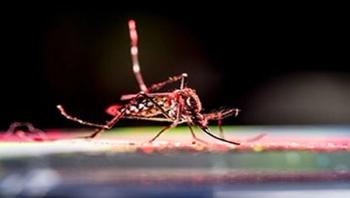
It’s been one year since the World Health Organization (WHO) declared Zika a public health emergency. The virus, transmitted through the Aedes aegypti mosquito, has since been declared to be a long-term problem rather than an emergency, but Zika continues to concern health professionals. Professors in Notre Dame’s Department of Biological Sciences and members of the Eck Institute reflect on the outbreak, the challenges presented by the virus and the work yet to be done to help health professionals and key decision makers protect their citizens.

With a $416,000 grant from the National Institutes of Health (NIH), SLU scientists will continue work to cure hepatitis B, building on significant findings published in two recent papers. John Tavis, PhD, professor of molecular microbiology and immunology at Saint Louis University, aims to advance our understanding of how the hepatitis B drug replicates in order to develop a new drug that, in combination with other medications, could cure the viral infection.

Beginning in the mid-1980s, an epidemic of severe invasive infections caused by Streptococcus pyogenes (S. pyogenes), also known as group A streptococcus (GAS), occurred in the United States, Europe, and elsewhere. The general public became much more aware of these serious and sometimes fatal infections, commonly known as the “flesh-eating disease.” Potent cytotoxins produced by this human pathogen contribute to the infection. A new study in The American Journal of Pathology reports that the bacteria’s full virulence is dependent on the presence of two specific cytotoxins, NADase (SPN) and streptolysin O (SLO).

Perena Gouma, a professor in the Materials Science and Engineering Department at The University of Texas at Arlington, has published an article in the journal Sensors that describes her invention of a hand-held breath monitor that can potentially detect the flu virus.

When someone is HIV-positive and takes antiretroviral drugs, the virus persists in a reservoir of infected cells. Those cells hide out in germinal centers, specialized areas of lymph nodes, which most "killer" antiviral T cells don't have access to.